Key planning information for appendicectomy in South Korea.
90 minsProcedure time
3–4 daysHospital stay
1 hospitalLists appendicectomy
Appendicectomy in South Korea is priced per case at 1 hospital. The operation takes 90 minutes, with 3 to 4 days in hospital. Each hospital quotes its own price for your case.
Hospitals and clinics offering Appendicectomy in South Korea
Appendicectomy is listed by 1 hospital in South Korea. The order reshuffles every hour so each gets equal exposure.
The Samsung Medical Center plans to achieve medical innovation in the future to promote the happiness of patients and develop into a global hub of biohealth care study and link the industry by connecting to hospital-R&D Center-school and enterprises.
What is an Appendicectomy?
Appendicectomy is the surgical removal of the appendix when it becomes infected or inflamed. The appendix is an organ that is finger-shaped and extends from the initial portion of the large intestine. Appendicitis may produce symptoms like abdominal pain located around the navel and lower right region of the abdomen. You may also experience symptoms like fever, nausea, vomiting, and loss of appetite if you have appendicitis. It becomes life-threatening when an infected appendix may become perforated which will cause it to leak and infect the whole abdomen.
Appendicitis is difficult to diagnose among children, elderly patients and women. The doctor will conduct some tests to confirm if the symptoms are caused due to appendicitis. The results of these tests will determine if an Appendicectomy is required. However, an Appendicectomy is normally done as an emergency surgery if the patient has acute appendicitis.
How is Appendicectomy performed?
There are 2 methods used to perform Appendicectomy:
Laparoscopic Appendicectomy
This method is commonly used to do an Appendicectomy. A laparoscope is used in this method of surgery. A laparoscope is a thin flexible endoscopic tube with a camera attached to it. Small incisions are made in the abdomen through which a laparoscope and other instruments are inserted to perform the surgery. A laparoscopic Appendicectomy produces a quicker recovery and less post-operative pain.
Open Appendicectomy
In this method, an incision of 2 or 3 inches is made on the lower right region of the abdomen. The surgeon examines the area to see if there are any additional problems, after which the appendix is removed. To remove the appendix, the appendix is first freed from its connection to the abdomen and colon. Then the appendix is cut and the surgeon stitches over the hole that is left in the colon. If the appendix is perforated and an abscess is formed, the abdomen is washed out completely during the surgery. To drain out the liquid and pus, a small rubber tube is used, which goes out from the abscess through the skin. The incision in the abdomen is then stitched and closed.
What are the preoperative preparations for an Appendicectomy?
Before an Appendicectomy is performed, there are some preoperative preparations which include:
Blood tests
White blood cells count
CT scan and ultrasound if the diagnosis is not clear
Before the surgery, intravenous fluids are given to keep you hydrated.
Your stomach needs to be empty before the surgery to avoid complications during the surgery.
About Appendicectomy
Key facts to plan your treatment: how long it takes, your hospital stay, anaesthesia, risks and recovery.
Duration of surgery/treatment
Laparoscopic Appendicectomy: Approximately 90 minutes
Open Appendicectomy: Approximately 60 minutes
Days admitted
3 to 4 days.
If the patient’s appendix is perforated, the duration of stay in the hospital is prolonged to 4 to 7 days.
Anesthesia
General anesthesia
Recovery
- After the surgery the patient is put in the post-anesthesia care unit (PACU) for the anesthesia to wear out.
- The patient’s temperature, breathing intervals, and heart rate are checked.
- The patient is transferred to the hospital room after the anesthesia wears off.
- Patients can usually resume normal activities within 1 to 3 weeks after being discharged from the hospital
- If the appendix is ruptured or if there is formation of abscess, recovery is slower than normal.
Risks
The complications that are involved in an Appendicectomy are:
- Infection
- Bleeding
- Abscess
- Intestine obstruction
- Breathing problems
- Adverse effects of medication
After care
- Liquid diet is given to the patient in the morning after the surgery. If the body tolerates these well, solid diet can be started.
- Intravenous supply is removed after the patient starts eating and drinking.
- Pain medication to relieve the surgical pain is provided.
- After the patient is discharged from the hospital, care should be taken to keep the incision area dry and covered.
- The doctor should be informed if the patient has fever and pain, and also if the wounds start bleeding or if pus is formed.

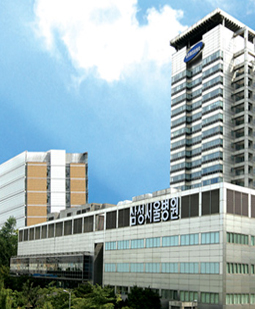 Samsung Medical Center
 ISOPrice on request