Key planning information for calf implants in Spain.
$2,500 fromLowest listed price
1–2 hrsProcedure time
1 nightHospital stay
7 hospitalsList calf implants
Calf Implants in Spain is listed from US$2,500 to US$3,000 at 7 hospitals. The operation takes 1 to 2 hours, with 1 night in hospital. Each hospital quotes its own price for your case.
Prices last updated May 2017
Cost of Calf Implants in Spain
Table of prices by type of procedure, in US$. Each hospital quotes its own price for your case.
Procedure
Minimum price
Maximum price
Calf Implants
$2,500
$3,000
Price starting from $2,500 up to $3,000 · last updated May 2017.Final prices are quoted by each hospital
Hospitals and clinics offering Calf Implants in Spain
Calf Implants is listed by 7 hospitals in Spain. The order reshuffles every hour so each gets equal exposure.
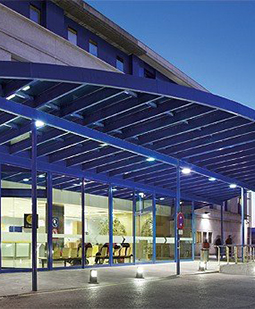
The Cosmetic and Plastic Surgery Service of Sanitas Hospitales is made up of highly qualified professionals to improve the health and beauty of their patients.
The surgeons at Cirumed Clinic Marbella all hold academic positions at the department of Plastic, Aesthetic and Reconstructive surgery of Hospital Quiron Malaga - Spain's largest private hospital. The clinic offers the full range of cosmetic surgeries.
DoctorsAADr. Alexander AslaniAHDr. Alexander HamersView all 3
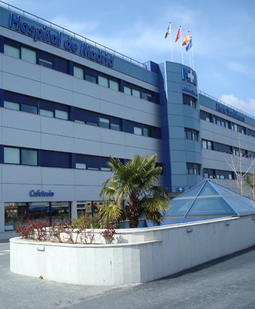
Hospital Clínic Costa Brava is a modern medical facility with over 250 medical specialists, offering medical, surgical, aesthetic, cosmetic and rehabilitation treatments in the relaxing tourism town of Palamos, Costa Brava.
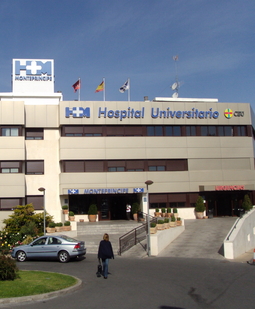
HM Hospitales is a hospital group with six private hospitals in Madrid: three general hospitals, a cardiovascular hospital, an oncological center and a women's health hospital.
Plastic and Reconstructive Surgery is strongly committed to excellence in patient care and cross-disciplinary research that brings current medical developments into clinical practice.
It is a branch of Surgery that deals with the surgical correction of any congenital, acquired, tumor or simply involutive process that requires repair or replacement of superficial structures that affect the body shape and function, with criteria of proportionality and aesthetic parameters
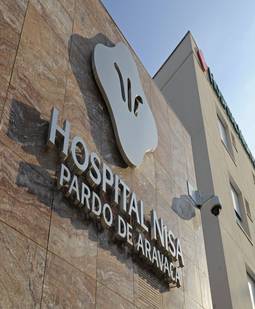
A modern (opened in 2007), general, private hospital located in Madrid, part of the NISA group of hospitals. The international patients department can assist patients with accomodation and trasportation, and can communicate in English as well as in Spanish.
What are Calf Implants?
Men and women choose calf implants when they are dissatisfied with the shape or proportion of their calves, they cannot achieve the muscle tone they desire through exercise alone, or they wish to correct calf muscle imperfections as a result of injury or disease. Conditions such as polio, spina bifida and club foot can create muscle deterioration and a shrunken leg that benefits from calf implants. Calf implants come in different shapes and sizes, for men and women.
Calf implants are carried out through surgery on the calves. Calf implants surgery increase the size of the calf and improves calf shape and definition.
Calf implants are also referred to as calf augmentation.
How is Calf Implants surgery carried out?
Calf implants are inserted into the lower legs in the following surgical procedure:
The surgeon makes a small incision in the back of the knee and creates a pocket for the insertion of the implant using a surgical instrument. The silicone implant is placed over the calf muscle. Sometimes calf implants will be placed on both the inner and outer calf for more definition. Calf implants can be added to both legs or one leg only depending on the desired results. The calf implants stay in place with stitches or the action of your existing muscle.
How popular is this type of surgery?
Calf implants are fairly common in Mexico, South America and Central America. Inner calf augmentation is more popular with women while inner and outer calf augmentation is popular with men.
About Calf Implants
Key facts to plan your treatment: how long it takes, your hospital stay, anaesthesia, risks and recovery.
Duration of surgery/treatment
Calf implant surgery may take between 1 to 2 hours per calf.
Days admitted
You may need to stay over for 1 night after your calf implants procedure.
Anesthesia
Calf implants are inserted under a general anesthesia. Occasionally an epidural or local anesthesia is used instead.
Recovery
- Dressings are removed after 2 days.
- Walking becomes easier after the first week following the calf implants procedure.
- Swelling and pain should disappear after 2 weeks.
- After 3 weeks walking becomes normal and the skin begins to retain its usual appearance.
- Normal activity levels can be resumed after one month to six weeks.
Risks
Calf implant surgery is a minimally invasive procedure and serious complications are rare.
Risks include:
- Infection.
- Bleeding.
- Nerve or muscle damage.
- Swelling surrounding the muscle.
- Calf implants may shift from the original placing and produce an asymmetrical appearance.
- Calf implants can rupture and need to be removed and replaced.
- Dissatisfaction with appearance of calves. To minimize risk and ensure the desired calf shape is achieved, consult with your surgeon to choose the correct size and shape of the implants.
After care
- Stay in bed for the first day, get lots of rest and elevate the legs.
- Wear a compression bandage for a few days.
- After the first two days, for the first week or two, you can walk around gently but elevate the legs when sitting or lying to reduce swelling and discomfort.
- Avoid strenuous activities for around six weeks.
- Take prescribed painkiller following calf implant surgery.

 Sanitas Hospitales
 JCI
 ISO