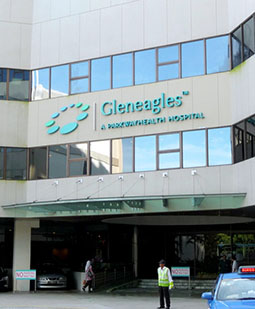
 Private Hospital
Singapore
 JCIPrice on request
A 380 bed private hospital offering tertiary acute care services that cover a wide range of medical and surgical specialties.
Price
Contact for quote
Oncology care in Singapore
Hospitals and medical centers in Singapore which treat Colon Cancer patients.

Key planning information for colon cancer treatment in Singapore.
Colon Cancer Treatment in Singapore is priced per case at 4 hospitals. The operation takes 2 to 3 hours, with 3 to 4 days in hospital. Each hospital quotes its own price for your case.
Colon Cancer Treatment is listed by 4 hospitals in Singapore. The order reshuffles every hour so each gets equal exposure.
Private HospitalJCIPrice on requestA 380 bed private hospital offering tertiary acute care services that cover a wide range of medical and surgical specialties.
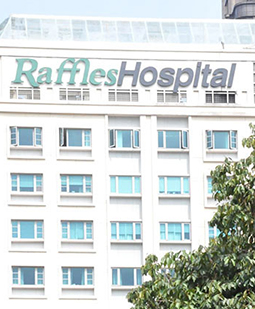 Private Hospital
A full service private hospital offering a comprehensive range of specialist services by a team of 200 physicians. 35-40% of the patients are foreigners, and there is a dedicated department for handling medical tourists.
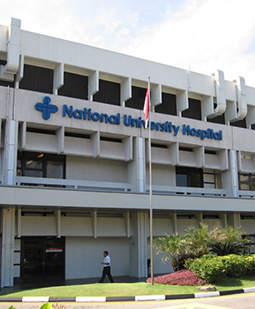 Public Hospital
A 928 bed teaching hospital offering a full range of medical, surgical and diagnostic services. NUH serves as a refferal center for cancer patients, pediatrics, cardiology and other specialties.
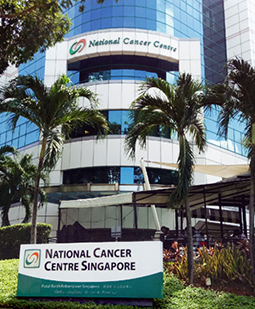 Cancer Treatment CenterJCIPrice on request
A comprehensive cancer centre providing a full range of clinical services to its patients.
Treatment options for colon cancer depend on the stage at which the cancer is discovered. They include surgery, chemotherapy and radiotherapy. Surgery is the best approach for early stages of colon cancer. Adjuvant chemotherapy is required, particularly in later stages to prevent the recurrence of cancer. A combination of surgery, chemotherapy and radiation is required in the advanced stages of colon cancer.
1) Surgery: Surgery may either be done as total colectomy or subtotal colectomy. It is the only treatment required in the early stages of colon cancer (stage I and most cases of stage II) in which cancerous part of the intestine is removed and remaining ends are joined. Sometimes patient may require a surgically created opening between the intestine and abdominal wall called as colostomy. A small bag called as colostomy bag is applied in which contents of the intestine are emptied. Colostomy can be permanent or temporary.
2) Chemotherapy:In addition to surgery, chemotherapy is required in stage II or above to reduce the risk of recurrence of cancer. It may be palliative, adjuvant or neoadjuvant. Palliative is used when cancer has spread to other body parts and surgical removal is not possible. Palliative chemotherapy helps to shrink the tumor, alleviates the symptoms and prolong life. Adjuvant chemotherapy is used once the surgery is done to remove any left out cancer cells. Neoadjuvant chemotherapy is given prior to the surgery. It reduces the size of the tumor and helps in efficient removal during surgery. 5-fluorouracil is the most commonly used drug in colon cancer. It is used in association with a vitamin called as leucovorin. Various new chemotherapy drugs such as avastin, vectibix and Erbitux are used along with 5-FU for the treatment of colon cancer which has already spread.
Bevacizumab, cetuximab, and panitumumab, and regorafenib are newer chemotherapy agents that target specific aspects of the cancer cell which may be more important to the tumor than the surrounding tissues. They also have fewer side effects than traditional chemotherapy.
3) Radiotherapy: Radiation therapy is typically given under the guidance of a radiation specialist called a radiation oncologist. Its primary use is in the treatment of rectal cancer. Multiple cycles may be required. It may sometimes be used to alleviate the pain associated with recurrent or metastatic colon cancer.
What is the success rate of colon cancer treatment?With surgery, more than 90% stage I and 65-80% of stage II colorectal cancers are curable.
Key facts to plan your treatment: how long it takes, your hospital stay, anaesthesia, risks and recovery.
Common questions
Have a question? Get a free consultation.
Choose a hospital and send your enquiry to its international patient team. Each replies with its own price and plan.
Free consultation • No obligation ISO