Key planning information for colonoscopy in Spain.
$600 fromLowest listed price
30–60 minsProcedure time
11 hospitalsList colonoscopy
Colonoscopy in Spain is listed from US$600 to US$1,100 at 11 hospitals. The operation takes 30 to 60 minutes. Each hospital quotes its own price for your case.
Prices last updated Jul 2019
Cost of Colonoscopy in Spain
Table of prices by type of procedure, in US$. Each hospital quotes its own price for your case.
Procedure
Minimum price
Maximum price
Colonoscopy
$600
$1,100
Price starting from $600 up to $1,100 · last updated Jul 2019.Final prices are quoted by each hospital
Hospitals and clinics offering Colonoscopy in Spain
Colonoscopy is listed by 11 hospitals in Spain. The order reshuffles every hour so each gets equal exposure.
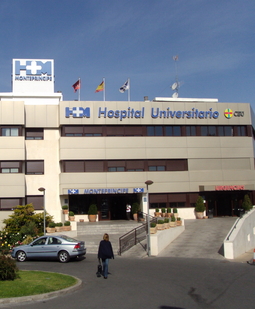
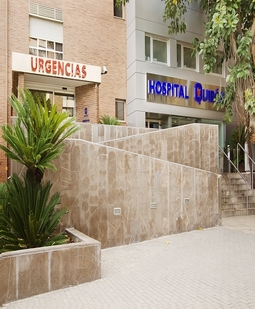
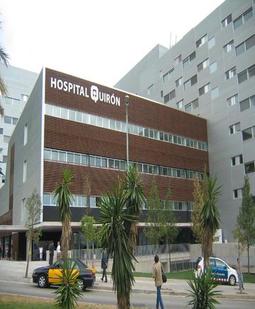
With more than 36 medical specialties, 200 physicians and surgeons of the highest level, Quironsalud Hospital Malaga is one of the most pertinent hospitals in Spain.
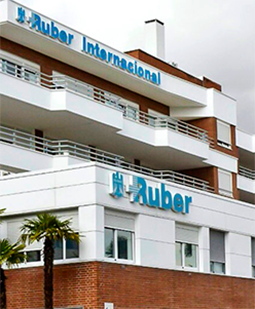
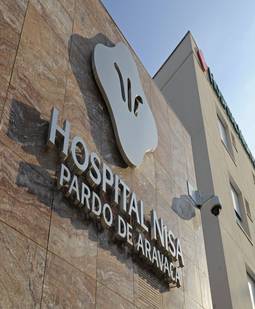
A modern (opened in 2007), general, private hospital located in Madrid, part of the NISA group of hospitals. The international patients department can assist patients with accomodation and trasportation, and can communicate in English as well as in Spanish.
Division of Gastroenterology is responsible for a wide variety of target organs, including the gastrointestinal tract, liver, gallbladder and pancreas.
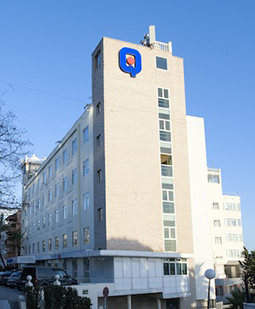
Quirón has an internationally prestigious medical staff, the largest in the sector, and is also the principal hospital network in terms of patient numbers and care facility area. The group administers 47 healthcare centers, more than 4.000 hospital beds and 8.000 doctors
As a clinical department, the goal is to produce not only many good clinical specialists for gastroenterology who can understand both clinical medicine and basic science but also researchers for basic gastroenterology.
Hospital Clínic Costa Brava is a modern medical facility with over 250 medical specialists, offering medical, surgical, aesthetic, cosmetic and rehabilitation treatments in the relaxing tourism town of Palamos, Costa Brava.
This international hospital incorporates prestigious doctors, invests in research and development, technology and continuing education that enhances skills, in facilities, and in an increased operational efficiency in order to provide nothing but the best
Hospital Quirónsalud Valencia is ranked as one of the best private schools in Spain, winning nine times in the TOP 20 award in recognition of its management and quality of care.
What is a Colonoscopy?
Colonoscopy is a procedure in which the large intestine and the colon are examined. The examination is carried out by using an endoscopic instrument known as a colonoscope. The instrument is a long thin tube with a tiny camera attached to it. During colonoscopy your doctor can diagnose and treat diseases like ulcers, abnormal growths, inflamed tissues and so on, without the need for a major operation.
How to be prepared for a Colonoscopy?
Inform the doctor about your medical conditions that require attention, such as:
Heart condition
Lung condition
Diabetes
Allergy to any medication
Pregnancy
Antibiotics may be required in the following conditions:
If the patient has an artificial heart valve
If the patient requires antibiotics before a surgical or a dental procedure for certain medical reasons
The doctor may give instructions on diet and fluid restrictions. You may be required to take laxatives orally to clean out the colon.
Enemas are usually given to clean out your bowels.
How is a Colonoscopy performed?
The patient is asked to lie on the side on the examining table. A colonoscope is inserted from the anus, through the rectum and moved to the large intestine. The colonoscope transmits images of the colon as it bends and moves around the curves of the colon. The patient may be required to change positions so that the doctor can move the colonoscope. Air is also blown into the colon to expand the colon, which helps the doctor to see and examine clearly. You may experience mild cramps during the colonoscopy.
When the procedure is completed, the colonoscope is withdrawn slowly while the bowel lining is carefully examined.
Anything abnormal that is observed during the colonoscopy is removed for biopsy.
Polyps are also identified and removed.
Can any diseases be treated during the Colonoscopy?
Medicine is injected around wounds and diverticula that are bleeding.
Alternatively, heat is applied to cauterize the wounds.
A lasso-like device removes cancerous polyps
With the help of a balloon, strictures can be dilated
About Colonoscopy
Key facts to plan your treatment: how long it takes, your hospital stay, anaesthesia, risks and recovery.
Duration of surgery/treatment
Approximately 30 - 60 minutes
Days admitted
None. Colonoscopy is done on an outpatient basis.
Recovery
The patient is kept for some time in a recovery room for observation.
As an outpatient, you can go home the same day. Cramping, bloating, nausea, and drowsiness are some of the symptoms that are experienced for some time after a colonoscopy. The doctor will give you a follow-up appointment upon discharge.
Risks
The following complications are possible in a colonoscopy:
- Cramps and abdominal swelling caused by the air that is blown into the colon during the colonoscopy
- Slight bleeding in the bowel movements if a biopsy is done during the colonoscopy
- Injury to the intestine that may cause bleeding and infection
- Allergic reaction and side effect of sedating medication used during the colonoscopy
After care
- Follow the doctor’s instructions on diet.
- Symptoms such as the following should be reported:
o Severe abdominal pain
o Fever
o Vomiting
o Bleeding from the anus
- Certain medications should be avoided if polyps were removed or if biopsies were taken.

 Private Hospital
 JCI
 ISO