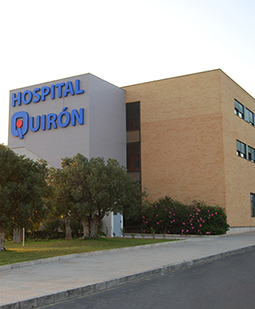
With more than 36 medical specialties, 200 physicians and surgeons of the highest level, Quironsalud Hospital Malaga is one of the most pertinent hospitals in Spain.
The goal is to preserve and restore vision through excellence in provision of eye care services, medical education, and clinical research. The physicians have earned national and international recognition as clinicians and educators.
Innova Ocular ICO Barcelona is one of the most important ophthalmology and ocular microsurgery institutes in central Barcelona, and an industry leader at both the national and international level.
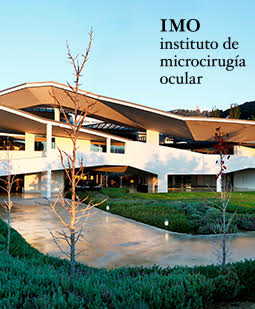
The Instituto de Microcirugía Ocular (IMO – Institute of Ocular Microsurgery in English) is a leading international ophthalmology centre. Their hallmark is medical excellence and our objective is to provide the best service to the patient.
DoctorsBCDr. Borja CorcósteguiINDr. Isabel NietoView all 32
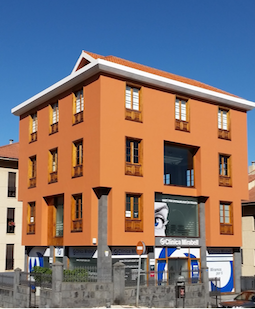
CLÍNICA MIRABELL is one of the leading private ophthalmological centres in the Canary Islands. We improve our patients' quality of life protecting, treating and enhancing their vision and the aesthetics of their eye area.
DoctorsDPDra. Patricia Martínez GarcíaRHDr. Ricardo Herrera PiñeroView all 4
Institut Omiq Oftalmologia Medica's Medical and Surgical activity is developed in all areas and specialities in Ophthalmology. They provide the most modern, latest and complete diagnostic and therapeutic equipment.
DoctorsMGDr. Mercè Guarro MDLSDr. Laura Sararols MDView all 18
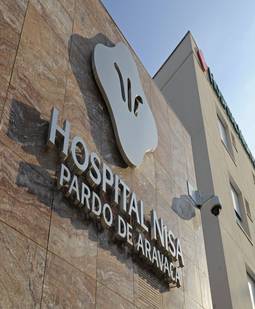
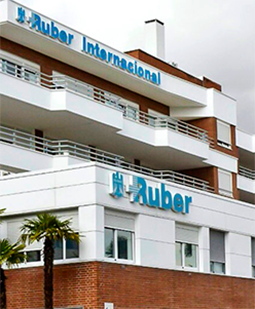
A modern (opened in 2007), general, private hospital located in Madrid, part of the NISA group of hospitals. The international patients department can assist patients with accomodation and trasportation, and can communicate in English as well as in Spanish.
Quironsalud Hospital Torrevieja is an ISO-certified private hospital located in the north of Torrevieja, championing excellence in cancer treatment and management. IMTJ Best International Hospital of the world (awards 2017)
What are the types of Glaucoma Surgery?
The most common Glaucoma Surgery procedures are:
Filtration surgery (Trabeculectomy): A “trapdoor” in the eye is cut to drain fluid into a reservoir and then into the blood vessels surrounding the eye.
Laser trabeculoplasty: This glaucoma surgery helps drain fluid from the eye by using a laser to make tiny holes in the drainage system. Types of laser trabeculoplasty include argon laser trabeculoplasty and selective laser trabeculoplasty for the treatment of primary open-angle glaucoma.
Tube-shunt surgery (Seton glaucoma surgery): This procedure uses a silicon tube inside the eye to drain fluid. Tube shunts are used if the glaucoma is not responding to standard procedures.
Laser cyclophotocoagulation (Cycloablation): This procedure is used for end-stage glaucoma because there is a chance of losing vision. Laser cyclophotocoagulation destroys the muscles controlling near and far vision.
Iridotomy or Iridectomy: Laser or conventional surgery is used on an emergency basis for acute closed-angle glaucoma. The surgeon cuts into the iris to make a tiny opening that allows fluid to flow out freely.
What are the chances of success with Glaucoma Surgery?
Glaucoma surgery helps lower the intraocular pressure in the eye but the length of time for which pressure remains low depends on many factors – the surgical technique, the age of the patient, the race of the patient etc. Repeat surgery may be necessary to continue to control the pressure in the eye, or the continued use of medications.
In almost half of people who had a laser trabeculoplasty, eye pressure increases again after five years.
Around half of people who have trabeculectomy filtration surgery still need medication to control glaucoma.
Trabeculectomy filtration surgery is successful in about 70 to 90 percent of cases for at least one year.
About Glaucoma Surgery
Key facts to plan your treatment: how long it takes, your hospital stay, anaesthesia, risks and recovery.
Duration of surgery/treatment
- Trabeculectomy filtration surgery takes about an hour to perform.
- Laser trabeculoplasty takes around 10 to 15 minutes.
Days admitted
None. Glaucoma surgery is an outpatient procedure with no overnight stay.
Patients commonly need to remain in the doctor’s office for eye pressure monitoring, for up to three hours after surgery.
Anesthesia
Glaucoma surgery is carried out with a local eye drop anesthesia.
Recovery
Usually patients can go back to normal activities and work the day after glaucoma surgery.
Risks
- Scarring and re-closure of the drainage channels in the eye.
- Infection and leakage from the blister-like bumps created on the eye.
- Risk of developing cataracts.
- Loss of vision.
- Some people experience increased eye pressure for a short period following laser glaucoma surgery, or reduced eye pressure.
After care
- Take non-aspirin pain relievers to treat any pain or discomfort.
- Keep water out of the treated eye for around a week following glaucoma surgery
- Avoid heavy lifting, bending or straining after glaucoma surgery until the eye pressure stabilizes.
- Take care with contact lenses so as to avoid infection of the eye.
 Private Hospital

 JCI
 ISO