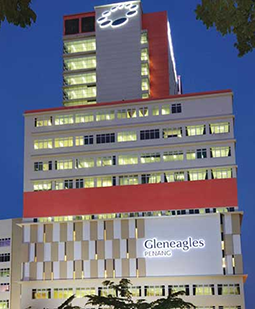
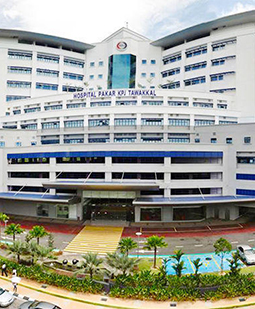
Private HospitalAn acute care general hospital in Penang with advanced facilities and healthcare professionals specializing in a wide range of medical areas.
Neurosurgery care in Malaysia
Hospitals, clinics and medical centers in Malaysia performing Minimally-Invasive Neurosurgery.

Key planning information for minimally-invasive neurosurgery in Malaysia.
Minimally-Invasive Neurosurgery in Malaysia is priced per case at 3 hospitals. Each hospital quotes its own price for your case.
Minimally-Invasive Neurosurgery is listed by 3 hospitals in Malaysia. The order reshuffles every hour so each gets equal exposure.
Private HospitalAn acute care general hospital in Penang with advanced facilities and healthcare professionals specializing in a wide range of medical areas.
Private HospitalNeurosurgery is the surgery discipline focused on treating the central nervous system, peripheral nervous systems and spinal column diseases amenable to surgical intervention. In the last few decades, the greatest steps in the development of neurosurgery have been the implementation of microsurgery.
Private HospitalNeurosurgery is the surgery discipline focused on treating the central nervous system, peripheral nervous systems and spinal column diseases amenable to surgical intervention.
This is the use of miniaturized equipment to operate on the human central nervous system. The operation involves making small incisions that help one to access the central nervous system. The doctor inserts a long narrow tube that has a camera attached at the end. This helps him/her to view any structures that may require repair or removal.
The most common form of minimally invasive neurosurgery performed is the intracranial surgery. In this type of procedure, the surgeon makes a small opening on the skull and inserts the endoscope. This procedure helps to minimize the need for making a large incision in the skull that leaves a huge scar.
Endonasal surgery is also another one that uses this technique. The surgeon will insert an endoscope by drilling a hole into the brain through the nasal openings. As a result, there is visible scarring on the patient. This procedure allows the doctor to operate on different parts of the brain that would have required extensive incisions. For instance, the surgeon is able to operate on the base of the skull and the top of the spine without making visible scars.
Spinal surgery is also performed on a regular basis using this type of procedure. Cameras attached to the end of the endoscope help the surgeon to see what exactly needs to be cut or removed in the spinal column. A number of procedures have benefited from this type of equipment. For instance, lumber discectomy.
One obvious benefit is that the operation leaves less scarring. In most cases, the surgeon requires making an incision that is less than one inch. Another benefit of this type of procedure is fewer complications. This is because the doctor can find better workarounds. Thus, he/she does not require cutting through a lot of tissue.
The other major benefit is the reduced risk of death. This type of procedure reduces the risk of death to almost zero. For one, the doctor does not have to cut through any major blood vessels. Bleeding out is a common cause of death in most operations.

Key facts to plan your treatment: how long it takes, your hospital stay, anaesthesia, risks and recovery.
Common questions
Have a question? Get a free consultation.
Choose a hospital and send your enquiry to its international patient team. Each replies with its own price and plan.
Free consultation • No obligation