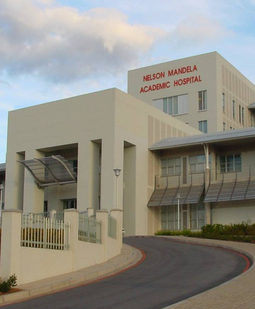
Life Healthcare is a leading private hospital operator in South Africa and primarily serves the market for privately insured individuals, representing approximately eight million people. The group provides mainly acute care, high technology private hospital services.
Nelson Mandela Academic Hospital is a large Provincial government funded hospital situated in central Mthatha in South Africa. It is a tertiary teaching hospital and forms part of the Mthatha Hospital Complex.
The extensive hospital network includes 64 hospitals (of which 57 are majority owned by Life Healthcare and another seven in which the group holds substantial minority ownership), providing a range of healthcare services throughout South Africa.
This is a branch of radiology that focuses on diagnosing and treating abnormalities of the brain, spine, head and neck using imaging techniques.
Who is a neuroradiologist?
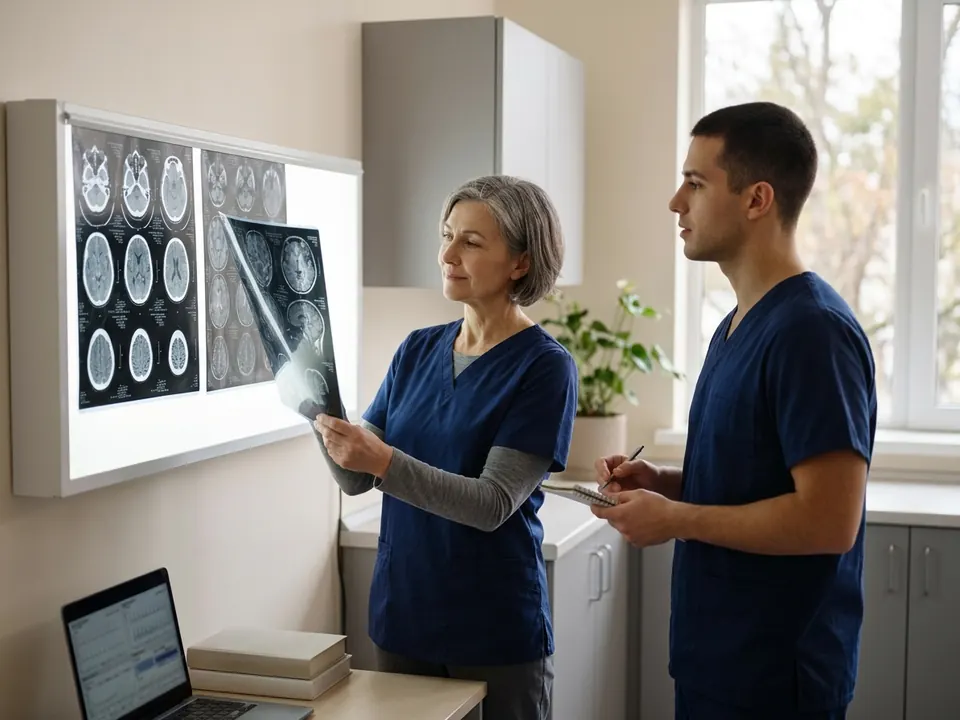
Physicians who have specialized in the performing and interpreting neuroimages in a medical setting are known as neuroradiologists. Neuroradiologists recommend various tests and interpret the x-rays, computed tomography (CT) scans and magnetic resonance imaging (MRI) of the brain, spine, head, and neck. Neuroradiologists also perform and interpret the results of angiographic studies of the brain and spine.
The tests and procedures performed by neuroradiologists allow them to diagnose diseases, conditions, and disorders of the brain and spine. If diagnosed in the early stages diseases can be treated effectively and at the earliest time possible.
Training
Neuroradiologist have a board certification in radiology.
And at least one year of neuroradiology training following a radiology residency.
Some have additional training in interventional neuroradiology or pediatric neuroradiology which is optional.
Diseases diagnosed by neuroradiologists
Alzheimer’s disease
Aneurysms
Strokes
Seizure disorders
Tumors
Genetic conditions
Arteriovenous malformations
Compression fracture of the spine
Diagnostic and therapeutic techniques in neuroradiology
Magnetic resonance imaging (MRI): This technique uses radio waves and a magnetic field to create images of tissue and organs inside your body. These images can be three-dimensional allowing the images to be viewed from different angles.
Magnetic resonance spectroscopy (MRS): This is a noninvasive technique that creates a spectrum or graph arraying the quantity and types of chemicals in the brain and other organs. It is also known as nuclear magnetic resonance(NMR).
Functional MRI (fMRI): This technique uses MRI technology to measure brain activity by detecting any changes associated with blood flow. Blood flow increases in the part of the rain that is in use and this technique can detect these changes.
Magnetic resonance angiography (MRA): This technique uses MRI technology to create images of arteries in order to evaluate aneurysms and other abnormalities.
Radiography: This technique uses electromagnetic radiation such as x-rays to view inside the body.
Ultrasound: This imaging technique uses high-frequency sound waves to look inside the body. This technique does not expose one to radiation.
Computed tomography angiography(CTA): This imaging technique uses computed tomography technique to examine inside the body and display the anatomical details of blood vessels very clearly.
Digital Subtraction Angiography (DSA): This imaging technique is used to visualize blood vessels in a soft tissue environment. It produces images by using a contrast medium by subtracting a pre-contrast image from later images.
Lumbar puncture: This is the procedure used to test for conditions affecting the nervous system such as the spine, brain and spinal cord.
Myelography: This test uses a contrast agent to detect diseases and injuries to the spinal cord. A myelography involves injecting the contrast agent into the spine and then perform several x-rays.
Interventional neuroradiology
This is a subspecialty of neuroradiology which specializes in minimally invasive imaging technique to diagnose and treat diseases of the brain, head, neck, and spine.
It is also known as Endovascular surgical neuroradiology (ESN) or neuro-interventional surgery.
About Neuroradiology
Key facts to plan your treatment: how long it takes, your hospital stay, anaesthesia, risks and recovery.
Recovery
Information coming soon. Request a consultation for personalized recovery guidance. Get Quote →
After care
Information coming soon. Request a consultation for personalized recovery guidance. Get Quote →
 Hospital Group