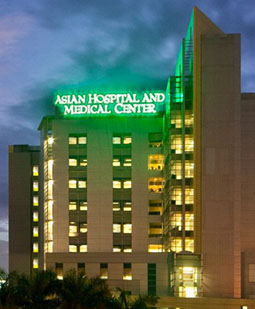
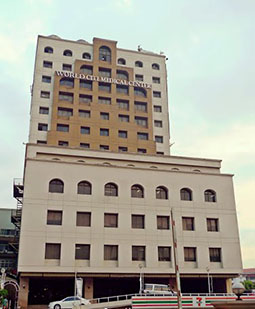
This medical centre in Manila, Philippines offers a wide array of services under the different fields and sub-specialties of the medical field. This privately owned tertiary hospital has been in operation for more than 50 years.
DoctorsGTDr. Generoso T.AbesAMDr. Armando M.Chiong, Jr.View all 13
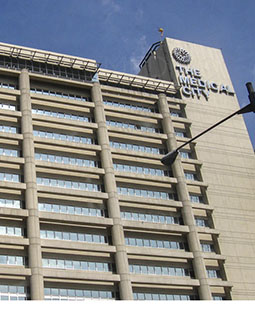
The Medical City is a private, tertiary care hospital, that is accredited by the JCI. It serves over 40,000 inpatients a year, making it one of the largest health care facilities in the Philippines.
DoctorsJMDr. Jose M.AcuinGCDr. Gerard C.AgcaoiliView all 23
Oto-rhino-laryngology (aka Ear, Nose, & Throat or ENT) is the branch of medicine that deals with disorders of the ear, nose, throat (laryngopharynx), mouth, as well as portions of the trachea and esophagus.
DoctorsTADr. Tomas AngCMDr. Christopher Malorre CalaquianView all 21
A tertiary hospital offers a wide range of medical services. It has the first and only medical hotel in the Philippines, and serves local and international patients alike.
Skull base surgery is performed to remove benign growths, cancerous growths, and abnormalities on the underside of the brain, skull base or the top few vertebrae of the spinal column.
Indications for skull base surgery
Cysts that grow from birth
Growths caused by infections
Pituitary tumors
Cerebrospinal fluid fistulas
Meningiomas: These are often benign tumors which grow from the tissue that covers the brain (meninges)
Trigeminal neuralgia: This is an intense pain on one side of the face.
Craniopharyngiomas: These are growths that occur near the pituitary gland.
Chordomas: These are slow-growing bone tumors often found at the skull base.
Craniosynostosis: This occurs when the skull bones of an infant close too early causing problems with the shape of the skull and brain growth.
Arteriovenous malformations: These are arteries and veins which are abnormally connected to one another.
A cerebral aneurysm: This is a weak often bulging area in a blood vessel in the brain.
Types of skull base surgery
There are two main types of skull base surgery. The method used usually depends on the type of growth being removed and where it is located.
Traditional or open skull base surgery: This type of surgery requires an opening to be made in the skull. This is done by making incisions in the facial area and skull. The surgeon may remove parts of bone so as to reach the growth and remove it. An operating room microscope is often used during open skull base surgery.
Endoscopic or minimally invasive skull base surgery: This type of surgery does not require a large incision. Instruments are inserted through small incisions or natural openings in the skull such as nose and mouth. An ENT (ear, nose and throat) surgeon may make a small incision inside the nose which allows a neurosurgeon to remove the growth through an endoscope (a thin lighted tube). To make sure all of the growths are removed, a radiologist takes an MRI during the surgery.
Symptoms
A growth or abnormality in the skull area may exhibit symptoms. The symptoms will vary depending on the type, size and location of the growth and include:
Headache
Facial pain
Visual problems
Dizziness
Numbness
Ringing in the ears or hearing loss
Frequent sinus infections or nasal congestion
Weakness of the face
Diagnosis
Based on your symptoms, your doctor will first perform a physical exam. Because the skull base area cannot be seen directly, exams and imaging techniques are used for the diagnosis. This include:
Brain imaging studies: Special imaging techniques such as magnetic resonance imaging (MRI), magnetic resonance angiogram (MRA), computerized tomography (CT) scan and positron emission tomography (PET) scan are used to create an image of the skull to help the doctors see the growths or abnormalities.
Biopsy: The doctor may recommend a biopsy of the skull base. This involves taking a small piece of the growth or abnormal tissue and examining it under a microscope. A biopsy may be done by using an endoscope which is placed through the nose and sinuses. A biopsy may also be done by excisional biopsy or fine need aspiration (FNA).
Other tests: Your doctor may check your balance, muscle activity, cranial nerves, vision, and hearing. Scans of other areas of the body and studies of body systems may also be checked.
About Neurotology & Skull Base Surgery
Key facts to plan your treatment: how long it takes, your hospital stay, anaesthesia, risks and recovery.
Recovery
Information coming soon. Request a consultation for personalized recovery guidance. Get Quote →
After care
Information coming soon. Request a consultation for personalized recovery guidance. Get Quote →

 Private Hospital
 ISO
 JCI