Key planning information for thyroidectomy in South Africa.
4 hrsProcedure time
1–4 daysHospital stay
4 hospitalsList thyroidectomy
Thyroidectomy in South Africa is priced per case at 4 hospitals. The operation takes 4 hours, with 1 to 4 days in hospital. Each hospital quotes its own price for your case.
Hospitals and clinics offering Thyroidectomy in South Africa
Thyroidectomy is listed by 4 hospitals in South Africa. The order reshuffles every hour so each gets equal exposure.
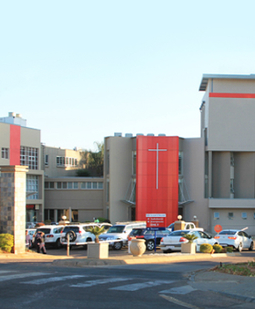
Life Healthcare is a leading private hospital operator in South Africa and primarily serves the market for privately insured individuals, representing approximately eight million people. The group provides mainly acute care, high technology private hospital services.
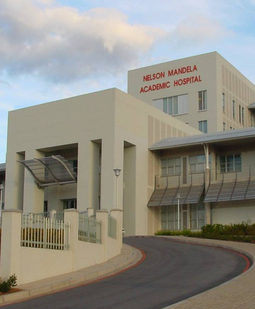
Nelson Mandela Academic Hospital is a large Provincial government funded hospital situated in central Mthatha in South Africa. It is a tertiary teaching hospital and forms part of the Mthatha Hospital Complex.
The extensive hospital network includes 64 hospitals (of which 57 are majority owned by Life Healthcare and another seven in which the group holds substantial minority ownership), providing a range of healthcare services throughout South Africa.
What is Thyroidectomy?
Thyroidectomy is a surgery performed to remove the thyroid gland. The thyroid gland is located over the trachea, below the larynx. It is an endocrine gland of the body that secretes its products and hormones into the blood. Total thyroidectomy is the removal of the whole gland, while partial or subtotal thyroidectomy is the removal of a portion of the thyroid gland.
Thyroidectomy is performed to remove tumor from the thyroid gland or it is done to cut an enlarged thyroid gland that has resulted in a goiter. It is also performed on patients with hyperthyroidism, which is over production of the thyroid hormone.
How is a Thyroidectomy performed?
Once the patient receives anesthesia, a tube is placed in the windpipe to provide air to the patient during the operation. A surgical incision in made in the neck over the thyroid gland. The surgeon takes utmost care not to injure any gland and nerves while removing the thyroid gland. Then, the blood supply is clamped to the portion or the whole gland that has been removed. After this, a part or the entire thyroid gland is removed. A catheter may be placed in the surgical area to drain blood and tissue fluids. This will be removed in a couple of days. The incision is then closed and dressing is applied to the surgical area.
How to prepare for a Thyroidectomy?
Before a thyroidectomy, different kinds of test and examination are conducted on the patient to find out about the thyroid disease. These are as follows:
Tests to determine the active thyroid hormone levels in the body
Blood test to measure the TSH hormone level in the blood
Sonogram
CT scan
Needle biopsy
Usage of nuclear medicine to evaluate thyroid function (This is not a routine test)
Patients may be required to take thyroid medication 1 to 2 weeks before the surgery.
Patients who are suffering from hyperthyroidism may be required to take anti-thyroid medication.
Patients may be required to stop certain medication a week before the procedure if it is advised by the doctor.
Patients should inform the doctor about health and medical conditions such as pregnancy or heart disease
Patients should stop smoking some weeks prior to the surgery to avoid healing problems.
About Thyroidectomy
Key facts to plan your treatment: how long it takes, your hospital stay, anaesthesia, risks and recovery.
Duration of surgery/treatment
Approximately 4 hours if the entire thyroid is removed. Lesser time is taken if only a part of the thyroid is removed.
Days admitted
1 to 4 days
Anesthesia
General Anesthesia
Recovery
- After the surgery the patient’s calcium levels are checked.
- Most patients are required to take thyroid hormone replacement pills for a live long period.
- Patients will suffer pain and some difficulty while swallowing. The voice may be hoarse for a week after the surgery.
- Patients may be given exercises by a speech pathologist to strengthen the vocal cords.
- After the surgery the patient’s meals may be planned by a dietitian for a few days.
- The doctor may prescribe pain medication.
- The doctor will schedule follow-up visits for 2 to 4 weeks.
Risks
The possible risks of a thyroidectomy include:
- Risks of anesthesia
- Bleeding
- Infection
- Injury and paralysis of the vocal cord
- Injury to the parathyroid glands that will cause low calcium levels
- Breathing difficulty
- Airway obstruction
After care
- The patient is required to take plenty of rest, and should only eat soft solid foods and liquids during the first few days after the surgery.
- The diet should consist of plenty of high fiber food and water.
- Strenuous activities should be avoided for a week after the surgery.
- The patient can indulge in normal activities in a few weeks after the surgery.
- Thyroid cancer patients may be required to have radioactive iodine treatment.
- While sleeping, the patient’s head should be kept raised for a week after the surgery.
- The medications should be taking according to the doctor’s instructions.
- Dry cold compression may be applied to the surgical site.
- Good care should be taken of the drain surgical dressings.
- The surgical wound should be cleaned and dressed twice a day according to the doctor’s instructions.
The doctor should be informed if the patient has the following symptoms:
- Redness, swelling, and infection to the surgical incision
- Bleeding from the incision
- Fever
- Chest pain
- Eating difficulty
- Coughing
- Numbness and itchiness on the face or lips
- Weak voice

 Hospital Group