Key planning information for tympanoplasty in Spain.
$3,600 fromLowest listed price
2–3 hrsProcedure time
14 hospitalsList tympanoplasty
Tympanoplasty in Spain is listed from US$3,600 to US$4,700 at 14 hospitals. The operation takes 2 to 3 hours. Each hospital quotes its own price for your case.
Prices last updated Sep 2020
Cost of Tympanoplasty in Spain
Table of prices by type of procedure, in US$. Each hospital quotes its own price for your case.
Procedure
Minimum price
Maximum price
Tympanoplasty
$3,600
$4,700
Price starting from $3,600 up to $4,700 · last updated Sep 2020.Final prices are quoted by each hospital
Hospitals and clinics offering Tympanoplasty in Spain
Tympanoplasty is listed by 14 hospitals in Spain. The order reshuffles every hour so each gets equal exposure.
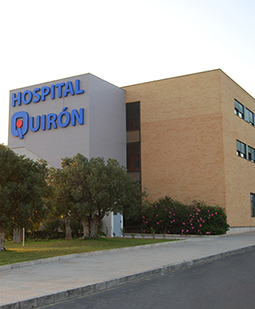
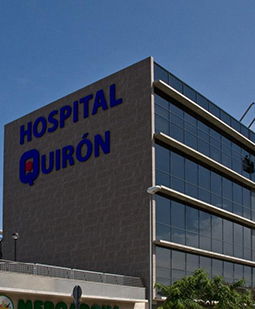
With more than 36 medical specialties, 200 physicians and surgeons of the highest level, Quironsalud Hospital Malaga is one of the most pertinent hospitals in Spain.
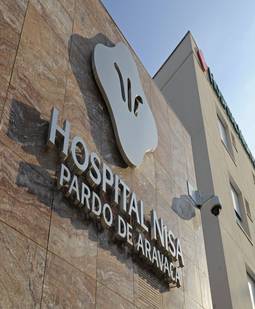
A modern (opened in 2007), general, private hospital located in Madrid, part of the NISA group of hospitals. The international patients department can assist patients with accomodation and trasportation, and can communicate in English as well as in Spanish.
Quironsalud Hospital Torrevieja is an ISO-certified private hospital located in the north of Torrevieja, championing excellence in cancer treatment and management. IMTJ Best International Hospital of the world (awards 2017)
Hospital Ruber Internacional Otolaryngology (ENT) provides world-class care for diseases related to auditory function, speech and swallowing behavior, taste and oral pain syndromes, progression of sinonasal inflammatory disease and head and neck cancer.
The physicians in the ENT Department are highly trained physicians and surgeons who offer a wide range of services related to conditions of the head and neck.
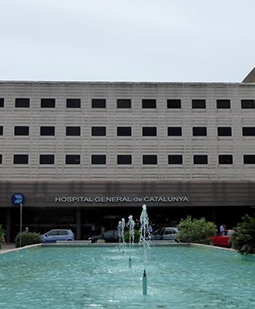
Hospital General de Catalunya is an independent super specialty institute that is renowned for its quality surgical procedures. Our ear, throat and nose specialists have vast experience in the treatment of a variety of disorders.
An ISO certified modern private hospital, which was opened in 2006, and is part of the Quironsalud Hospital Group. This tertiary care hospital has certified medical specialties capable of treating the most complicated medical cases.
This international hospital incorporates prestigious doctors, invests in research and development, technology and continuing education that enhances skills, in facilities, and in an increased operational efficiency in order to provide nothing but the best
The SJD Barcelona Children's Hospital's Otorhinolaryngology (ENT) department has highly specialised professionals in the different childhood disorders affecting the ear nose and throat.
What is Tympanoplasty?
Tympanoplasty, also known as eardrum repair, is a surgical procedure that repairs the perforated eardrum, named tympanic membrane. Tympanoplasty aids in restoring normal hearing that may have been damaged due to chronic infection or injury to the eardrum.
Depending on the requirement, tympanoplasty may also involve ossiculoplasty (reconstructing the bones located at the back of the tympanic membrane).
What are the different types of Tympanoplasty?
Type I Tympanoplasty
This procedure is named myringoplasty, and involves repairing only the perforated eardrum by grafting.
Type II Tympanoplasty
This procedure involves repairing the perforated tympanic membrane that has malleus erosion with grafting on top of the incus or remnants of the malleus.
Type III Tympanoplasty
Involves destroying two ossicles by keeping the states undamaged and movable. Grafting is done on top of the stapes to provide protection.
Type IV Tympanoplasty
This procedure involves ossicular destruction along with partial or complete stapes arch. Grafting is done on top of or around a movable footplate of the stapes.
Type V Tympanoplasty
This is performed when the footplate of the stapes is immovable.
How is Tympanoplasty Performed?
An incision is made in the ear canal.
The residual eardrum is lifted away and forward of the ear canal.
An operating microscope is used to magnify the view of the structures inside the ear.
In case of very large perforations or those that are too far to be viewed, an incision is made behind the ear.
The remaining parts of the perforated eardrum are turned forward and the bones are examined.
Any scar tissue is removed with laser or by using micro hooks.
The tissues from behind the ear, the tragus or a vein are taken.
The graft tissues are then thinned out and dried.
A gelatin sponge that is absorbable is positioned beneath the eardrum to hold the graft.
The graft is put in beneath the remaining parts of the eardrum, which is folded black to close the perforation.
To stop it from coming out of the ear when the patient sneezes, the sheeting that is placed on the graft is made very thin.
If the incision is made behind the ear, it is then closed with dissolvable stitches, and a sterile patch is place outside the ear canal.
How to prepare for Tympanoplasty?
The patient’s ear is fully examined using various diagnostic tests including audiogram, hearing loss history, facial weakness and vertigo.
A microscopic examination of the ear is also done.
Otoscopy is performed to examine the mobility of the tympanic membrane and the malleus.
If the patient has a history of dizziness or minor eardrum perforation, a fistula test is done.
Blood and urine tests are conducted.
Any condition that is affecting the other ear, throat or nose is first treated prior to tympanoplasty.
The doctor should be informed if the patient suffers from any allergies or illnesses.
Certain medication that the patient is taking may need to be stopped, including herbs and vitamins.
If the patient needs to take medication, it can be taken with a small sip of water.
About Tympanoplasty
Key facts to plan your treatment: how long it takes, your hospital stay, anaesthesia, risks and recovery.
Duration of surgery/treatment
2 to 3 hours
Anesthesia
Local or general anesthesia is used, depending on the type of tympanoplasty.
Recovery
- The patient may experience a pulsing sensation or hear a popping sound or other strange sounds after the surgery.
- The patient may feel sharp pains and feel as if the ear is filled with liquid after the surgery.
- Pain medication and antibiotics are provided.
- The patient can go home after two to three hours of the surgery.
- 10 days after the surgery, the packing is taken off and the ear is examined to check the graft.
- Usually patients resume work and normal activities after five or six days.
- Patients who perform strenuous physical labor need to wait for two to three weeks.
- The complete packing is entirely removed after three weeks and the success of the graft is then determined.
- A complete hearing examination is conducted four to six weeks after tympanoplasty.
Risks
- Bleeding
- Infection
- Difficulty in breathing
- Adverse reactions to medications
- Injury to the facial nerve or nerves affecting the sense of taste
- Middle ear bones damage leading to loss of hearing
- Vertigo or dizziness
- Incomplete repair of the eardrum perforation
- Loss of graft
- Graft healing failure causing repeated eardrum perforation
- Ear canal stenosis
- Worsening of hearing or loss of hearing
- Tinnitus
After care
- The patient should keep the ear dry and water should not get inside the ear.
- The patient should avoid blowing the nose and care should be taken while sneezing.
- The patient should avoid swimming and air travel.
- Any ear drainage should be wiped off carefully and ear drops may need to be applied during the first week of recovery.
- The patient should stay away from crowded areas and from people with cold symptoms
- Antibiotics and decongestants may be prescribed by the doctor if the patient has a cold or allergies.

 Private Hospital

 JCI
 ISO