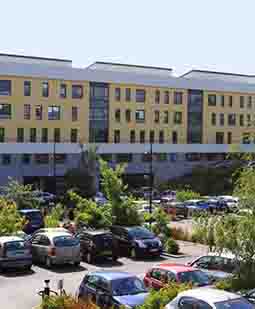
In 2006, the clinic was acquired by an independent group Hexagone Hospitalisation, expanding and doubling its capacity to more than 200 beds.Clinique Ambroise Paré is a leader in chemotherapy, dialysis and In-Vitro Fertilization and is the first private facility
CHP Saint-Grégoire (Saint Gregory Private Hospital), the first Breton hospital in France specializing in Surgery, was established in 2004 when three medical facilities -- Saint Vincent Clinic, Volney Polyclinic, Bréquigny Maternity -- merged into a single site.
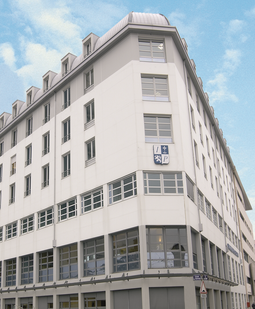
Orthopedic Surgery in Lyon - Clinic of the Protestant Infirmary The Orthopedic Surgery and Traumatology is a function surgery (walk, run, play sports, use his hand ...). It seeks to restore the best possible function when an accident or illness come to deteriorate.
This procedure is used to restore function in joints of the body. This procedure may involve the use of an artificial bone, known as prosthesis or by resurfacing the bones that make up that joint. Many illnesses are responsible for the need to get knee arthroplasty. For instance, degenerative joint disease and some types of arthritis may cause the knee cartilage or joint cushion to get worn out. These are most common reasons that necessitate this type of surgery.
How it is diagnosed
Before one can go for this procedure, a proper diagnosis is conducted to ensure that it is necessary. The most common symptom is painful joint. This includes aches that occur even when one is asleep. The joints will be noticeably stiff in such an instance. In order for a proper diagnosis to occur, the physician will ask about physical ability such as distance walked. Swelling of the joints will also be considered when making the decision. In some cases, potential patients will experience sudden giveaway of the joints, especially in the knees and hips.
The tests conducted are:
Imaging of the affected joints using Cat Scans, MRI and use of a bone densitometry that is used to assess the loss of bone density in the affected joints.
Cardiac studies to assess the circulatory and heart system
Blood tests to confirm arthritis and rule out an infection
Use of X-rays to determine how much joint space has been lost
About Joint Replacement
Key facts to plan your treatment: how long it takes, your hospital stay, anaesthesia, risks and recovery.
Days admitted
The patient is discharged from hospital after about 10 days in the hospital. Before discharge, the patient has to demonstrate the ability to flex the knee to 90 degrees. There should be no complications and he/she should continue to receive care at home. If any of this is not fulfilled the patient may have to stay longer.
Recovery
The after care will depend on the health care system. In most cases, one will be required to make regular visits to hospital after 6 weeks, then 3 months, a year, five years and ten years. However, this follow-up also depends on how intensive the arthroplasty was. Sometimes, there is no need for follow-up after three months.
Risks
The major threat after surgery is an infection. It can complicate the entire recovery procedure. The patient needs to stay clean and avoid contaminating the unhealed incision points. In addition, the area is examined regularly to determine if there are signs of an infection. Corrective measures should be taken immediately. Other risks are: arthrofibrosis, neurovascular problems, patellofemoral problems, periprosthetic fracturing, aseptic loosening
After care
The patient will be kept under intensive watch to ensure that he/she do not experience complications. This will take place in a high dependency room. At this time, the patient undergoes cryotherapy to prevent the knee from getting swollen.
The patient has to undergo very light knee movement, sometimes with the aid of a machine, which is done under the doctor’s supervision. A physiotherapist will be present until the patient is discharged. Before leaving the hospital, the patient is told to attempt light walking on the second day after the surgery.

 Private Hospital