How is chemotherapy provided?
Chemotherapy may be provided along with radiation therapy. Sometimes chemotherapy may be given before or after radiation therapy.
It is usually provided in cycles of days or weeks. There will also be a gap of many days, weeks or months between these cycles during which chemotherapy is not provided. During the gap, the body will produce new healthy cells.
Where is the chemotherapy provided?
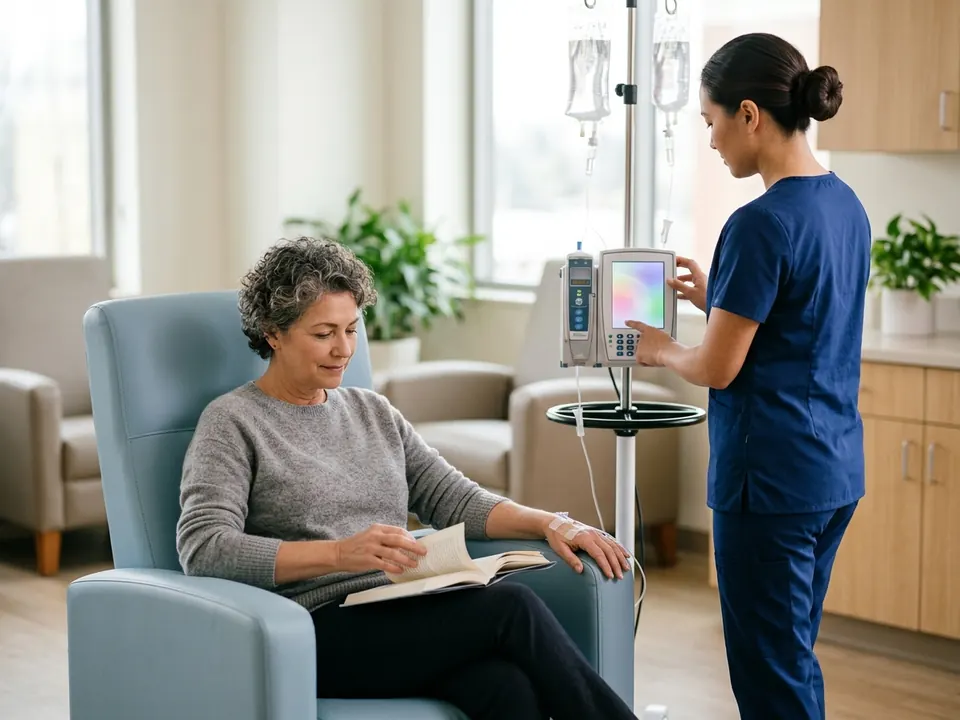
Usually, the patient will receive chemotherapy in a hospital or a clinic.
Sometimes it may be provided in the patient’s home after the patient’s caretakers or family members are trained adequately to administer the chemotherapy.
Methods of administering chemotherapy:
The method by which chemotherapy is given varies according to the type and location of the cancer.
The ways in which chemotherapy can be given are as follows:
- Injection: The chemotherapy is given by an injection in the patient’s arm, thigh, hip or leg.
- Intra-arterial (IA): The chemotherapy is given straight into the artery that is connected to the cancer.
- Intra-peritoneal (IP): The chemotherapy is given straight into the peritoneal cavity affected by the cancer.
- Intravenous (IV): The chemotherapy is given straight into a vein.
- Percutaneously Inserted Central Catheter (PICC): A thin catheter is placed inside a vein close to the heart of the patient with a minor surgery. The chemotherapy is given through the catheter. PICC is used when patients require chemotherapy for a long period.
- Topically: The chemotherapy is provided in the form of a cream that is applied on the skin.
- Orally: The chemotherapy is given in the form of pills, capsules or liquids that needs to be taken orally.
Number of sessions required:
The number of chemotherapy sessions that are required depends on:
- The cancer type and stage.
- The purpose of the chemotherapy, for example whether the chemotherapy is intended to cure the cancer or to control its growth.
- The way in which the chemotherapy is being provided to the patient.
- How well the body reacts to the chemotherapy. If the patient’s body reacts well, the number of sessions may be lesser.
Side effects of chemotherapy:
The side effects depend on the patient’s cancer type and the kind of drugs that are being used for the chemotherapy.
Possible side effects include:
- Myelosuppression, which is decrease in the production of blood cells, which also causes immunosuppression
- Mucositis, which is the inflammation of the digestive tract lining
- Hair loss
- Infections
- Bleeding frequently
- Pain due to damaged nerves
- Mouth sores
- Poor appetite
- Weight loss
- Diarrhea and vomiting
 University Hospital
 ISOPrice on request



 JCI