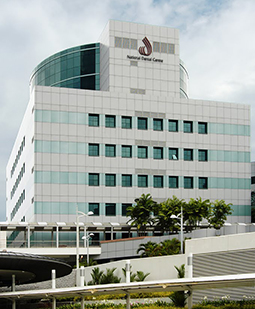
 Dental Center
Singapore
 ISO
An institution providing full dental services from professionals in the field, purposing as a research and learning centre as well.
PricesDental Braces upon request
Price
Contact for quote
Dental Care care in Singapore
Details of dental clinics and medical centers in Singapore performing Dental Braces.

Key planning information for dental braces in Singapore.
Dental Braces in Singapore is listed from US$2,100 to US$3,400 at 7 hospitals. Each hospital quotes its own price for your case.
Table of prices by type of procedure, in US$. Each hospital quotes its own price for your case.
| Procedure | Minimum price | Maximum price |
|---|---|---|
| Dental Braces | $2,100 | $3,400 |
Dental Braces is listed by 7 hospitals in Singapore. The order reshuffles every hour so each gets equal exposure.
Dental CenterAn institution providing full dental services from professionals in the field, purposing as a research and learning centre as well.
 Private Hospital
 JCIPrice on request
Mount Elizabeth Dental Surgery Pte Ltd is Multi-speciality dental practice. It was established at Mount Elizabeth Medical Centre since 1986. All specialists are experienced and certified dental specialists by the Singapore Dental Council, and Ministry of Health.
 Private Hospital
A full service private hospital offering a comprehensive range of specialist services by a team of 200 physicians. 35-40% of the patients are foreigners, and there is a dedicated department for handling medical tourists.
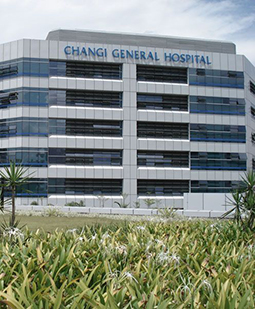 Public Hospital
A major hospital in the eastern side of Singapore, with a capacity of 790 beds and facilities to accommodate outpatients likewise.
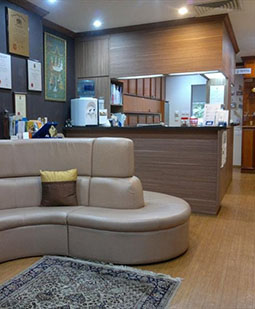 Dental Clinic
A dental care centre offering full mouth reconstructive procedures through the expertise of Dr. Juliet Tay.
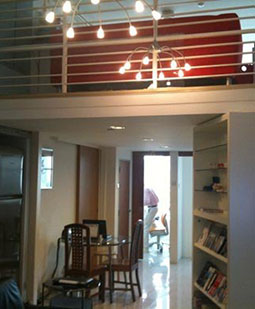 Dental Clinic
Your wellbeing is our priority. Our clinic is homely, friendly, state of the art equipment, infection control benchmarked against EU directive and focused on patient needs.
 Dental Clinic
A dental care facility offering a comprehensive range of dental services thru a team of dental specialists and surgeons.
Orthodontic Metal Braces
Orthodontic metal braces or dental braces are the fixed appliances used to correct malocclusion and to straighten the teeth. They are used for the correction of occlusal discrepancies like open bite, over bite, over jet, cross bite, crooked teeth and various other malocclusions.
Metal braces are silver or gold in color and have two components:
· Brackets: these are bonded to teeth
· Arch wire: this is threaded through each of the brackets and acts as a guide to align all the teeth in their proper position.
Metal braces or brackets are very strong and are most commonly made of stainless steel, which can withstand any type of orthodontic technique. Orthodontic braces have evolved and improved over the years and modern metal braces are less intrusive and more comfortable than the traditional bands and brackets. They have a low profile design which is far less irritating to the lips and mouth.
Orthodontic metal braces exert pressure over the teeth by means of an arch wire which moves the teeth to align them in their proper position. Braces and arch wire provide constant gentle pressure on the teeth in order to correct the malocclusion. The pressure applied should be gentle and the tooth movement should be slow.
Most of the traditional metal braces require a ligature wire or elastic o- shaped rubber bands to secure the wire to the brackets. However, there are self-ligating braces which work with self-ligation technology to hold the arch wire.
How many visits to the dentist are required?
The number of sessions required for orthodontic treatment depends on the severity of the case. If there is not enough space for the proper alignment of the teeth, the dentist may extract teeth so as to create the required space. In such cases, the number of sessions may increase as the teeth are extracted followed by healing of the soft tissue. Otherwise, the placement of the metal braces is usually completed in two to three sessions.
In the first session, the dentist will place separators in the molar areas of the upper and lower teeth in order to create space to receive the bands. The patient is then asked to come back after a week and during the next session brackets are bonded to the surface of the teeth and arch wire is secured in position. Arch wire puts pressure over the brackets and the teeth which compresses the periodontal ligament on one side and stretches on the other causing bone remodeling. The patient visits the dentist every 3-4 weeks throughout the entire treatment period to get the arch wire adjusted.
How long does the entire process take?
Metal braces are usually worn for at least two and a half years.
What type of dentist performs the procedure?
Dental braces are placed by orthodontists who are specialists in the field. It is a sensitive technique and therefore a general dentist cannot perform this treatment.
Taking care of oral hygiene during the process
With the bands, brackets and arch wire on the teeth surface, it becomes difficult to clean the teeth properly. There are special tooth brushes designed for cleaning around bracket areas. You need to pay extra care to maintaining good oral hygiene and avoid food deposition or plaque accumulation around the braces.
Risks
- Irritation to lips and oral mucosa
- Irritation to gums
- Decalcification around brackets and arch wire
- Tooth decay
- Inability to clean the teeth surface leading to poor oral hygiene
- Tooth pain
- Increased mobility of teeth due to greater pressure applied
- Relapse of the condition
- Breaking of the braces
Aftercare
Your dentist may provide you with a retentive appliance to be worn after the braces are removed, to rule out the reversal of the condition. This retentive appliance should be worn for a period of one year.
Key facts to plan your treatment: how long it takes, your hospital stay, anaesthesia, risks and recovery.
Common questions
Have a question? Get a free consultation.
Choose a hospital and send your enquiry to its international patient team. Each replies with its own price and plan.
Free consultation • No obligation