A modern 100 bed hospital opened in 2008, located in Gurgaon, outside of New Delhi.The hospital is a part of the Columbia Asia Group, which has an international patients office able to assist foreign patients with all aspects of medical travel.
The team of surgeons possesses extremely competent skills across all forms of surgical treatment with conventional and advanced laparoscopy methods for patients who require abdominal operations.
The primary goal of the Institutes of Medical and Surgical Gastroenterology is to prevent, diagnose and treat disorders of the digestive tract, liver and pancreatico-biliary system in children and adults.
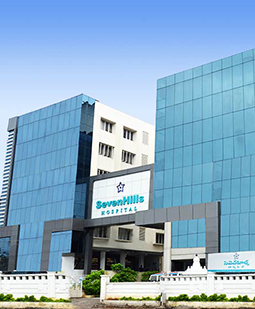
SevenHills Group of Hospitals (SHHL) has been delivering Healthcare services at the highest level, since past 25 years. SevenHills Hospital, Mumbai, is a world class integrated Healthcare Delivery System, that provides comprehensive Healthcare...
Endoscopic retrograde cholangiopancreatography (ERCP) is a medical procedure that combines x-rays and upper gastrointestinal (GI) endoscopy to treat diseases and disorders of the bile and pancreatic ducts.
What are the bile and pancreatic ducts?
Bile ducts are tubes which transport bile from the liver to the gallbladder and duodenum. Pancreatic ducts are tubes which transport pancreatic juice from the pancreas to the duodenum. Small pancreatic ducts join to a main pancreatic duct. The common bile duct and main pancreatic duct join and empty into the duodenum.
Why use ERCP?
ERCP is used to treat diseases and disorders of the bile and pancreatic ducts. If the doctor wants a diagnosis only, they usually opt for noninvasive tests such as magnetic resonance cholangiopancreatography (MRCP). This is a type of magnetic resonance imaging (MRI) that is safer and can also be used to diagnose various problems of the bile and pancreatic ducts.
Conditions treated using ERCP include:
Infection
Gallstones stuck in the common bile duct
Acute and chronic pancreatitis
Pancreatic pseudocysts
Trauma of the bile or pancreatic ducts
Tumors or cancer of the pancreas
Tumors or cancer of the bile ducts
How is ERCP performed?
The procedure can be performed at an outpatient center or hospital. It usually lasts between 1 to 2 hours. A sedative is given through an intravenous needle which is placed in your arm. The sedative will keep you relaxed during the procedure. You will be given a liquid anesthetic to gargle or spray at the back of your throat. This numbs the throat and prevents gagging as the procedure is performed. In some cases, general anesthesia is used.
As you lie on the examination table the doctor feeds the endoscope carefully down your esophagus, through the stomach, and into the duodenum. A small camera at the endoscope’s end sends images to a monitor. The endoscope also pumps air into the duodenum and stomach making it easier to see.
The openings of the bile and pancreatic ducts into the duodenum are located. A catheter is then placed through the endoscope and into the ducts. A contrast medium is them injected into the ducts through the catheter to make the ducts visible on X-rays. The doctor then uses fluoroscopy (an x-ray imaging technique) to examine the ducts and find blockages or narrowed areas.
The doctor may pass tiny tools via the endoscope to:
Remove or break up stones
Open narrowed or blocked ducts
Perform a biopsy or remove tumors in the ducts
Insert stents to hold the ducts open
About ERCP
Key facts to plan your treatment: how long it takes, your hospital stay, anaesthesia, risks and recovery.
Recovery
Information coming soon. Request a consultation for personalized recovery guidance. Get Quote →
Risks
Infection of the gallbladder
Infection of the bile ducts
Pancreatitis
Hemorrhage
Tissue damage from exposure to x rays
Abnormal reaction to the sedative such as respiratory or cardiac problems
Perforation in the bile ducts, pancreatic ducts or in the duodenum
Death
After care
You can leave the outpatient center 1-2 hours after the procedure. In some cases, you may need to stay overnight at the hospital. A sore throat, bloating and nausea are expected after the procedure, but do not last for long. Once your swallowing has returned to normal you can resume your normal diet.

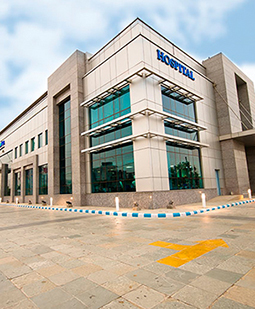 Private Hospital


 JCI
 ISO