Key planning information for gastrectomy in Singapore.
1–3 hrsProcedure time
7–10 daysHospital stay
4 hospitalsList gastrectomy
Gastrectomy in Singapore is priced per case at 4 hospitals. The operation takes 1 to 3 hours, with 7 to 10 days in hospital. Each hospital quotes its own price for your case.
Hospitals and clinics offering Gastrectomy in Singapore
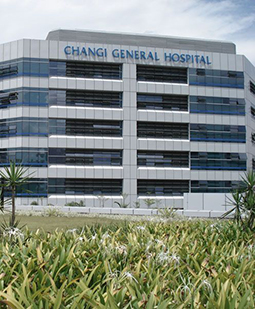
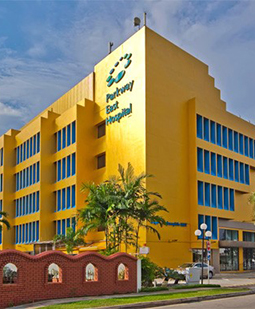
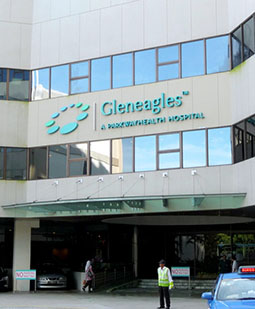
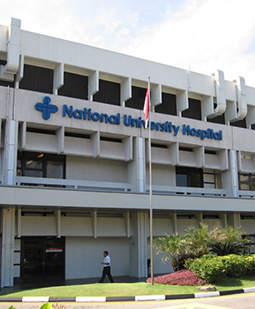
Gastrectomy is listed by 4 hospitals in Singapore. The order reshuffles every hour so each gets equal exposure.
A 928 bed teaching hospital offering a full range of medical, surgical and diagnostic services. NUH serves as a refferal center for cancer patients, pediatrics, cardiology and other specialties.
What is Gastrectomy?
Gastrectomy is a surgery to remove a portion or the entire stomach. Gastrectomy is performed to treat cancer, non-cancerous tumors, and bleeding and inflammation of the stomach due to ulcers.
For the surgery, a urinary catheter is used to monitor urine output. A nasogastric tube is inserted from the nose to the stomach, and an antiseptic solution is used to clean the abdomen.
The surgery is performed by making a cut in the abdomen, and a portion or the entire stomach is removed depending on the cause of the surgery.
What are the different types of Gastrectomy?
The different types of Gastrectomy are as follows:
Partial Gastrectomy
In partial gastrectomy, only a part of the stomach is removed depending on the ailment. The small intestine may be required to be re-attached to the remaining stomach.
Total Gastrectomy
In total gastrectomy, the whole stomach is removed depending upon the ailment. The small intestine may need to be connected to the esophagus.
Traditional Open Surgery
Traditional open surgery is usually the method by which gastrectomy is performed. A large incision is made in the abdomen just below the breast bone to the navel to conduct the surgery.
Laparoscopic Surgery
In a laparoscopic surgery a small incision is made through which a laparoscope is inserted. A tiny video camera is attached to the laparoscope that makes it possible for the surgeon to view the abdominal contents on a monitor. The surgery is performed through the small incision. However, this type of surgery is limited because it can only treat patients with early gastric cancer or for surgeries that are performed to relieve pain rather than fully cure the disease.
What are the preoperative preparations?
The patient needs to undergo some tests prior to the surgery which may include:
X-ray
CT scan
Ultrasound
Urinalysis
Blood test
Electrocardiography
Some medications that the patient may be taking are discontinued many days before the surgery.
There are some medications that should be avoided a week before the surgery.
The stomach should be empty before the surgery to prevent vomiting.
Patients should stop eating solid or liquid food since the night before the surgery.
About Gastrectomy
Key facts to plan your treatment: how long it takes, your hospital stay, anaesthesia, risks and recovery.
Duration of surgery/treatment
1 to 3 hours
Days admitted
7-10 days
Anesthesia
General anesthesia
Recovery
After the surgery, the patient is taken to the post-anesthesia care unit to be closely monitored until the anesthesia wears out. The patient is not allowed to eat or drink immediately after a surgery. Oxygen is given through a mask or nasal prongs. The intravenous line, urinary catheter and nasogastric tube remain attached to the patient. Pain medicine is provided intravenously. The nasograstric tube that keeps the stomach empty is kept attached to the patient until bowel functions return, which indicates healing. This takes 2 to 3 days.
The urinary catheter is removed 1 or 2 days after food and liquids are taken by the patient.
The process of recovery is gradual. Full recovery may take several weeks or a few months.
Risks
The complications that arise may be due to the problems adapting to a changed digestive tract. Dumping syndrome occurs when food and fluids pass directly to the small intestine that causes:
- Cramping
- Diarrhea
- Dizziness
- Nausea and vomiting
- Shortness of breath
- Sweating
Other possible risks are:
- Bleeding
- Infection
- Risks of anesthesia like breathing problem and unfavorable reaction to medication
After care
- Postoperative complications can be prevented by getting out of bed and moving around. Movement is required to help in:
o Blood circulation
o Reducing blood clot
o Normalizing bowel function
o Lowering the risk of lung infection
- Prescribed pain medication should be given to the patient to get relief from post surgery pain.
- To get relief from dumping syndromes, the patient needs to eat several small, frequent meals in a day.
- Diet should be higher in protein than carbohydrates.
- The doctor needs to be informed if vomiting and diarrhea worsen.
- Vitamin B12 may be supplemented with regular injections

 Private Hospital
 JCI
 ISO