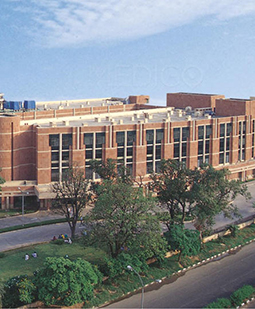
A 200-bed facility located at Gateway Center in Northwest Bangalore. The hospital opened in 2008 and provides comprehensive tertiary-level services, such as cardiac operations, orthopedics and neuroscience, as well as secondary-level medical care.
DoctorsNJDr. Nandakumar JairamMNDr. Mukunda N.K.View all 4
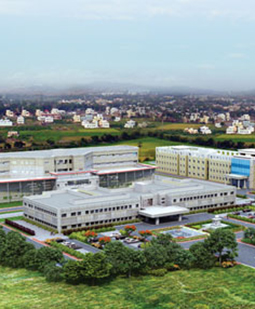
The flagship hospital of the Global Hospitals Group, which operates eight hospitals throughout India. The modern 500 bed hospital was opened in 2009, and offers advanced medical and surgical treatment, including organ transplantation, cardiac surgey and neurosurgy.
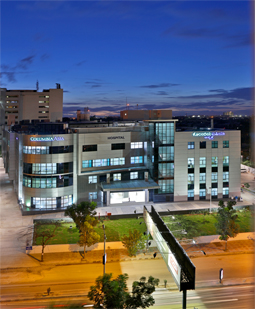
A modern 100 bed hospital opened in 2008, located in Gurgaon, outside of New Delhi.The hospital is a part of the Columbia Asia Group, which has an international patients office able to assist foreign patients with all aspects of medical travel.
Gleneagles Global Hospitals strives to provide quality care and it exceeds patients’ expectations. The treatment provided is accessible, cost-effective and convenient. The hospital is well equipped with a good infrastructure.
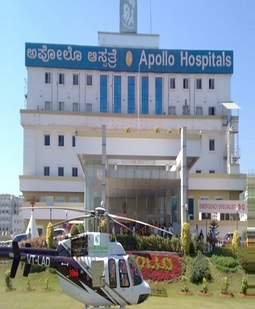
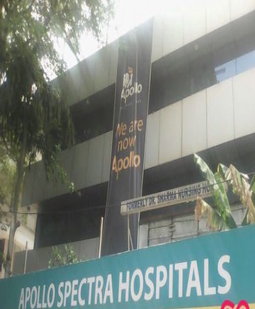
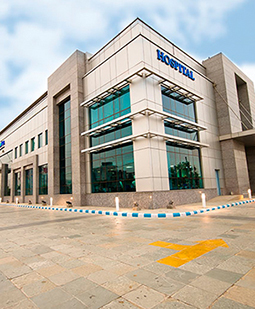
Apollo Bangalore is a modern, JCI accredited, multi-specialty hospital, capable of treating the most complex medical cases, including neurosurgy, bone marrow transplants, oncology and cardiac surgery. Apollo provides a full range of services for foreign patients.
DoctorsDBDr. Deepak BolbandiVSDr. V Sreedhar ReddyView all 6
During TORS, the surgeon uses a sophisticated, computer - enhanced system which displays a magnified, 3 - D view of the surgical area that enables him to visualize the procedure in much greater detail than in a traditional surgery.
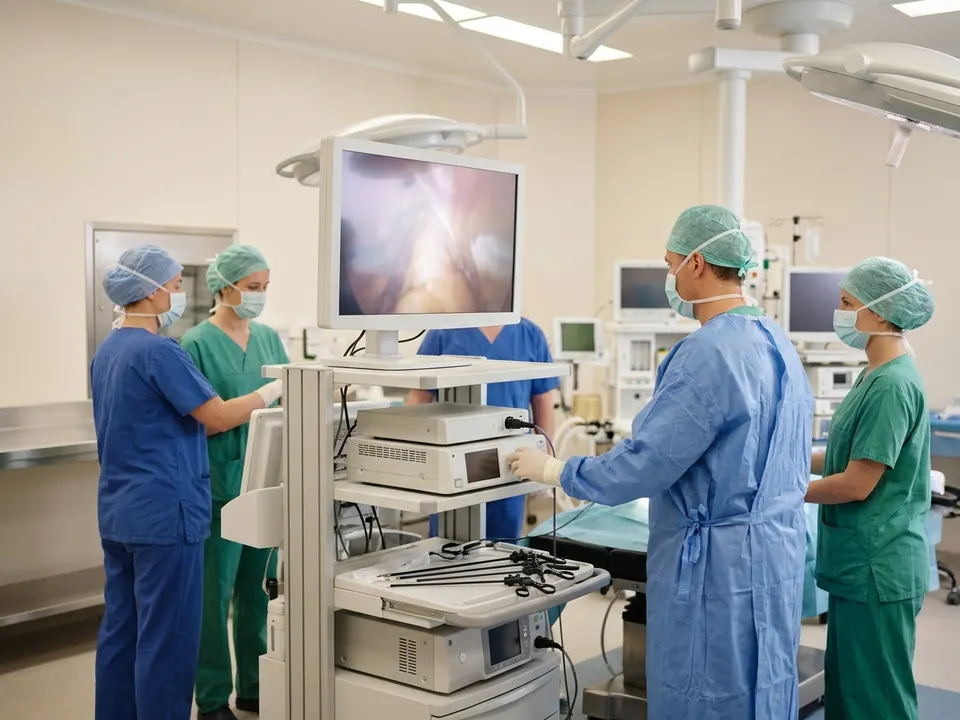
This is a minimally invasive surgical procedure used to examine the abdominal organs using a laparoscope. It does not necessitate large incisions in the skin and allows the doctor to examine the inside of your body without open surgery. A laparoscope is a long thin tube that has a high-resolution camera and high-intensity light attached at the front.
Why Is Laparoscopy Performed?
It is used to identify and diagnose pelvic or abdominal pain. Laparoscopy is usually performed when noninvasive tests such as ultrasound MRI and CT scan don’t provide adequate information for a diagnosis. A biopsy may also be taken during the procedure.
How Is Laparoscopy Performed?
Laparoscopy is usually an outpatient procedure which means that you will be able to go home the same day as your surgery. It can be performed in an outpatient center or a hospital.
You will likely be under general anesthesia which means you will be asleep and will not feel any pain. However, local anesthesia may be used. It numbs the area so that you do not feel any pain although you are awake.
The doctor will make an incision below your navel. Carbon dioxide gas is inserted into the abdomen using a small tube (cannula) which is inserted into the incision. The carbon dioxide inflates your abdomen allowing the doctor to see the abdominal organs clearly. A laparoscope is then inserted through the incision.
You may have up to four incisions made to allow other instruments to be inserted such as when taking a biopsy. After the laparoscopy is complete, the instruments are removed and the incisions closed up with surgical tape or stitches. The doctor may place bandages over the incisions.
You will be under observation for several hours after the procedure before you can be released. Depending on your overall physical condition and the type of anesthesia used you may be released a few hour after the surgery or you may need to stay overnight at the hospital.
Results of Laparoscopy
A pathologist will examine a biopsy if it was taken and send the results to your doctor.
Normal results indicate the absence of hernias, intestinal blockage, and abdominal bleeding.
Normal results also mean that your organs are healthy
Abnormal results indicate certain conditions which include:
Hernias
Appendicitis
Adhesions or surgical scars
Endometriosis
Fibroids
Tumors or cysts
Cholecystitis
Pelvic inflammatory disease
Cancer
Injury or trauma to a particular organ
Your doctor will schedule an appointment after the procedure to go over the results with you. In the case that a serious medical condition was found, he will give you the appropriate treatment.
About Laproscopic Surgery
Key facts to plan your treatment: how long it takes, your hospital stay, anaesthesia, risks and recovery.
Recovery
Information coming soon. Request a consultation for personalized recovery guidance. Get Quote →
Risks
Minor complications include bruising around the incision site, infection, nausea, and vomiting. Serious complications include blood clots, damage to a major artery, damage to an organ, allergic reaction to anesthesia and complications from using the carbon dioxide gas.
After care
It is unsafe to drive immediately after the procedure so you will need to have someone drive you home. The doctor may prescribe medication to relieve any throbbing and pain at the incision sites. You can resume normal activities gradually within a week. A follow-up appointment is usually given for two weeks after the procedure.
 Private Hospital


 JCI
 ISO