Planning treatment in Italy?
Choose a hospital below and send it your enquiry. Its international patient team replies with a price, the doctor's name and a treatment plan.
Free consultation • No obligationWho is already here?
Hospitals and clinics in Italy listed on Health-Tourism.com. The order reshuffles every hour so each gets equal exposure.
 JCI
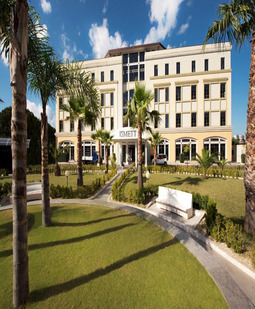


Showing 5 of 5 hospitals and clinics in ItalyMedical Centers in Italy →
About medical tourism in Italy
Italy is undoubtedly one of the most iconic destinations in Europe – from its rich culture and history, and of course, the food; the Mediterranean country boasts impressive sights, sounds, and experiences for both locals and visitors alike. [1] Italian doctors are also known for being highly qualified, adding to the overall level of healthcare provided in the country. [2]
In December 1978, Italy created a national, universal health-care system, called the Servizio Sanitario Nazionale, or simply SSN. The SSN automatically covers all Italian citizens and legal foreign residents. It provides a full range of healthcare services with a free choice of providers. [3]
Italy’s average level of medical care is high in comparison to internal standards. According to the World Health Organization, the Italian healthcare system has ranked 2nd best in terms of worldwide performance, and Italian doctors are typically highly qualified. [1]
Italy's Healthcare System
In the 2000s, WHO recognized Italy as the second in the world in terms of accessibility and medical care efficiency. [4]
Each region is responsible for organization and delivery of health services through local health units and via public and accredited private hospitals. [4]
Public and Private Healthcare
The number of public hospitals and private hospitals accredited with the national health service (Servizio Sanitario Nazionale - SSN) in Italy was equal to 1,048 in 2020. According to the figures, 570 of these hospitals were completely public, while 478 were private hospitals accredited with the Italian NHS. [5]
Private medical facilities in Italy are in excellent condition. While the comfort and quality of service at private hospitals are typically superior to state facilities, the quality of care is likely to be similar. It is also important to note that some treatments at private medical facilities in the country can be costly without the support of private health insurance. [6]
Health Insurance in Italy
EU citizens can use their European Health Insurance Card (EHIC) to access state healthcare during a short-term visit. UK citizens can make use of their Global Health Insurance Card (GHIC), which replaced the EHIC for UK citizens post-Brexit. [7]
JCI Accredited Hospitals/Clinics – Italy
|
JCI ACCREDITED HOSPITALS/CLINICS – ITALY [8]
|
|
|
Hospital Name |
Program |
|
A.p.s.p. Residenza Valle dei Laghi |
Long Term Care Program |
|
Azienda Ospedaliero Universitaria Meyer |
Academic Medical Center Hospital Program |
|
CDI Centro Diagnostico Italiano S.p.a. |
Ambulatory Care Program |
|
Ceinge Biotecnologie Avanzate Scarl |
Laboratory |
|
Centro Chirurgico Toscano Srl |
Hospital Program |
|
COT Cure Ortopediche Traumatologiche S.p.A. |
Hospital Program |
|
European Institute of Oncology (Istituto European di Oncologia) |
Hospital Program |
|
Fondazione CNAO |
Ambulatory Care Program |
|
Hospital Program |
|
|
Fondazione Policlinico Universitario Agostino Gemelli IRCCS |
Academic Medical Center Hospital Program |
|
Academic Medical Center Hospital Program |
|
|
Giannina Gaslini Children's Hospital |
Hospital Program |
|
Humanitas Gavazzeni |
Hospital Program |
|
Humanitas Instituto Clinico Catanese |
Hospital Program |
|
IRCCS Centro San Giovanni di Dio Fatebenefratelli |
Long Term Care Program |
|
Academic Medical Center Hospital Program |
|
|
Istituto Clinico Mater Domini - Casa Di Cura Privata Spa |
Hospital Program |
|
Istituto di Medicina Fisica e Riabilitazione "Gervasutta" |
Long Term Care Program |
|
ISMETT (Istituto Mediterraneo per i Trapianti e le Terapie ad Alta Specializzazione) |
Hospital Program |
|
Ospedale Pediatrico Bambino Gesu |
Academic Medical Center Hospital Program |
|
Presidio Ospedaliero Ospedale dei Bambini |
Academic Medical Center Hospital Program |
|
Santa Chiara Hospital |
Hospital Program |
|
SYNLAB SDN S.P.A. |
Ambulatory Care Program |
|
Ambulatory Care Program |
|
Top Hospitals for Foreign Patients in Italy
There are six popular hospitals in Italy are public hospital and 4 hospitals are private hospitals. [9]
|
Rank |
Hospital |
Score |
City |
|
|
1 |
Policlinico Universitario A. Gemelli |
93.33% |
Private |
Roma |
|
2 |
Grande Ospedale Metropolitano Niguarda |
90.72% |
Public |
Milano |
|
3 |
Policlinico Sant'Orsola-Malpighi |
88.98% |
Public |
Bologna |
|
4 |
Ospedale San Raffaele - Gruppo San Donato |
87.43% |
Private |
Milano |
|
5 |
Istituto Clinico Humanitas |
85.32% |
Private |
Rozzano |
|
6 |
Azienda Ospedaliera di Padova |
79.39% |
Public |
Padova |
|
7 |
Ospedale Borgo Trento |
78.66% |
Private |
Verona |
|
8 |
Ospedale Policlinico San Matteo |
78.02% |
Public |
Pavia |
|
9 |
Ospedale Papa Giovanni XXIII |
77.04% |
Public |
Bergamo |
|
10 |
IRCCS Arcispedale Santa Maria Nuova |
76.42% |
Public |
Reggio Nell'Emilia |
Common Procedures done by Medical Tourists in Italy
· Cosmetic Surgery [10]
· Hair Transplant [10]
· Bariatric Procedures [11]
· Dental Care [11]
Cost of Medical Treatment in Italy
|
Medical Procedures [12] |
||||
|
Procedure |
UK (€) |
USA (€) |
Italy (€) |
Savings |
|
Bariatric Surgery |
||||
|
Gastric Bypass Surgery |
9,035 – 16,940 |
13,870 – 21,270 |
12,000 |
8% – 32% |
|
Sleeve Gastrectomy |
9,035 – 12,730 |
6,865 – 31,020 |
5,625 |
48% – 70% |
|
Cardiology |
||||
|
Radiofrequency Ablation |
30,280 |
54,105 |
8,863 |
71% – 84% |
|
Medical Check-Up |
||||
|
190 – 280 |
325 |
100 |
57% – 69% |
|
|
115 – 277 |
30 – 465 |
135 – 185 |
18% – 35% |
|
|
225 – 340 |
70 – 555 |
20 – 150 |
70% – 73% |
|
|
225 – 340 |
190 – 280 |
165 |
42% – 30% |
|
|
Basic check up |
170 – 490 |
95 – 185 |
28 – 52 |
88% – 71% |
|
310 – 340 |
352 |
190 |
42% – 46% |
|
|
85 – 140 |
20 – 60 |
14 |
88% – 65% |
|
|
Comprehensive examination for women |
457 |
302 |
120 – 230 |
62% – 42% |
|
Comprehensive examination for men |
567 |
65 – 230 |
50 – 95 |
87% – 51% |
|
230 – 345 |
140 – 925 |
80 – 100 |
69% – 83% |
|
|
1,430 |
1,210 |
140 – 250 |
86% – 84% |
|
|
230 – 345 |
100 – 1,050 |
169 |
41% – 71% |
|
Malpractice and Liability Laws in Italy
Misdiagnosis:
Today Italian laws have introduced, both for doctors and medical facilities, a sort of compulsory insurance, which is aimed at compensating damages in case of medical malpractice: as a result, in case of misdiagnosis patients can bring legal proceedings directly against the insurance company, thus having the chance to get compensation faster. [13]
Before taking action for compensation, anyway, it is always recommended to have a medical forensic examination conducted, so as to ascertain the causal link between medical malpractice and damage suffered. Thereafter, once the causal link is as certained, an attempt at conciliation must be carried out. [13]
Compensation for the damage suffered must be claimed within 10 years in case of a civil action. Otherwise, compensation must be claimed within 3 months of becoming aware of the unlawful action, that is within three months of becoming aware that a pathology was determined by misdiagnosis or medical error. [13]
Pros
ü Affordable Prices
Seeking medical care with the public system is very affordable—most procedures and appointments are free-of-charge or subject to a small fee. [14]
ü High Numbers of Staff
The number of doctors per 1000 in habitants is higher than the European average for doctors in Italy when it comes to medical and paramedical personnel. [15]
ü Highly Skilled Professionals
Medical staff and professionals in Italy are highly skilled and trained. [14]
ü High Qualified Health System
According to a study on the effectiveness of health systems, the Italian health system is among the most efficient, despite some short comings, which are also linked to the Decimation of public spending on health. [15],
ü Wide Range of Medical Specialties
Italy has a strong tradition of medical research and innovation, and offers a wide range of medical specialties and treatments. Patients can find specialized care in areas such as orthopedics, cardiology, neurology, and oncology. [16]
ü Access to Advanced Technology and Techniques
Italy is home to many cutting-edge medical facilities and research centers, which can offer access to the latest medical technology and treatment techniques. [16]
ü Good Service Culture
Italy has a culture of hospitality, and this extends to its healthcare industry. Patients can expect friendly and helpful service from medical staff. [16]
ü Great Tourism Infrastructure
Italy is a popular tourist destination, with a rich cultural heritage and beautiful scenery. Patients can enjoy the country's many attractions and experiences while receiving medical treatment. [16]
Cons
û Language
You may have difficulty finding medical professionals in the public healthcare system who speak English or another language other than Italian. It’s not as easy to find English-speaking medical staff unless you’re in larger cities or go private. [17]
û Appointment Hours
Even if you have an appointment at a hospital, you may still have to wait. [17]
û Long Waiting List in State Hospitals
Seeing a specialist in Italy may take months in state hospitals, which can delay both diagnosis and treatments. [17]
û Digitalization of the Healthcare System
They are behind in the digitalization of the health system. (it is hoped that support will be provided for electronic health file, telemedicine, electronic prescription). [15]
û Limited Insurance Coverage
Patients may find that their insurance coverage does not extend to medical treatment received in Italy, which could lead to high out-of-pocket costs. [16]
û Lengthy Travel Time
For those traveling from outside Europe, the lengthy travel time could be a drawback, especially for patients requiring immediate medical attention. [16]
Traveling to Italy
The majority of these arrivals are mainly Arabs, Swiss, Russians and Albanians who are mostly treated for neurology, cardiac surgery, oncology, bariatric surgery, and orthopaedics departments. [18]
Average estimated travel time in hours and kilometres: [19]
|
From/To |
Italy |
|
UK (London) |
2 hours 7 minutes / 1444.74km |
|
Mumbai |
7 hours 45 minutes / 6183.32km |
|
Singapore |
12 hours 20 minutes / 10026.10km |
|
Sydney |
19 hours 49 minutes / 16323.77km |
|
Berlin |
1 hours 48 minutes / 1187.78km |
|
Accra (Ghana) |
5 hours 25 minutes / 4222.74km |
|
Los Angeles |
12 hours 35 minutes / 10234.53km |
|
Stockholm |
2 hours 45 minutes / 1983.46km |
Traveling by Train:
Traveling by train from the city of Rome in Italy to the city of Amsterdam in the Netherlands, the main route passes through France or Germany. For example, from Venice/Milan (Italy) to Paris (France). Or from Rome/Milan/Venice (Italy) to Munich (Germany). [20]
There are two main routes: [21]
1. Roma (Italy)- Munich (Germany) - Amsterdam (Netherlands) [20]
2.Roma (Italy) - Milan (Italy) - Paris (France) - Amsterdam (Netherlands) [20]
Entry and Exit Requirements to Italy
European Countries:
All EU /EEA nationals will only need to present an identification document to enter Italy due to the common travel area of the Schengen Zone, part of which Italy is. [21]
In the meantime, if you are a non-EU/EEA traveller wishing to visit Italy, San Marino or the Vatican, you will need to present the following at the Italian port of entry in order to be permitted to enter: [21]
· A valid passport or travel document. Valid for at least three more months beyond their planned date of Exit from Schengen and issued within the last ten years. [21]
· A visa –if they are subject to the Italian visa regime. [21]
· Proof of sufficient financial means for the period of stay in Italy. The Italian authorities want you to prove you have the necessary financial means to support yourself throughout your stay in Italy. You will need to prove you have the following amount depending on the length of your stay. [21]
· Up to 5 days – The overall amount is 269.60€ per person and 212.81 per two and more persons. [21]
· 6-10 days– The daily amount is 44.93€ per person and 26.33€ per two and more persons. [21]
· 11-20 days – The overall amount is 51.64€ per person and 25.82€ per two and more persons, plus the daily amount is 36.67€ per person and 22.21€ per two and more persons. [21]
· Over 20days – The overall amount is 206.58€ per person and 118.79€ per two and more persons, plus the daily amount is 27.89€ per person and 17.04€ per two and more persons. [21]
Middle East Countries:
An Italian transit visa allows the holder to change their travel vessel in an Italian port in order to continue onward travels to a non-Schengen country. [22]
If you need to change airplanes in an Italian airport, depending on your country, you may need to apply for an Italian Airport Transit Visa, also known as an A-visa. [22]
You need an Airport Transit Visa (ATV) for Italy if you are a national of the following countries: [22]
|
Afghanistan |
Democratic Republic of Congo |
Ethiopia |
Iran |
Nigeria |
Somalia |
Senegal |
|
Bangladesh |
Eritrea |
Ghana |
Iraq |
Pakistan |
Sri Lanka |
Syria |
Asian Countries:
Generally, you will not need a visa to travel to Italy for a period of up to 90 days. Citizens of Australia, New Zealand, USA, Canada, Japan and many other countries can spend 90 days within a 180-day period in the wider Schengen area, including Italy and other countries in the EU. [23]
Citizens of many other nationalities, including China, South Africa and Russia do need to apply for and obtain a Schengen visa before travelling to Italy and the EU. [23]
From UK:
You can travel to countries in the Schengen area for up to 90 days in any 180-day period without a visa. This applies if you travel as a tourist, to visit family or friends, to attend business meetings, cultural or sports events, or for short-term studies or training. [23]
If you are travelling to Italy and other Schengen countries without a visa, make sure your whole visit is within the 90-day limit. Visits to Schengen countries within the previous 180 days before you travel count towards your 90 days. [23]
From US:
Americans must have an entrance visa which should be obtained at an Italian consulate before coming to Italy, in order to remain in Italy more than three months and gain resident status. This procedure will take several weeks to complete so it is advisable to apply well in advance of the departure date. The visa will be granted only for the time indicated on the application. Americans already in Italy without a visa will have to leave Italy to obtain one before they will be able to gain resident status. [24]
From Canada:
ETHICS is a new travel authorisation for the Schengen Area. It will be an entry requirement for Canadian tourists and other short-stay visitors travelling to Italy. [25]
ETIAS is linked to the traveller’s passport and verified at an external Schengen border. The same ETIAS is valid to travel to Italy and other countries in the Schengen zone. [25]
ETIAS is not a visa. It is a travel authorisation similar to the ESTA for the United States. Canadians can continue travelling to Italy short-term without a visa, but they will need to register for ETIAS. [25]
From Australia:
Australians don't need a visa to travel to countries in the Schengen Area for up to 90 days in any 180-day period. Your reason for travel must be for one or more of the reasons below: [26]
· Business Purposes
· Visitin g Friends and Family
· Tourism and Holidays
· Official Visit
· Medical Reasons
· Short-Term Study and Research Purposes
Insights About Italy for Medical Tourists
Recently, Italian hospitals have won the gold seal of quality in the European ranking of hospitals which is awarded by the prestigious Joint Commission International. This commission certifies adherence to 368 safety and standards and quality of care. [27]
A study estimates that worldwide every year 7 million people take a trip for health reasons. Today, Italy represents 17% of the medical tourism in Europe. [27]
In 2019, the Italian Ministry of Health reported that 745,000 foreign patients were treated in Italian hospitals. [28]
According to the Italian National Institute of Statistics (ISTAT), approximately 4 million medical tourists visited Italy in 2019, with the majority of visitors coming from other European countries. [28]
Information Sources:
[1] Travellers Guide to Healthcare in Italy
[2] Ministero degli AffariEsteri e della Cooperazione Internazionale
[3] Italian Healthcare System: Healthcare System in Italy - Servizio Sanitario Nazionale
[4] State of Health in the EU: Italy –Country Health Profile 2021
[5] Number of public hospitals and private hospitals accredited with the NHS in Italy in 2020
[6] Travelers Guide to Healthcare in Italy
[8] JCI Accredited Organisations(Italy)
[9] Newsweek - World's Best Hospitals 2022 (Italy)
[11] Italy: Culture, Cuisine and Quality Care
[12] Common Treatment Costs – Italy
[13] Italy: Compensation For Medical Mistake in Italy: What To Do?
[14] Health Insurance and Healthcare in Italy Explained
[16] "The Pros and Cons of Medical Tourism." U.S. News & World Report, 22 Nov. 2019
[17] Health Insurance and Healthcare in Italy Explained
[18] Health tourism in Italy has a Positive Outlook
[19] How long does it take to get from A to B by plane?
[20] Rome to Amsterdam by train
[21] Italy Visa Application and Entry Requirements
[22] Countries whose Nationals are Subject to the Requirement of an Airport Transit Visa
[23] Do you need a visa for Italy?
[25] Entering Italy from Canada with ETIAS
[26] Visas and entry requirements in Europe and the Schengen Area
[27] Health tourism in Italy has a positive outlook
[28] https://www.euro.who.int/__data/assets/pdf_file/0010/419464/Country-Health-Profile-2019-Italy.pdf
Common questions
Frequently asked questions
Short answers about hospitals, costs, accreditation and booking in Italy.
Have a question? Ask one of the hospitals above.