A modern 100 bed hospital opened in 2008, located in Gurgaon, outside of New Delhi.The hospital is a part of the Columbia Asia Group, which has an international patients office able to assist foreign patients with all aspects of medical travel.
With a 30-year legacy of clinical excellence and the confidence of bringing more than 100,000 babies safely into our world , we indeed have a tradition of serving you from the heart.
DoctorsMSDr. Meenakshi SundaramWSDr. Wahida SureshView all 11
A team of well experienced and trained doctors, surgeons, physicians and technicians are present in the department to provide good care and service to the patients. They provide world-class treatment and bring permanent healing to the patients suffering from gynecological problems.
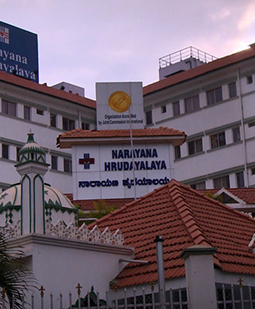
A conglomeration of hospitals in one campus, including: the Sparsh Hospital for Orthopedics & Trauma, the Mazumdar Shaw Cancer Center, the Narayana Hrudayalaya Heart Hospital, the Narayana Nethralaya Eye Hospital, as well as a full fledged multi specialty hospital.
DoctorsPADr. Padmasri AyyagariBSProf. B. Shakuntala BaligaView all 22
The department's mission is to provide the best patient care possible with compassion and understanding; educating tomorrow's physicians so as to provide them the best educational opportunities.
DoctorsAKDr. Anjali KumarSBDr. Sonu BalharaView all 5
SevenHills Group of Hospitals (SHHL) has been delivering Healthcare services at the highest level, since past 25 years. SevenHills Hospital, Mumbai, is a world class integrated Healthcare Delivery System, that provides comprehensive Healthcare...
DoctorsCDDr. Chitwan DubeyKKDr. Krishna Kumar PanickerView all 3
This is a special branch of medicine in obstetrics and gynecology that focuses on training doctors in reproductive medicine that addresses how hormones function in regard to reproduction and infertility.
Who is a reproductive endocrinologist?
These are medical doctors who have specialized training in reproductive medicine in conjunction with hormonal function in relation to infertility and reproduction. They are also k known as reproductive endocrinologist and infertility specialist and diagnose, treat and manage hormonal dysfunctions in males and females outside infertility.
Training
A reproductive endocrinologist has studied for four years in medical school followed by a four-year residency in obstetrics and gynecology. This is followed by a two to three-year fellowship in reproductive endocrinology. The fellowship training is intensive and focuses on the comprehensive understanding of the reproductive system.
What do reproductive endocrinologists treat?
Reproductive endocrinologists treat and manage a number of diseases and conditions that affect the human reproductive system and in turn cause infertility.
Müllerian abnormalities
Polycystic ovarian syndrome (PCOS)
A congenital adrenal hyperplasia
Uterine fibroids
Endometriosis
Male factor infertility
Hypothalamic-pituitary dysfunction
Tubal factor infertility
Congenital uterine anomalies
In vitro fertilization (IVF)
Fertility preservation
Scar tissue and blockages
Reproductive Endocrinology procedures include:
Laparoscopy: This procedure is done under general anesthesia in an outpatient center. A laparoscope is used to view and treat problems with the outer wall of the uterus, fallopian tubes, and ovaries. An incision is made near your navel and a needle is inserted into the abdomen. This procedure generally takes one to two hours but this varies with the extent of the surgery. You may experience some discomfort and pain in the navel and abdomen area for a while.
Risks and Side Effects: Complications from anesthesia, allergic reactions, infection at the wound site, blood clots, bladder infection and puncture of the abdominal organs.
Hysteroscopy: This procedure requires local or general anesthesia and is best done before ovulation and after menstrual periods so as to have a good view of the uterine lining. An instrument called a hysteroscope is used to examine and treat inside the uterine cavity. The procedure will last for one to two hours although this may vary.
Risks and Side Effects: Discharge, cramping, difficulty breathing, perforation of the uterine lining, blood clots, allergic reaction, and hemorrhage.
Laparotomy: This procedure is performed in the hospital under general anesthesia. An incision is made above the pubic bone and the doctor examines and removes any scar tissue, growths or obstructions. This will take one to three hours
Risks and Side Effects: Blood clots, nerve damage, infections near the wound site, bladder infection, complications from anesthesia, puncture of abdominal organs.
Myomectomy: This procedure is done under general anesthesia to remove uterine fibroids or the whole uterus. The location and number of fibroids determine the length of the surgery. You will need to be admitted to the hospital.
Risks and Side Effects: blood clots in the abdomen, pelvic or abdominal infections, skin infections near the incision, allergic reactions, nerve damage, bladder infection, complications from anesthesia, puncture of the bowel, blood vessels, bladder and other organs
About Reproductive Endocrinology
Key facts to plan your treatment: how long it takes, your hospital stay, anaesthesia, risks and recovery.
Recovery
Information coming soon. Request a consultation for personalized recovery guidance. Get Quote →
After care
Information coming soon. Request a consultation for personalized recovery guidance. Get Quote →

 Private Hospital

 JCI
 ISO