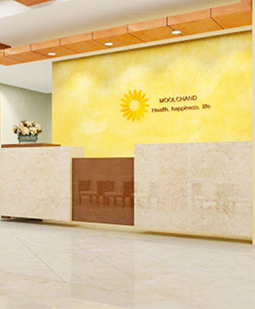
 Trust Hospital
New Delhi, India
 JCI
 ISO
Trust based hospital that treats around 7,000 international patients a year. India's first JCI and comprehensive NABH accredited hospital.
Parkinson's Disease is treated at
Price
Contact for quote
Stem Cell Therapy care in India
Hospitals and medical centers in India performing Stem Cell Therapy for Parkinson's Disease.

Key planning information for parkinson's disease stem cell therapy in India.
Parkinson's Disease Stem Cell Therapy in India is priced per case at 1 hospital. Each hospital quotes its own price for your case.
Parkinson's Disease Stem Cell Therapy is listed by 1 hospital in India. The order reshuffles every hour so each gets equal exposure.
Trust HospitalTrust based hospital that treats around 7,000 international patients a year. India's first JCI and comprehensive NABH accredited hospital.
Parkinson's Disease is treated at
This is a disease that affects people who do not have enough dopamine in their body. Dopamine is a chemical that permits messages to be sent to the part of the brain which controls movement and some form of thinking.
Parkinson’s disease targets and destroys neurons and nerve cells which produce dopamine. The disease also affects other areas of the brain which accounts for associated problems such as thinking, sleep, and motivation.
As the dopamine nerve cells die, tremors and rigidity develop and movement slows down. Sometimes dementia is seen in the later stages when the disease spreads out and affects other nerve cells.
In the rare cases where the cause is known, Parkinson’s’ disease is caused by a genetic problem that is inherited. In most cases, the cause is not known. The disease affects men more than women and although it can affect younger people, it mostly affects people over 40.
The symptoms of Parkinson’s disease vary with each individual person. During the early stages, the symptoms may be unnoticed as they are mild. Symptoms typically begin on one side f the body and remain worse on that side even after both sides are affected by the symptoms.
Current treatment using drugs aims at converting the drug into dopamine inside the boy to replace the lost dopamine. Other treatments include, physiotherapy, occupational therapy, and lifestyle changes such as regular exercise and a healthy diet. Surgery involves deep brain stimulation with implanted electrodes but is rarely done unless in the more advanced cases. Current treatment can relieve the symptoms of Parkinson’s disease but cannot slow down or reverse the damage to the brain nerve cells.
Scientists are researching on ways to replace damaged cells. Although the cause of Parkinson’s disease is not known, scientists know which areas of the brain and which cells are involved. Because a single, known type of cell is affected, Parkinson’s may be treated by replacing the lost nerve cells with healthy new ones.
Stem cell research has great potential to treat Parkinson’s disease by creating dopamine-producing cells from stem cells
A lot of work still remains to be done to generate robust cells which can survive and perform their appropriate function in the host brain.
Key facts to plan your treatment: how long it takes, your hospital stay, anaesthesia, risks and recovery.
Common questions
Have a question? Get a free consultation.
Choose a hospital and send your enquiry to its international patient team. Each replies with its own price and plan.
Free consultation • No obligation