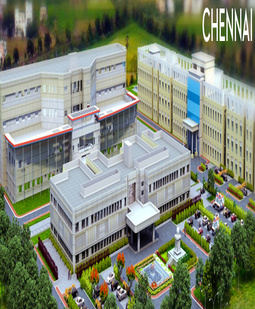
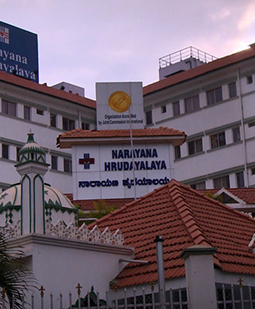
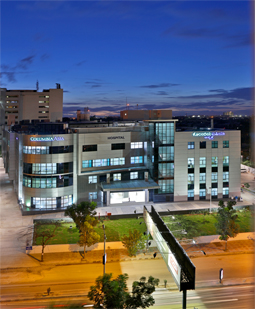
A 200-bed facility located at Gateway Center in Northwest Bangalore. The hospital opened in 2008 and provides comprehensive tertiary-level services, such as cardiac operations, orthopedics and neuroscience, as well as secondary-level medical care.
Our advanced infrastructure shores up to the multifarious nature of cardiac care provided. Our third generation Cath Labs, Cardiac Critical Care Units and Intensive Care Units support our accomplished cardiologists and post-operative care teams, making us one of the best Cardiology Institutes.
The Centre of Excellence for Cardiology, Cardiothoracic & Vascular Surgery at Gleneagles Global Hospitals, Chennai offers comprehensive, innovative and advanced care; while working closely as a team of experts, physicians and nurses.
The team vascular and cardiothoracic surgeons are trained at the top institutes in India and abroad and are completely dedicated to the treatment for coronary heart diseases.
A conglomeration of hospitals in one campus, including: the Sparsh Hospital for Orthopedics & Trauma, the Mazumdar Shaw Cancer Center, the Narayana Hrudayalaya Heart Hospital, the Narayana Nethralaya Eye Hospital, as well as a full fledged multi specialty hospital.
This is a blood clot which develops inside a deep vein inside the body. It is also known as deep vein thrombosis or venous thrombosis. They commonly occur in the leg in a large vein which runs through the thigh and calf muscles. Vein thrombo-embolism can lead to pain and complications such as pulmonary embolism which is a serious condition that occurs when the blood clot enters the bloodstream and blocks off circulation to the lungs. When pulmonary embolism and deep vein thrombosis occur together they are referred to as venous thrombo-embolism.
Causes of thrombo-embolism
Vein thrombo-embolism is caused by blood clots. Blood clots form when there is a change in blood flow in the veins. The blood clots can form in the arteries or veins in the limbs, lungs, kidneys heart or brain and travel from one point to another. They can lead to serious complications such as:
Stroke
Heart attack
Organ damage
Death
Risk factor
Smoking
Use of estrogen or birth control pills
Cancer
Autoimmune disorders such as lupus
Obesity
People who have too many blood cells
A family history of blood clots
Multiple traumas
Surgeries to the hip, pelvis or knee
Leg fractures
Genetic defects
Indwelling central venous lines
A history of pulmonary embolism or deep vein thrombosis
Being inactive for long periods such as after surgery
Being pregnant
Blood vessel damage
Hormone replacement therapy
Symptoms
In some cases, vein thrombo-embolism is asymptomatic. If symptoms occur they include:
Pain in the leg usually in the calf area
Swelling and tenderness in the calf muscle
A heavy dull ache in the affected area
The skin appears red in the affected area
Warm skin in the affected area
Pain that worsens when the leg is bent towards the knee
Chest pain that worsens when you inhale
Breathlessness that may occur suddenly or gradually
Sudden collapse
If you experience any of the symptoms that may indicate vein thrombo-embolism you should seek medical attention immediately.
Diagnosis
D-dimer test: This is a special blood test which detects pieces of blood clots that are loose in your bloodstream. If the number of fragments found is high it more likely that there is a blood clot in your vein
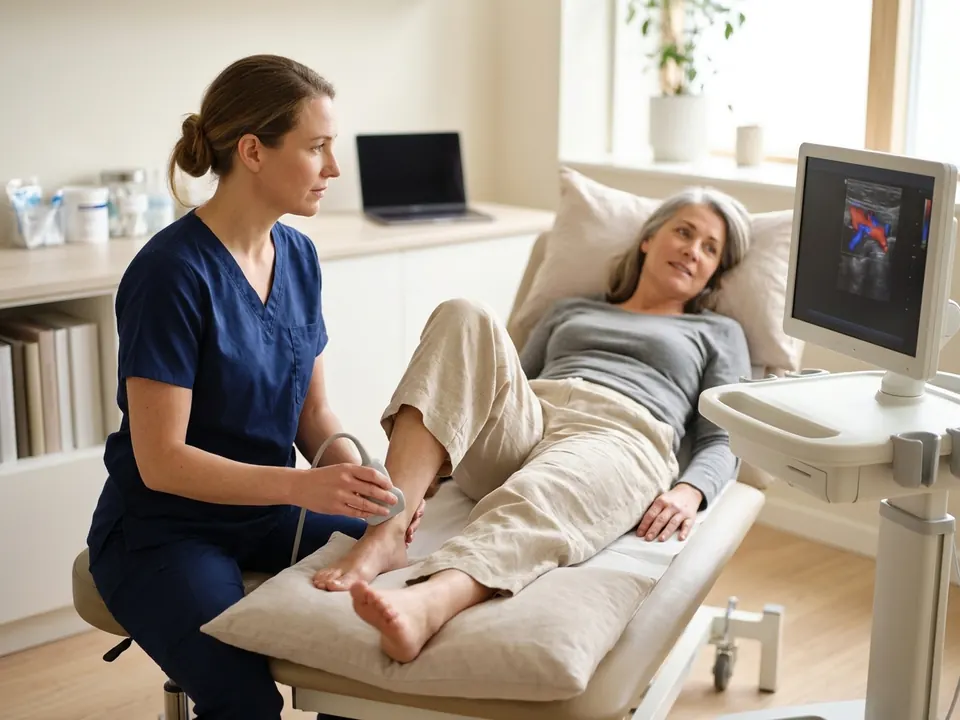
Ultrasound scan: This test is used to detect any blood clots that may be present in your veins. A Doppler ultrasound may also be done as it shows how fast the blood is flowing. If blood flow is blocked or slow it may be due to a blood clot.
Venogram: This test may be used if the ultrasound and D-dimer test results are inconclusive. A contrast dye is injected into your vein and highlights any gaps in the blood vessels where a blood clot is blocking blood flow.
Treatment
Vein thrombo-embolism is usually treated by anticoagulant medications. These reduce the ability of the blood to clot and stop any existing clots from getting bigger.
Compression stocking may also be prescribed to improve symptoms and prevent complications.
Prevention
Stop smoking
Lifestyle changes that include eating healthy balanced diet and regular exercise
Maintaining a healthy weight and riding excess weight if obese.
About Vein Thrombo-embolism
Key facts to plan your treatment: how long it takes, your hospital stay, anaesthesia, risks and recovery.
Recovery
Information coming soon. Request a consultation for personalized recovery guidance. Get Quote →
After care
Information coming soon. Request a consultation for personalized recovery guidance. Get Quote →
 Private Hospital

 JCI
 ISO