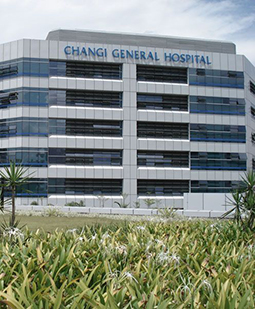
 Public Hospital
Singapore
 ISO
A major hospital in the eastern side of Singapore, with a capacity of 790 beds and facilities to accommodate outpatients likewise.
Price
Contact for quote
Ophthalmology care in Singapore
Hospitals, clinics and medical centers in Singapore performing Cornea and External Diseases.
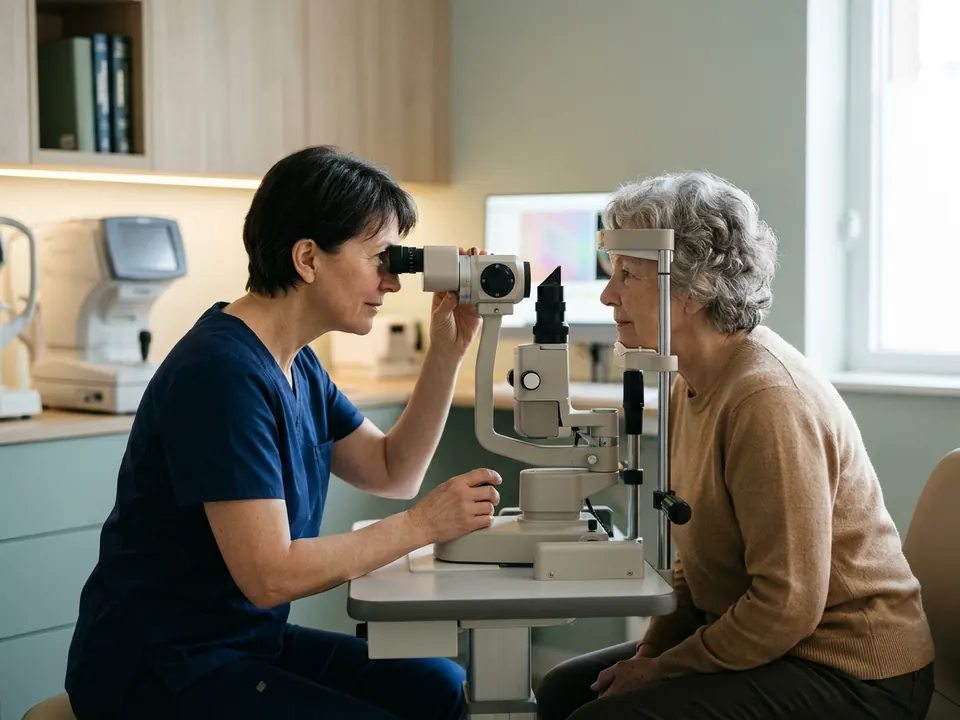
Key planning information for cornea and external diseases in Singapore.
Cornea and External Diseases in Singapore is priced per case at 4 hospitals. Each hospital quotes its own price for your case.
Cornea and External Diseases is listed by 4 hospitals in Singapore. The order reshuffles every hour so each gets equal exposure.
Public HospitalA major hospital in the eastern side of Singapore, with a capacity of 790 beds and facilities to accommodate outpatients likewise.
 Private Hospital
A full service private hospital offering a comprehensive range of specialist services by a team of 200 physicians. 35-40% of the patients are foreigners, and there is a dedicated department for handling medical tourists.
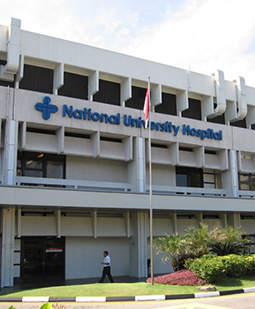 Public Hospital
A 928 bed teaching hospital offering a full range of medical, surgical and diagnostic services. NUH serves as a refferal center for cancer patients, pediatrics, cardiology and other specialties.
 Private Hospital
 JCIPrice on request
The gift of eyesight is one we aim to regain and improve for our young and adult patients seeking the expertise of our ophthalmology specialists. The team uses efficient diagnostic and surgical equipment, offering a range of eye care services and tailoring treatment to your individual needs.
Corneal and External diseases involve the cornea, anterior chamber of the eye, eyelids, lens, conjunctiva and iris, which include cataracts; infections, irregularities and corneal allergies; refractive errors (astigmatism, nearsightedness and farsightedness); conjunctivitis (pink eye); tear disorders; dry eye; endophthalmitis; keratoconus; ptergium; Fuch's Dystrophy and many more.
The cornea is the outermost, transparent, dome-shaped layer, which covers the pupil and iris in the front of the eye. The corneal tissue has five basic layers: endothelium, stroma, epithelium, Descemet's membrane and Bowman's layer. Though the cornea is clear, it has a highly structured group of proteins and cells. Contrary to most tissues in the body, the cornea has no blood vessels to protect or nourish against infection. Rather, the cornea gets its nutrients from the aqueous humor and tears, which fill the chamber behind it.
To see well, the lens and cornea have to focus the light rays accurately on the retina. This refractive procedure resembles the way a camera captures an image. The lens and cornea in the eye function as would the lens of a camera. The retina estimates the film. If the cornea fails to focus the light correctly, then the retina gets a blurry image.
Some trauma, which includes blunt trauma, projectile foreign bodies, and lacerations, may result in scarring, which clouds the cornea. Hereditary problems, which include dystrophies and degenerations, might as well cloud the cornea. The commonest hereditary ailment seen in young people is keratoconus, an ailment where the cornea assumes a cone shape. This is popular in kids with Down’s syndrome as well as in people with allergic conjunctivitis. These patients might be able to use glasses or contact lenses for some time; however, might ultimately develop high astigmatism and scarring, which can't be rectified without corneal transplantation.
Sometimes, it might be essential to carry out a corneal transplant following cataract operation, if bullous keratopathy takes place. Bullous keratopathy is a disorder where the endothelial cells on the back of the cornea decline in number after a cataract operation. But this is less popular nowadays due to improved lens designs and new techniques.
The surface of the eye may be seriously damaged by several problems, which include:
These problems may lead to extensive damage on the eye surface, resulting in scarring and new blood vessel formation; damage that leads to loss of vision.
Bascom Palmer scientists are assessing the potential of common tears for modulating promoting and modulating the healing of these conditions. A complete understanding of the correct role of tears in the healing process must result in strategies, which would quicken visual recovery and boost the percentage of patients totally pleased after the operation.
Key facts to plan your treatment: how long it takes, your hospital stay, anaesthesia, risks and recovery.
Common questions
Have a question? Get a free consultation.
Choose a hospital and send your enquiry to its international patient team. Each replies with its own price and plan.
Free consultation • No obligation