Skip to hospitals

Neurosurgery care in Spain

Deep Brain Stimulation in Spain

Hospitals and medical centers in Spain performing Deep Brain Stimulation.

✓ Listed hospitals✓ Free consultation✓ No obligation
A neurosurgeon discussing deep brain stimulation therapy with a patient.

Trusted by

  • +22 millionusers
  • +482,000patients assisted
  • +4,060medical centers
  • +18years of experience in medical tourism

At a glance

Key planning information for deep brain stimulation in Spain.

5 hrsProcedure time
3 daysHospital stay
11 hospitalsList deep brain stimulation

Deep Brain Stimulation in Spain is priced per case at 11 hospitals. The operation takes 5 hours, with 3 days in hospital. Each hospital quotes its own price for your case.

Hospitals and clinics offering Deep Brain Stimulation in Spain

Deep Brain Stimulation is listed by 11 hospitals in Spain. The order reshuffles every hour so each gets equal exposure.

Showing 1–10 of 11 hospitals
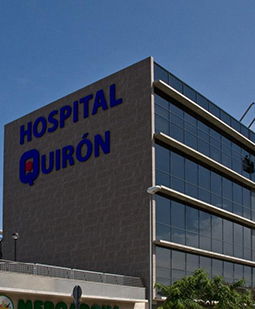
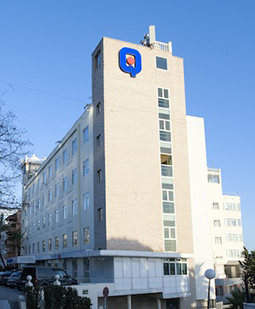
Barcelona Spine Center — photoPrivate Hospital
Barcelona, Spain
ISO 9001:2015 certified hospital sealISOPrice on request

A neurosurgery center within Quiron Hospital Barcelona, specializing in minimally invasive surgeries on the spine. The Barcelona Spine Centre team of three neurosurgeons have over 15 years of experience in the field of neurosurgery.

DoctorsPCDr. Pablo ClavelMCDr. Marcelino CaballeroView all 3
PricesDeep Brain Stimulation upon request
Price
Contact for quote
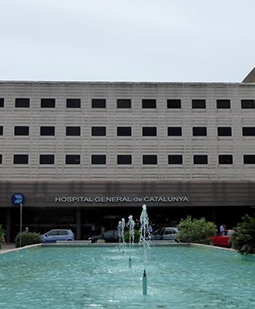
Hospital General de Catalunya — photoHospital
Barcelona, Spain
JCI Gold Seal of ApprovalJCIISO 9001:2015 certified hospital sealISOPrice on request

Hospital General de Catalunya provides medical services in over 25 specialties, being one of the most technologically advanced hospitals in Europe, with an excellent medical care capacity to carry out complex surgeries and medical conditions.

PricesDeep Brain Stimulation upon request
Price
Contact for quote
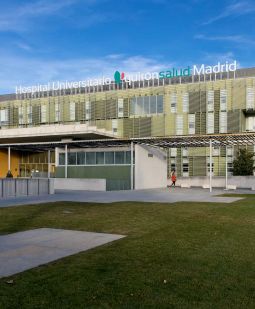
Hospital Quirón Madrid — photoPrivate Hospital
Madrid, Spain
ISO 9001:2015 certified hospital sealISOPrice on request

An ISO certified modern private hospital, which was opened in 2006, and is part of the Quironsalud Hospital Group. This tertiary care hospital has certified medical specialties capable of treating the most complicated medical cases.

DoctorsCRDr. Carlos Ruiz-ocaña
PricesDeep Brain Stimulation upon request
Price
Contact for quote
Hospital Quirónsalud Marbella — photoPrivate Hospital
Marbella, Spain
ISO 9001:2015 certified hospital sealISOPrice on request

This international hospital incorporates prestigious doctors, invests in research and development, technology and continuing education that enhances skills, in facilities, and in an increased operational efficiency in order to provide nothing but the best

PricesDeep Brain Stimulation upon request
Price
Contact for quote
HM Hospitales — photoHospital Group
Madrid, Spain
ISO 9001:2015 certified hospital sealISOPrice on request

HM Hospitales is a hospital group with six private hospitals in Madrid: three general hospitals, a cardiovascular hospital, an oncological center and a women's health hospital.

PricesDeep Brain Stimulation upon request
Price
Contact for quote
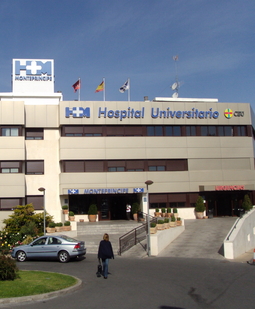
Hospital Universitario HM Montepríncipe — photoHospital
Madrid, Spain
Price on request

The Department of Neurosurgery at the University Hospital HM Montepríncipe offers a wide spectrum of services, ranging from the simplest to the most complex neurosurgical techniques in the treatment of tumors.

DoctorsAFDr. Alfredo Ferrer Fernández
PricesDeep Brain Stimulation upon request
Price
Contact for quote
Grupo Quirónsalud — photoHospital Group
Madrid, Spain
JCI Gold Seal of ApprovalJCIISO 9001:2015 certified hospital sealISOPrice on request

Within this field, Quirónsalud provides specialized care in neurology (Alzheimer’s disease, Parkinkson’s disease, movement disorders, epilepsy, MS, headaches, and pain) as well as psychiatry and mental health.

DoctorsBODr. Bartolomé OliverPCDr. Pablop Clavel LariaView all 8
PricesDeep Brain Stimulation upon request
Price
Contact for quote

Description of Deep Brain Stimulation:

What is Deep Brain Stimulation?
Deep brain stimulation (DBS) is a surgical procedure in which a brain pacemaker, known as a neurostimulator is implanted. The brain pacemaker delivers constant electrical impulses to particular areas of the brain.

About Deep Brain Stimulation

Key facts to plan your treatment: how long it takes, your hospital stay, anaesthesia, risks and recovery.

Duration of surgery/treatment
The duration of the surgery depends on the steps involved, which may vary. If two electrodes are inserted, then the duration is longer. Some surgeries could take approximately 5 hours or more.
Days admitted
Approximately 3 days
Anesthesia
- The first stage of the surgery is done under local anesthesia.
- The second stage of the surgery is done under general anesthesia.
- If the surgery is performed on children, both the stages
Recovery
- The patient may be required to take antibiotics to prevent infection. - The patient may need to visit the neurologist several times after the surgery to adjust the stimulation with the help of programming. - The medications of the patient are adjusted after the surgery. - The stitches or staples are removed in 7 to 10 days after the surgery.
Risks
There are several risks of deep brain stimulation. However, if it is performed on properly selected patients, it is safe and effective. The risks of deep brain stimulation are as follows: - Allergic reaction to the implanted devices - Concentrating problems - Infection - Cerebrospinal fluid leakage leading to meningitis - Dizziness and balance loss - Movement disability - Vision and speech defect or disability - Swelling of the surgical site where the devices are implanted - Breakage or dysfunction of the implanted devices and wires - Coma - Brain swelling - Stroke - Seizures
After care
- The incision area should be kept dry and covered, and should be changed according to the requirements. - The patient’s head can be washed using a damp cloth carefully avoiding the surgical region. - The day after the stitches or staples are removed, the patient’s hair can be washed gently. - The patient should avoid scratching the surgical wound. - Light activities, such as housework and sexual activity, should be avoided for 2 weeks after the surgery. - Heavy physical activities, such as jogging and swimming, should be avoided for 4 to 6 weeks after the surgery. - The patient should avoid lifting heavy objects for 2 to 4 weeks after the surgery. - If the doctor permits, the patient may return to work in 4 to 6 weeks after the surgery. - Some places may contain devices such as theft detectors, which may affect the neurostimulator that causes an uncomfortable sensation. The patient should always carry a medical identification card to request assistance to avoid such devices. - A magnet will be provided to activate or deactivate the neurostimulator. This magnet may harm other devices like TV or credit cards. So the magnet should be kept away from these devices. - The batteries of the pulse generator need to be replaced in 3 to 5 years. This can be done in an outpatient procedure. If the following symptoms are experienced, the doctor should be contacted immediately: - Fever - Severe headaches - Bleeding from the surgical area - Infection or irritation in the incision area - Vision impairment - Nausea and vomiting - Speech difficulty - Weakness - Numbness or a tingling sensation on a part of the body

Patient reviews

Reviews coming soon.

Common questions

Frequently asked questions

Have a question? Get a free consultation.

Ready to compare deep brain stimulation hospitals in Spain?

Choose a hospital and send your enquiry to its international patient team. Each replies with its own price and plan.

Free consultation • No obligation