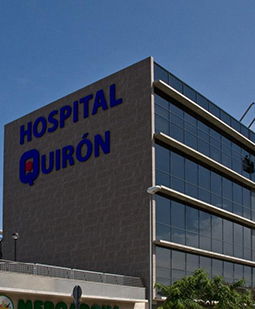
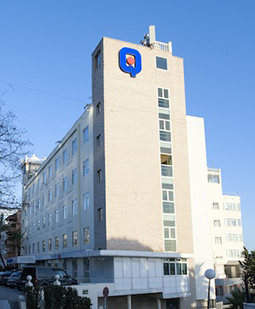
Private HospitalWith more than 36 medical specialties, 200 physicians and surgeons of the highest level, Quironsalud Hospital Malaga is one of the most pertinent hospitals in Spain.
Neurosurgery care in Spain
Hospitals and medical centers in Spain performing Radiofrequency Rhizotomy.

Key planning information for radiofrequency rhizotomy in Spain.
Radiofrequency Rhizotomy in Spain is priced per case at 12 hospitals. Each hospital quotes its own price for your case.
Radiofrequency Rhizotomy is listed by 12 hospitals in Spain. The order reshuffles every hour so each gets equal exposure.
Private HospitalWith more than 36 medical specialties, 200 physicians and surgeons of the highest level, Quironsalud Hospital Malaga is one of the most pertinent hospitals in Spain.
Private HospitalWe are working hand in hand with the University of Malaga and other international centres to develop education and training programmes in this area. This field is managed by a team belonging to the field of Neurology, Clinical Neurophysiology and Clinical Psychology.
Private HospitalA neurosurgery center within Quiron Hospital Barcelona, specializing in minimally invasive surgeries on the spine. The Barcelona Spine Centre team of three neurosurgeons have over 15 years of experience in the field of neurosurgery.
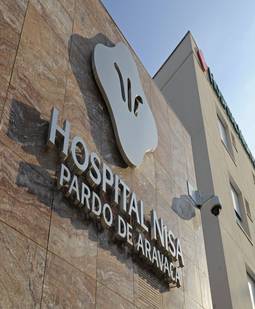
Private HospitalA modern (opened in 2007), general, private hospital located in Madrid, part of the NISA group of hospitals. The international patients department can assist patients with accomodation and trasportation, and can communicate in English as well as in Spanish.
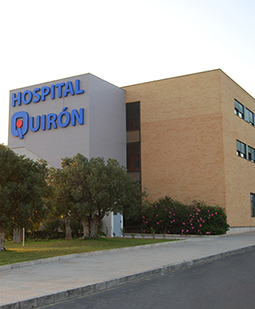
Private HospitalQuironsalud Hospital Torrevieja is an ISO-certified private hospital located in the north of Torrevieja, championing excellence in cancer treatment and management. IMTJ Best International Hospital of the world (awards 2017)
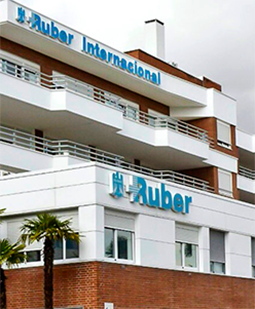
Private HospitalHospital Ruber Internacional by Quirónsalud is designed as a "whole hospital". Thus, achieving maximum efficiency in the organization and development of the various medical, welfare, educational and research activities
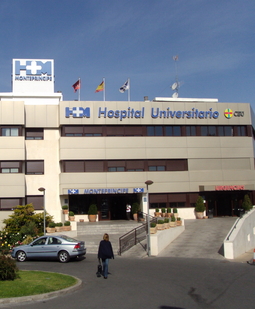
HospitalThe Department of Neurosurgery at the University Hospital HM Montepríncipe offers a wide spectrum of services, ranging from the simplest to the most complex neurosurgical techniques in the treatment of tumors.
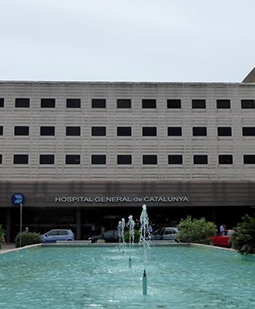
HospitalHospital General de Catalunya provides medical services in over 25 specialties, being one of the most technologically advanced hospitals in Europe, with an excellent medical care capacity to carry out complex surgeries and medical conditions.
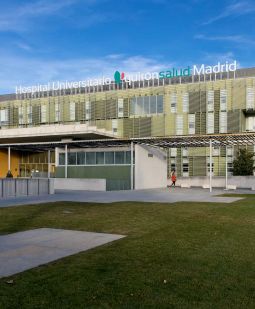
Private HospitalAn ISO certified modern private hospital, which was opened in 2006, and is part of the Quironsalud Hospital Group. This tertiary care hospital has certified medical specialties capable of treating the most complicated medical cases.
Private HospitalThis international hospital incorporates prestigious doctors, invests in research and development, technology and continuing education that enhances skills, in facilities, and in an increased operational efficiency in order to provide nothing but the best
This procedure involves intentionally destroying nerves in the human body. Sometimes, the nerves may start transmitting signals that are unnecessarily painful for the person. The decision to destroy nerves is made after a careful analysis by a qualified professional. Success is measured by reduced pain for the patient.
The diagnosis for painful nerves involves making a careful identity of which nerve is causing pain. This can usually be achieved by the use of an MRI. However, this may not always be possible especially if there is nothing that can be physically seen to cause pain.
In such a case, advanced techniques are used. One of the most common is nerve blocking. This will involve medication being injected around the nerve root. If it is the one causing pain, the patient should notice pain disappear temporarily. Once the medication wears off, the pain returns.
The diagnosis may involve a discogram. In such an instance, a fluid is injected into the spinal disc using x-ray guidance. If the area is healthy, only a bit of pain is experienced. However, if the area is excessively affected, the patient will feel pain. The diagnosis is only performed for people who have failed to respond to other noninvasive techniques such as creams.
Using x-ray, the doctor will guide a thin needle to the area identified as being the cause of pain. A contrast solution is applied to help make it clear which nerve is in need of removal. The solution highlights this nerve quite clearly. Light electrical stimulation may be applied to the nerve causing light muscle contraction.
The doctor then proceeds to apply a numbing agent on the particular nerve. After he is sure the patient cannot feel anything, he uses an electrode to burn off the base of the nerve. The operation mainly takes place in the lower back, where nerve problems mainly originate. The entire procedure will normally take about an hour and a half.

Key facts to plan your treatment: how long it takes, your hospital stay, anaesthesia, risks and recovery.
Common questions
Have a question? Get a free consultation.
Choose a hospital and send your enquiry to its international patient team. Each replies with its own price and plan.
Free consultation • No obligation