Key planning information for cervical cancer treatment in Thailand.
2–3 daysHospital stay
4 hospitalsList cervical cancer treatment
Cervical Cancer Treatment in Thailand is priced per case at 4 hospitals. It needs 2 to 3 days in hospital. Each hospital quotes its own price for your case.
Hospitals and clinics offering Cervical Cancer Treatment in Thailand
Cervical Cancer Treatment is listed by 4 hospitals in Thailand. The order reshuffles every hour so each gets equal exposure.
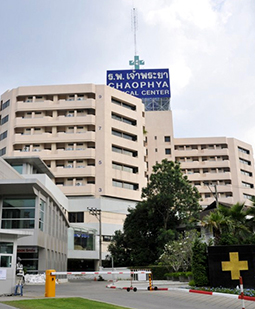
The Chaophya Hospital is a JCI accredited, tertiary private hospital in Bangkok, Thailand, which has been in operation since 1991. It has an international department which offers a comprehensive range of supporting services to foreign patients.
DoctorsAPAssoc. Prof. Supatra SangruchiPIDr. Peerapong IntasornView all 3
Vejthani is a 500 bed private hospital that serves international patients from over 40 countries annually. The hospital has all necessary services to accomodate medical tourists.
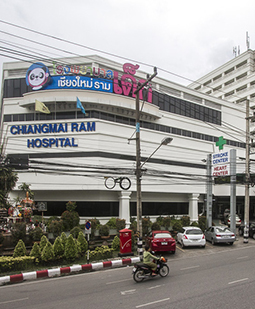
Being established in 1993, this tertiary private medical institution offers a wide range of medical care services. It has 350 in-patient bed capacity and is accredited by the Hospital Accreditation of Thailand.
DoctorsPIDr. Pawares IsariyodomRCDr. Rattiya CheewakraingkraiView all 3
Cervical cancer detected in early stages can be treated successfully. The choice of treatment, however, depends on the tumor size, its spread and the need to preserve the ability to get pregnant.
What are the treatment options for cervical cancer?
Cervical cancer is widely treated with surgery and radiotherapy. Surgery is done to remove the cancer cells. It is used primarily in early stages of cancer. Chemotherapy may also be recommended in some stages of cancer along with radiation therapy called as chemo radiation.
Surgery: The extent of the surgery depends upon the stage of the cervical cancer. It may either be done as total hysterectomy in which whole uterus is removed or partial hysterectomy or cone biopsy, hereby, preserving fertility. Cone biopsy is done in small tumours. In more advanced stages a procedure called as pelvic exenteration may also be done in which uterus, surrounding lymph nodes and parts of other affected organs are removed.
Radiation therapy: Also, called as radiotherapy, it is used in some stages of cancer. It uses high energy rays or implants to destroy cervical cancer cells and prevent them from growing further. Radiation therapy is applied locally either externally or internally.
Chemotherapy: Chemotherapy uses special and powerful medicines to destroy cancer cells. It may be used alone or in association with radiotherapy. The drugs are either given orally or in the veins. It is given in cycles comprising intensive and recovery phase. Commonly used chemotherapy drugs in cervical cancer are 5-fluorouracil and cisplatin. Certain targeted drugs have been developed that are used along with chemotherapy in cervical cancer. These include Avastin (Bevacizumab). Targeted drugs prevent the growth of cancer by inhibiting the growth of its blood vessels.
About Cervical Cancer Treatment
Key facts to plan your treatment: how long it takes, your hospital stay, anaesthesia, risks and recovery.
Number of sessions required
Surgical procedures may take 2- 3 hours, depending on the type of procedure done. Chemotherapy and radiotherapy are done in cycles extending from days to week.
Days admitted
Usually 2- 3 days of hospital stay are required following surgery. Further stay depends on the chemotherapy and radiotherapy cycles.
Anesthesia
Hysterectomy is done under general anaesthesia.
Recovery
Information coming soon. Request a consultation for personalized recovery guidance. Get Quote →
Risks
Risks are associated with different treatment modalities: 1) Fatigue, skin changes, vomiting, diarrhoea, bladder irritation, vaginal irritation or discharge and menstrual changes may occur with radiotherapy, 2) Chemotherapy can cause nausea, vomiting, mouth sores, hair loss or fatigue, 3) Loss of ability to get pregnant is an important issue that can happen in advanced cervical cancer treated by total hysterectomy.
After care
1) As the patient loses her ability to get pregnant, psychological support is needed after removal of the uterus, 2) Following cancer removal, good amount of calories and proteins should be added in the diet, 3) Follow up is required every 3-4 months for first 2 years. Later every 6 month evaluation is required.
 Private Hospital
 JCI
 Thai HA

 Private Hospital
 Private Hospital
 Private Hospital
 ISO