Key planning information for colonoscopy in Israel.
$450 fromLowest listed price
30–60 minsProcedure time
3 hospitalsList colonoscopy
Colonoscopy in Israel is listed from US$450 to US$8,000 at 3 hospitals. The operation takes 30 to 60 minutes. Each hospital quotes its own price for your case.
Prices last updated Jul 2017
Cost of Colonoscopy in Israel
Table of prices by type of procedure, in US$. Each hospital quotes its own price for your case.
Procedure
Minimum price
Maximum price
Colonoscopy
$450
$8,000
Price starting from $450 up to $8,000 · last updated Jul 2017.Final prices are quoted by each hospital
Hospitals and clinics offering Colonoscopy in Israel
Colonoscopy is listed by 3 hospitals in Israel. The order reshuffles every hour so each gets equal exposure.
The Gastroenterology Institute at Rambam Health Care Campus diagnoses, treats, and monitors patients with diseases of the gastrointestinal tract and liver as well as those who suffer from inflammatory bowel diseases.
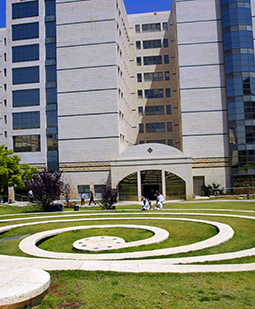
The second largest hospital in Israel, Rabin Medical Center is a tertiary care hospital that can handle the most complicated cases in all medical fields.
What is a Colonoscopy?
Colonoscopy is a procedure in which the large intestine and the colon are examined. The examination is carried out by using an endoscopic instrument known as a colonoscope. The instrument is a long thin tube with a tiny camera attached to it. During colonoscopy your doctor can diagnose and treat diseases like ulcers, abnormal growths, inflamed tissues and so on, without the need for a major operation.
How to be prepared for a Colonoscopy?
Inform the doctor about your medical conditions that require attention, such as:
Heart condition
Lung condition
Diabetes
Allergy to any medication
Pregnancy
Antibiotics may be required in the following conditions:
If the patient has an artificial heart valve
If the patient requires antibiotics before a surgical or a dental procedure for certain medical reasons
The doctor may give instructions on diet and fluid restrictions. You may be required to take laxatives orally to clean out the colon.
Enemas are usually given to clean out your bowels.
How is a Colonoscopy performed?
The patient is asked to lie on the side on the examining table. A colonoscope is inserted from the anus, through the rectum and moved to the large intestine. The colonoscope transmits images of the colon as it bends and moves around the curves of the colon. The patient may be required to change positions so that the doctor can move the colonoscope. Air is also blown into the colon to expand the colon, which helps the doctor to see and examine clearly. You may experience mild cramps during the colonoscopy.
When the procedure is completed, the colonoscope is withdrawn slowly while the bowel lining is carefully examined.
Anything abnormal that is observed during the colonoscopy is removed for biopsy.
Polyps are also identified and removed.
Can any diseases be treated during the Colonoscopy?
Medicine is injected around wounds and diverticula that are bleeding.
Alternatively, heat is applied to cauterize the wounds.
A lasso-like device removes cancerous polyps
With the help of a balloon, strictures can be dilated
About Colonoscopy
Key facts to plan your treatment: how long it takes, your hospital stay, anaesthesia, risks and recovery.
Duration of surgery/treatment
Approximately 30 - 60 minutes
Days admitted
None. Colonoscopy is done on an outpatient basis.
Recovery
The patient is kept for some time in a recovery room for observation.
As an outpatient, you can go home the same day. Cramping, bloating, nausea, and drowsiness are some of the symptoms that are experienced for some time after a colonoscopy. The doctor will give you a follow-up appointment upon discharge.
Risks
The following complications are possible in a colonoscopy:
- Cramps and abdominal swelling caused by the air that is blown into the colon during the colonoscopy
- Slight bleeding in the bowel movements if a biopsy is done during the colonoscopy
- Injury to the intestine that may cause bleeding and infection
- Allergic reaction and side effect of sedating medication used during the colonoscopy
After care
- Follow the doctor’s instructions on diet.
- Symptoms such as the following should be reported:
o Severe abdominal pain
o Fever
o Vomiting
o Bleeding from the anus
- Certain medications should be avoided if polyps were removed or if biopsies were taken.
 Private Hospital
 JCIPrice on request

 Public University Hospital
 Public Hospital
 ISO