Key planning information for breast cancer treatment in Israel.
3–4 hrsProcedure time
6–7 daysHospital stay
8 hospitalsList breast cancer treatment
Breast Cancer Treatment in Israel is priced per case at 8 hospitals. The operation takes 3 to 4 hours, with 6 to 7 days in hospital. Each hospital quotes its own price for your case.
Hospitals and clinics offering Breast Cancer Treatment in Israel
Breast Cancer Treatment is listed by 8 hospitals in Israel. The order reshuffles every hour so each gets equal exposure.
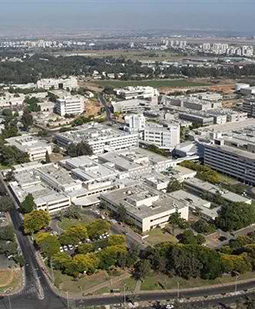
The largest medical center in Israel and the Middle East, internationally renowned for it's medical excellence. Around 31,000 inpatients are treated annually.
DoctorsEFProf. Eitan FriedmanZSProf. Zvi SymonView all 18
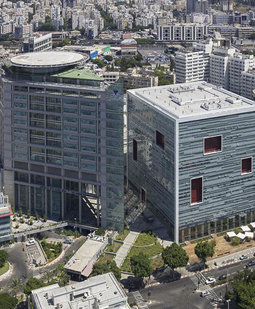
The Oncology Institute serves a broad population of cancer patients from central Israel and throughout the country. The fast-track appointment service enables patients to be seen for their initial visit within 48 hours of contacting the institute.
DoctorsIWProf. Ido WolfYKProf. Yehuda KolanderView all 4
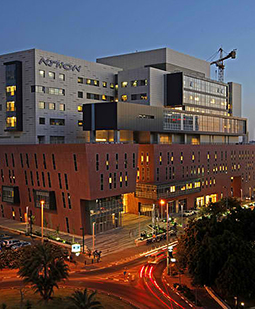
The Oncology Institute at Rambam Health Care Campus is a multi-disciplinary center for cancer treatment. It is certified by the European Society for Clinical Oncology (ESMO) as an integrated center for cancer treatment and support services, and is the only institute of its kind in Northern Israel.
DoctorsRBProf. Rechamim Ben-josefDKDr. David KakiashviliView all 11
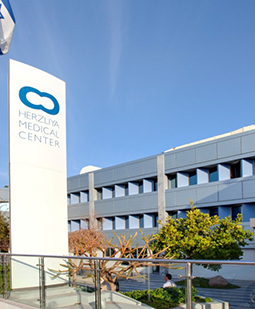
A private hospital located on the shorelines of Herzliya, just off Tel Aviv, offering healthcare services to both local and foreign patients. The hospital is affiliated with over 500 Israeli physicians, many of whom hold high level positions at public hospitals.
DoctorsGLDr. Guttman LiveASProf. Aaron SulksView all 5
The Davidoff Center for the research and treatment of cancer is one of the most advanced facilities in the Middle East for the treatment of malignant diseases, delivering medical treatment to approximately 15% of Israel's cancer patients.
DoctorsJBProf. Jack BanielMProf. M.ShohatView all 6
Hadassah medical institution includes two university hospitals in Jerusalem – on Mt. Scopus and in Ein Kerem. Both provide advanced tetriary healthcare services in all medical specialties.
DoctorsTPProf. Tamar Peretz-YablonskiAHDr. Ayala HubertView all 40
One of the largest hospitals in Israel with 900 beds and 700 physicians. The hospital serves 1000 medical tourists annually, providing advanced medical care at the highest western standards.
Breast cancer treatment requires a multidisciplinary team management consisting of surgeons, medical oncologists and radiation oncologists, oncology nurses, social workers, counsellors, physical assistants, etc. The pathology and behaviour of breast cancer affects the treatment plan.
What are the treatment options for breast cancer?
Treatment options depend on the type of the cancer, its stage, grade, genetic markers, overall health of the patient, presence of any mutation and menopausal status of the patient. Treatment involves surgical removal of breast cancer, chemotherapy, radiation therapy, hormonal therapy and targeted therapy.
Surgery: Surgery is a good option for small and early stage breast cancers. Surgical options include lumpectomy, which is the removal of cancer along with small cancer free healthy tissue around it or mastectomy in which entire breast is removed. Lymph node biopsy or dissection is also done along with surgery to determine the spread of cancer and further action plan. Following mastectomy, reconstructive surgeries are done to create a breast form. They may include silicone breast implants or tissue flap procedures.
Radiotherapy: Radiotherapy uses high energy x-ray or other particles to kill the cancer cells. It can be given before or after the surgery and is given in cycles for a few weeks.
Chemotherapy: Chemotherapy uses powerful medicines which help to destroy the cancer cells. It is given in cycles for a few weeks and usually involves a combination of two or more drugs. In some cases it is given before the surgery to shrink the cancer size. It is helpful in early stage or advanced stage breast cancer to remove left out cancer cells following surgery or destroy the cancer cells as much as possible after surgery.
Hormonal therapy or endocrine therapy: It is helpful in breast cancer cases which are positive for estrogen or progesterone receptors. Hormonal therapy is used for both early stage and metastatic breast cancer. Medicines such as tamoxifen or aromatase inhibitors are used to inhibit the cancer growth, which is activated by hormones.
Targeted therapy: It works against the cancer proteins, genes or tissue environment that promotes the cancer growth. Also, called as biological therapy, it changes the process in the cell cycle. Therapy is active against particular receptors for proteins present in the cancer cells. They help to control or slow the cancer growth.
What is the success rate of breast cancer treatment?
Breast cancer treatment success largely depends on the stage of breast cancer. Early stage breast cancer is highly treatable, having a very high success rate with surgery, chemotherapy and radiotherapy.
About Breast Cancer Treatment
Key facts to plan your treatment: how long it takes, your hospital stay, anaesthesia, risks and recovery.
Duration of surgery/treatment
Surgery may take 3- 4 hours depending on the cancer stage and spread to adjacent lymph nodes. Lumpectomy takes lesser time than the mastectomy.
Days admitted
A stay of 6-7 days may be required in the hospital, depending on the patient’s condition and type of surgery done. Frequent stay for chemotherapy or radiotherapy sessions is also required.
Anesthesia
Surgery is done under general anesthesia
Recovery
Information coming soon. Request a consultation for personalized recovery guidance. Get Quote →
Risks
Risks related to anesthesia during surgery: Bleeding, Rarely, damage to surrounding structures in the breast, Risks associated with radiotherapy such as: swelling of the breast, red and burning breast skin, hyperpigmentation or skin discoloration, blistering or peeling of skin etc. Rarely radiotherapy may affect the lungs, causing pneumonitis, Chemotherapy: can cause diarrhea, hair loss, loss of appetite, fatigue, etc. It can also cause nerve damage or secondary cancers in the long term, Risks associated with hormonal therapy: Aromatase inhibitors can increase the risk of osteoporosis, broken bones, hot flashes, vaginal dryness, muscle and joint pain. Tamoxifen can also cause vaginal dryness, hot flashes, bleeding or discharge. Rarely, cataract, uterine cancer or blood clots may occu
After care
Good after care is require especially following mastectomy as patient may have psychological effects of breast removal. Regular follow up visits are required to determine the success and recurrence of breast cancer. Psychological support needs to be provided to the patient in case of total mastectomy.
 Public Hospital
 JCIPrice on request

 Public University Hospital
 Private Hospital
 Public University Hospital
 Private Hospital
 Public Hospital
 University Hospital
 Public Hospital
 ISOPrice on request