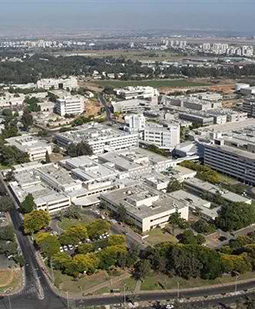
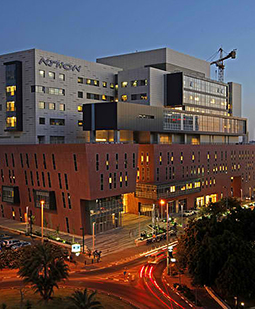
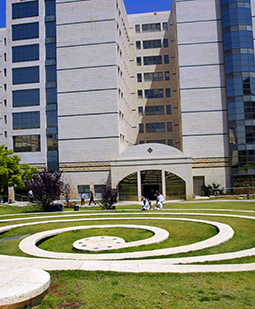
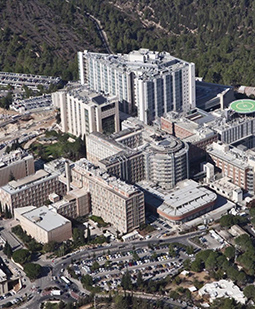
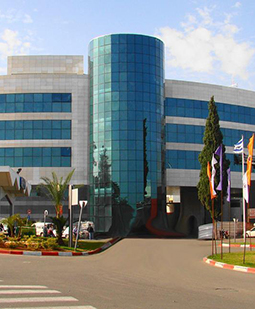
The Oncology Institute serves a broad population of cancer patients from central Israel and throughout the country. The fast-track appointment service enables patients to be seen for their initial visit within 48 hours of contacting the institute.
DoctorsIWProf. Ido WolfYKProf. Yehuda KolanderView all 4
The largest medical center in Israel and the Middle East, internationally renowned for it's medical excellence. Around 31,000 inpatients are treated annually.
DoctorsEFProf. Eitan FriedmanZSProf. Zvi SymonView all 18
The Oncology Institute at Rambam Health Care Campus is a multi-disciplinary center for cancer treatment. It is certified by the European Society for Clinical Oncology (ESMO) as an integrated center for cancer treatment and support services, and is the only institute of its kind in Northern Israel.
DoctorsRBProf. Rechamim Ben-josefDKDr. David KakiashviliView all 11
The Davidoff Center for the research and treatment of cancer is one of the most advanced facilities in the Middle East for the treatment of malignant diseases, delivering medical treatment to approximately 15% of Israel's cancer patients.
DoctorsJBProf. Jack BanielMProf. M.ShohatView all 6
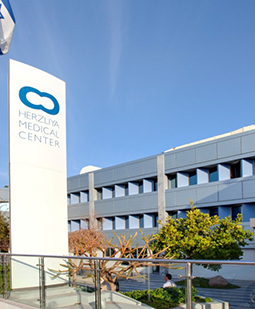
A private hospital located on the shorelines of Herzliya, just off Tel Aviv, offering healthcare services to both local and foreign patients. The hospital is affiliated with over 500 Israeli physicians, many of whom hold high level positions at public hospitals.
DoctorsGLDr. Guttman LiveASProf. Aaron SulksView all 5
Hadassah medical institution includes two university hospitals in Jerusalem – on Mt. Scopus and in Ein Kerem. Both provide advanced tetriary healthcare services in all medical specialties.
DoctorsTPProf. Tamar Peretz-YablonskiAHDr. Ayala HubertView all 40
One of the largest hospitals in Israel with 900 beds and 700 physicians. The hospital serves 1000 medical tourists annually, providing advanced medical care at the highest western standards.
This is a cancer condition which occurs when cells in the lung tissue start to grow uncontrollably.
Types of lung cancer
There are two types of lung cancer namely primary and secondary lung cancer. Primary lung cancer is cancer that begins in the lungs. Cancer that spreads from the lungs to another body part is known as secondary lung cancer.
Signs of lung cancer
There are usually no signs or symptoms in the early stages of lung cancer. Eventually, symptoms develop which include:
Coughing of blood or rusty-colored phlegm
Shortness of breath
Unexplained weight loss
Chest pain
Recurrent respiratory infections
Hoarseness
Wheezing
Diagnosis of lung cancer involves:
Chest X-ray: This is usually the first test used to diagnose lung cancer. However, chest X-rays can’t give a definitive diagnosis because they cannot differentiate between cancer and other medical conditions such as a lung abscess.
CT scan: A computerized tomography (CT) scan is usually carried out after a chest X-ray. Before having the scan you will be given an injection of a dye that makes the scan to be clearer. The scan is painless and takes 10-30 minutes to complete.
PET-CT scan: A PET-CT (positron emission tomography –computerized tomography) scan may be carried out if the results of the CT scan show you have early stage lung cancer. A PET-CT scan helps with diagnosis and treatment as it can show where there are active cancer cells.
Bronchoscopy and biopsy: A bronchoscopy is a procedure that allows a doctor to remove a small sample of cells from your lungs. A medical instrument called a bronchoscope is used to perform the biopsy. A biopsy is the sample of tissue taken from the body in order to examine it more closely. The procedure may be uncomfortable. A mild sedative is given beforehand and a local anesthetic to make your throat numb.
Precautions and Treatment
Tobacco is the number one cause of lung cancer. This is because different toxic substances are inhaled when smoking. However, people who do not smoke may get lung cancer. If you smoke, the best way to prevent lung cancer is to stop smoking. A healthy lifestyle will also decrease chances of developing lung cancer or other types of cancer. Major treatment procedures include surgery, radiotherapy, and chemotherapy
Radiotherapy: This involves the use of high-energy x-rays to destroy cancer cells. How intensive the radiotherapy is, depends on how advanced your lung cancer is. Radiation treatments are given a few days at a time for several weeks. Radiation may be before surgery, to shrink a tumor to make it easier to remove, or after surgery to kill any cancer cells left behind. The recovery period can be several weeks or even months.
Chemotherapy: Chemotherapy uses powerful cancer-killing medication to treat the lung cancer in cycles. Your doctor may prescribe one type of chemo drug or a mix of different ones. You’ll get them through an IV at a hospital or treatment center. It may take a few rounds of treatment over a few days or weeks. Some chemotherapy drugs are injected into a vein, while others are taken by mouth.
Surgery: Surgery is performed by making a cut in your chest or side and removing a section or the entire affected lung. Nearby lymph nodes may also be removed if it is likely that cancer has spread to them. General anesthesia is injected into a vein or even inhaled.
About Lung Cancer Treatment
Key facts to plan your treatment: how long it takes, your hospital stay, anaesthesia, risks and recovery.
Recovery
Information coming soon. Request a consultation for personalized recovery guidance. Get Quote →
Risks
Chest pain, Fatigue, Difficulty swallowing, Nausea, Vomiting, Mouth sores, Hair loss, Bleeding, Infection of lungs, an air leak in your lung that does not close, ongoing pain in your chest wall, risks from general anesthesia and damage to your heart, lungs, blood vessels, or nerves in your chest.
After care
Information coming soon. Request a consultation for personalized recovery guidance. Get Quote →
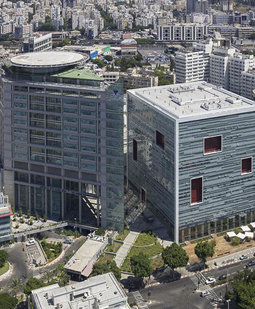 Public University Hospital
 JCI
 ISO