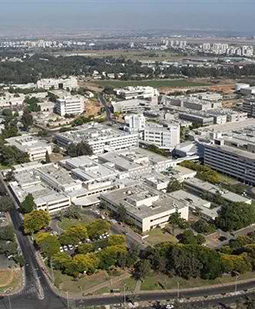
 Public Hospital
Tel Hashomer, Israel
 JCIPrice on request
The largest medical center in Israel and the Middle East, internationally renowned for it's medical excellence. Around 31,000 inpatients are treated annually.
Price
Contact for quote
Oncology care in Israel
Hospitals and medical centers in Israel which treat Endometrial Cancer patients.

Key planning information for endometrial cancer treatment in Israel.
Endometrial Cancer Treatment in Israel is priced per case at 6 hospitals. Each hospital quotes its own price for your case.
Endometrial Cancer Treatment is listed by 6 hospitals in Israel. The order reshuffles every hour so each gets equal exposure.
Public HospitalJCIPrice on requestThe largest medical center in Israel and the Middle East, internationally renowned for it's medical excellence. Around 31,000 inpatients are treated annually.
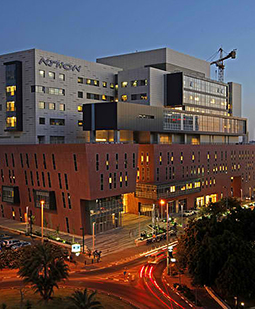 Private HospitalJCIPrice on request
The new Assuta Hospital was opened in 2009, and claims to be the most modern hospital in the middle east.
 Public University HospitalJCIPrice on request
The Oncology Institute at Rambam Health Care Campus is a multi-disciplinary center for cancer treatment. It is certified by the European Society for Clinical Oncology (ESMO) as an integrated center for cancer treatment and support services, and is the only institute of its kind in Northern Israel.
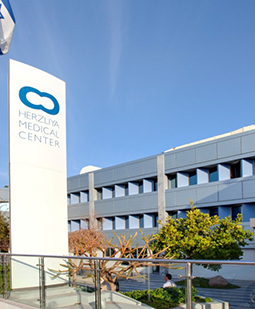 Private Hospital
A private hospital located on the shorelines of Herzliya, just off Tel Aviv, offering healthcare services to both local and foreign patients. The hospital is affiliated with over 500 Israeli physicians, many of whom hold high level positions at public hospitals.
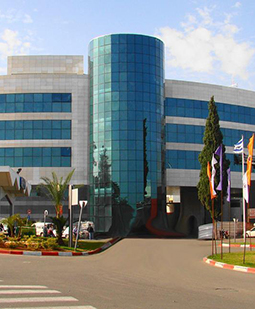 Public Hospital
 ISOPrice on request
One of the largest hospitals in Israel with 900 beds and 700 physicians. The hospital serves 1000 medical tourists annually, providing advanced medical care at the highest western standards.
Endometrial Cancer is treated at
 University Hospital
Hadassah medical institution includes two university hospitals in Jerusalem – on Mt. Scopus and in Ein Kerem. Both provide advanced tetriary healthcare services in all medical specialties.
Endometrial cancer refers to a type of cancer that begins in the uterus and specifically starts in the layer of cells of the endometrium (lining) of the uterus. It is also referred to as uterine cancer or cancer of the uterus. The uterus is an organ where a fetus grows and develops in the abdomen of women.
Endometrium cancer occurs in women who are of 50 years of age and above and usually caused by hormonal imbalance, which is having excessive estrogen hormone and low progesterone hormone in the body. These hormones thicken and contract the uterus. With the hormonal imbalance, the endometrium gets thicker and thicker, and if this trend continues and stays in that state, the cancerous cells start to grow.
Other risk factors include:It is advisable to visit a doctor if any of the following symptoms arise:
In the tests for this type of cancer, the doctor removes a sample of the endometrium to check for cancer cells, a process known as a biopsy. Treatment options include surgery, radiotherapy and chemotherapy depending on the stage and grade of cancer, as well as the risk for cancer to come back or spread to the other body parts. For the case of endometrial cancer, it is categorized into 4 stages.
Medicine choices: These include progestin hormone therapy and chemotherapy and are usually given after surgery. Progestin hormone therapy is used in case cancer comes back, spreads, or if you are unable to have radiation therapy or surgery. It is also applied to young women who wish to give birth in the future.
Surgery: This involves the removal of the entire uterus, and it is the most frequent method. Surgery has the highest probability of eliminating endometrial cancer and the doctor removes the uterus, ovaries, fallopian tubes, and the pelvic lymph nodes to examine the extent of cancer and further advice.
Radiotherapy: Radiations are given internally through the placement of a radioactive substance in the vagina or externally through delivering radiation from an outside source.
Chemotherapy: Chemotherapy (chemo) is when cancer-fighting drugs are given by mouth or into a vein. The drugs get into the bloodstream, then eventually to the entire body, making it useful for cancer that is beyond the endometrium. This treatment goes well with a combination of drugs. Combination chemotherapy at times works better in treating cancer as opposed to one drug alone.
Key facts to plan your treatment: how long it takes, your hospital stay, anaesthesia, risks and recovery.
Common questions
Have a question? Get a free consultation.
Choose a hospital and send your enquiry to its international patient team. Each replies with its own price and plan.
Free consultation • No obligation