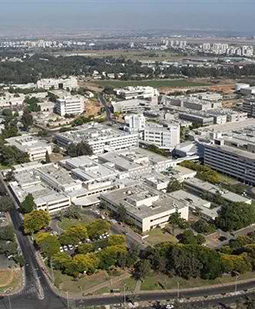
 Public Hospital
Tel Hashomer, Israel
 JCIPrice on request
The largest medical center in Israel and the Middle East, internationally renowned for it's medical excellence. Around 31,000 inpatients are treated annually.
Price
Contact for quote
Oncology care in Israel
Hospitals and medical centers in Israel which treat Testicular Cancer patients.

Key planning information for testicular cancer treatment in Israel.
Testicular Cancer Treatment in Israel is priced per case at 7 hospitals. Each hospital quotes its own price for your case.
Testicular Cancer Treatment is listed by 7 hospitals in Israel. The order reshuffles every hour so each gets equal exposure.
Public HospitalJCIPrice on requestThe largest medical center in Israel and the Middle East, internationally renowned for it's medical excellence. Around 31,000 inpatients are treated annually.
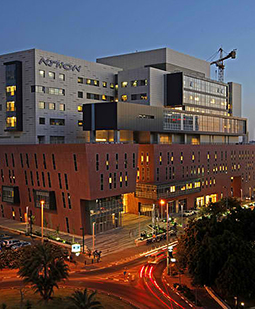 Private HospitalJCIPrice on request
The new Assuta Hospital was opened in 2009, and claims to be the most modern hospital in the middle east.
 Public University HospitalJCIPrice on request
The Oncology Institute at Rambam Health Care Campus is a multi-disciplinary center for cancer treatment. It is certified by the European Society for Clinical Oncology (ESMO) as an integrated center for cancer treatment and support services, and is the only institute of its kind in Northern Israel.
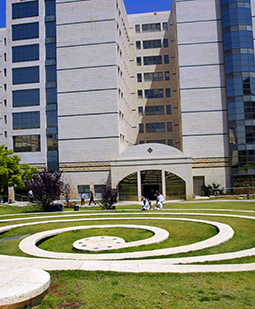 Public Hospital
The Davidoff Center for the research and treatment of cancer is one of the most advanced facilities in the Middle East for the treatment of malignant diseases, delivering medical treatment to approximately 15% of Israel's cancer patients.
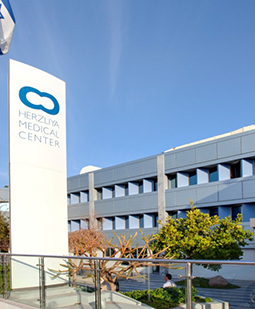 Private Hospital
A private hospital located on the shorelines of Herzliya, just off Tel Aviv, offering healthcare services to both local and foreign patients. The hospital is affiliated with over 500 Israeli physicians, many of whom hold high level positions at public hospitals.
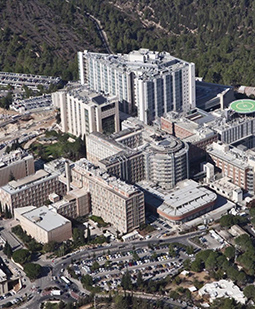 University Hospital
Hadassah medical institution includes two university hospitals in Jerusalem – on Mt. Scopus and in Ein Kerem. Both provide advanced tetriary healthcare services in all medical specialties.
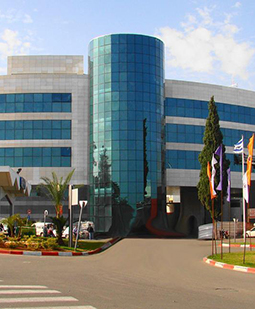 Public Hospital
 ISOPrice on request
One of the largest hospitals in Israel with 900 beds and 700 physicians. The hospital serves 1000 medical tourists annually, providing advanced medical care at the highest western standards.
Testicular Cancer is treated at
This is cancer that affects the testicles. It is a rare form of cancer and usually affects younger men below the age of 50. Testicles are two oval-shaped male sex organs. They sit in the scrotum on either side of the penis. The testicles are part of the male reproductive system and are enclosed in the scrotum- the sac of skin which hangs under the penis. Testicles produce sperms and testosterone which is a major hormone in male sexual development.
The different types of testicular cancer are classified by the type of cells cancer first begins in. These include:
Germ-cell testicular cancer is the most common type of testicular cancer. The body uses germ cells to help create sperm. There are two main subtypes of germ cell testicular cancer; non-seminomas and seminomas.
The cause or causes of testicular cancer are unknown, but several things have been pointed out, which increase the chance of developing the condition. These include:
Your doctor will perform a physical exam to look for the signs of cancer of the testicles. Laboratory tests and imaging tests are used to confirm the diagnosis. Biopsy should not be done because it increases the risk of spreading cancer to the scrotum. Accurate diagnosis is crucial to ensure that treatment is effective and appropriate.
Most cases of cancer of the testicles can be treated if diagnosed early. Treatments include surgery, whereby the affected testicle is removed. The procedure done to remove the affected testicle is known as an orchiectomy. Although it is possible to remove tumors from a testis while leaving it functional, it is rarely done because the precancerous cells can spread through the entire testicle. Other treatments used for cancer of the testicles are chemotherapy and radiation therapy.
If the treatment option chosen has infertility as a side effect, you can bank your sperm at a sperm bank for later on when you want to have children. Surgical removal of the affected testicle does not cause infertility or the ability to have sex. After treatment, it is crucial to have regular exams to ensure the cancer is all gone.
Key facts to plan your treatment: how long it takes, your hospital stay, anaesthesia, risks and recovery.
Common questions
Have a question? Get a free consultation.
Choose a hospital and send your enquiry to its international patient team. Each replies with its own price and plan.
Free consultation • No obligation