 Private Hospital
Tel Aviv, Israel
 JCIPrice on request
The new Assuta Hospital was opened in 2009, and claims to be the most modern hospital in the middle east.
Price
Contact for quote
Orthopedics care in Israel
Details of hospitals and medical centers in Israel performing Foot & Ankle Surgery.

Key planning information for foot & ankle surgery in Israel.
Foot & Ankle Surgery in Israel is priced per case at 8 hospitals. Each hospital quotes its own price for your case.
Foot & Ankle Surgery is listed by 8 hospitals in Israel. The order reshuffles every hour so each gets equal exposure.
Private HospitalJCIPrice on requestThe new Assuta Hospital was opened in 2009, and claims to be the most modern hospital in the middle east.
 Public University Hospital
The Division of Orthopedics of the Tel Aviv Sourasky Medical Center treats a wide variety of conditions related to the skeletal system and movement - bone, joint, and connective tissue - such as joint replacements, traumatic injuries, and sports conditions.
 Public HospitalJCIPrice on request
The largest medical center in Israel and the Middle East, internationally renowned for it's medical excellence. Around 31,000 inpatients are treated annually.
 Public University HospitalJCIPrice on request
The Orthopedic Surgery Section has been the concentration of surgical care at the Rambam Health Care Campus.
 Private Hospital
A private hospital located on the shorelines of Herzliya, just off Tel Aviv, offering healthcare services to both local and foreign patients. The hospital is affiliated with over 500 Israeli physicians, many of whom hold high level positions at public hospitals.
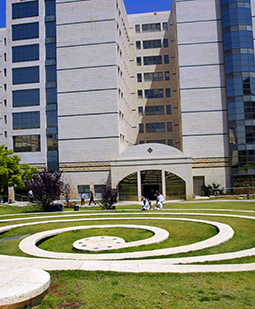 Public Hospital
The second largest hospital in Israel, Rabin Medical Center is a tertiary care hospital that can handle the most complicated cases in all medical fields.
 University Hospital
Hadassah medical institution includes two university hospitals in Jerusalem – on Mt. Scopus and in Ein Kerem. Both provide advanced tetriary healthcare services in all medical specialties.
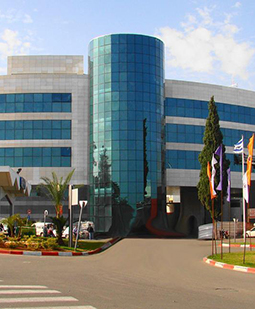 Public Hospital
 ISOPrice on request
One of the largest hospitals in Israel with 900 beds and 700 physicians. The hospital serves 1000 medical tourists annually, providing advanced medical care at the highest western standards.
This is a type of orthopedic and podiatry surgery that is concerned with diagnosing and treating disorders of the foot. It focus on restoring functionality in the foot in order to ease the suffering of a patient. There are many causes of foot disorders; some are caused by accidents while others are congenital.
A foot & ankle surgeon is equipped with knowledge and skills to treat surgical and non-surgical foot & ankle disorders. In adults, foot & ankle pain is caused by a variety of factors. Thus, the surgeon is trained to establish the connection between the foot & ankle, the spine and arthritis. In addition, the doctor is well equipped to deal with congenital foot & ankle disorders.
The treatment will largely be based on the results of the various tests conducted. Sometimes, the physician will recommend that the person takes some painkillers. This will usually be followed by advice to ease pressure on the affected foot and/or ankle for some time.
Other treatments may involve placing ice packs on the foot. He or she may also offer some ointments to ease the swelling. At times, corticosteroids may be given to reduce inflammation. The doctor may bind the foot in bandages to restrict the movement and to give it time to heal.
In case surgery is necessary, it will be performed to remove any damaged tissues. These tissues usually affect movement in the foot, thus lowering a person’s quality of life. At times, surgery is performed to replace the ankle joint.
Ankle joint replacement takes place when in the doctor’s opinion it is damaged beyond salvation. The surgery will at times involve lengthening calf muscles. This is done in order to reduce pressure on the tendons of the foot. The Achilles heel tendon is usually the target of such an operation.
In the case of congenital disorder such as clubfoot, an operation is usually performed to restore the child’s foot to its normal shape. This will enable the child to lead a normal life without complications. Congenital disorders should be reported as early as possible to a qualified medical practitioner.
Key facts to plan your treatment: how long it takes, your hospital stay, anaesthesia, risks and recovery.
Common questions
Have a question? Get a free consultation.
Choose a hospital and send your enquiry to its international patient team. Each replies with its own price and plan.
Free consultation • No obligation