SevenHills Group of Hospitals (SHHL) has been delivering Healthcare services at the highest level, since past 25 years. SevenHills Hospital, Mumbai, is a world class integrated Healthcare Delivery System, that provides comprehensive Healthcare...
DoctorsIADr. Indoo AmbulkarCSDr. Chetan ShahView all 3
A 200-bed facility located at Gateway Center in Northwest Bangalore. The hospital opened in 2008 and provides comprehensive tertiary-level services, such as cardiac operations, orthopedics and neuroscience, as well as secondary-level medical care.
DoctorsGNDr. Govind NandakumarSGDr. Shalini GovilView all 15
The Department of Medical Oncology at Gleneagles Global Hospitals is known for its superior patient care and clinical outcomes. Medical oncologists work together with the surgeons and radiotherapists in deciding the treatment and delivering it.
Apollo Specialty Cancer Hospital is an exclusive and well established hospital for Cancer care with an Oncology team that consists of the most renowned specialists and a well trained team of medical and paramedical professionals who are exclusively trained in cancer care.
DoctorsRProf. RajasundaramDDDr. Debnarayan DuttaView all 19
Located near Delhi, Fortis Hospital Noida is a Centre of Excellence for Orthopaedics and Neurosciences with a focus on Cardiac Sciences, Minimally Invasive Surgeries and Oncology.
Apollo Oncology Team brings together the brightest minds in surgical, medical & radiation oncology, along with a complete range of high-end ancillary experts.
Artemis Cancer Centre is an integral part of Artemis staffed by well trained and experienced team of oncologists and paramedics, and armed with world class equipment and facilities.
DoctorsRCDr. Rakesh ChopraHGDr. Hari GoyalView all 18
A conglomeration of hospitals in one campus, including: the Sparsh Hospital for Orthopedics & Trauma, the Mazumdar Shaw Cancer Center, the Narayana Hrudayalaya Heart Hospital, the Narayana Nethralaya Eye Hospital, as well as a full fledged multi specialty hospital.
DoctorsAPProf. Anthony PaisPNDr. Prasad NarayananView all 21
To the thousands of patients who visit for cancer treatment in India, the Apollo Hospitals Cancer Institute symbolizes hope that Cancer is Conquerable. The Cancer care system at Apollo Hospitals involves over 125 surgical and radiation Oncology specialists.
Cancer can be defined as the uncontrollable growth of cells that invade and cause the damage to surrounding tissues. Mouth cancer appears as a growth or sore in the mouth that does not go away. Mouth cancer includes cancer of the tongue, lips, cheeks, the floor of the mouth, hard and soft palate, sinuses and the throat. If not diagnosed early, mouth cancer can be life threatening.
Types of mouth cancer
Squamous cell carcinoma: This is the most occurring case of mouth cancer
Verrucous carcinoma
Minor salivary gland carcinomas
Lymphomas
Symptoms of mouth cancer
Swelling and lumps on the lips and gums
Unexplained bleeding in the mouth
Numbness and loss of feeling in any area of the face, neck or mouth.
Difficulty swallowing or chewing, speaking or moving the jaw or tongue
Change in voice (hoarseness) and chronic sore throat
Pain in the ears
Dramatic weight loss
Risk factors for the development of mouth cancer
The risk factors can be categorized under general, genetics and lifestyle
General
Gender: Mouth Cancer is twice more likely to occur in males than females.
Age: The disease is mainly known to affect those who have attained middle age. The average diagnosis of oral cancer is between the ages of 62 and 55
Ultraviolet light: Cancers of the lip are more common among those who work outdoors or others with prolonged exposure to sunlight.
Genetics
Genetic syndromes: Some inherited genetic mutations carry a high risk of oral and oropharyngeal cancer. These include Fanconi anemia and Dyskeratosis congenita
Lifestyle
Excessive use of tobacco use
Excessive intake of Alcohol.
Other Conditions
Human papillomavirus (HPV) infection: HPV is a risk factor for oral cancers. People with oral cancers linked to HPV tend to not be drinkers or smokers and usually have a good prognosis.
Immune system suppression: Taking drugs that suppress the immune system may increase the risk of oral cancer.
Graft-versus-host disease (GVHD): This condition can occur after a stem-cell transplant. The new stem cells may have an immune response against the patient’s own cells, and tissues in the body may also be destroyed as a result. GVHD increases the likelihood of oral cancer, which can develop as soon as 2 years later.
How is oral cancer diagnosed?
As part of your routine dental exam
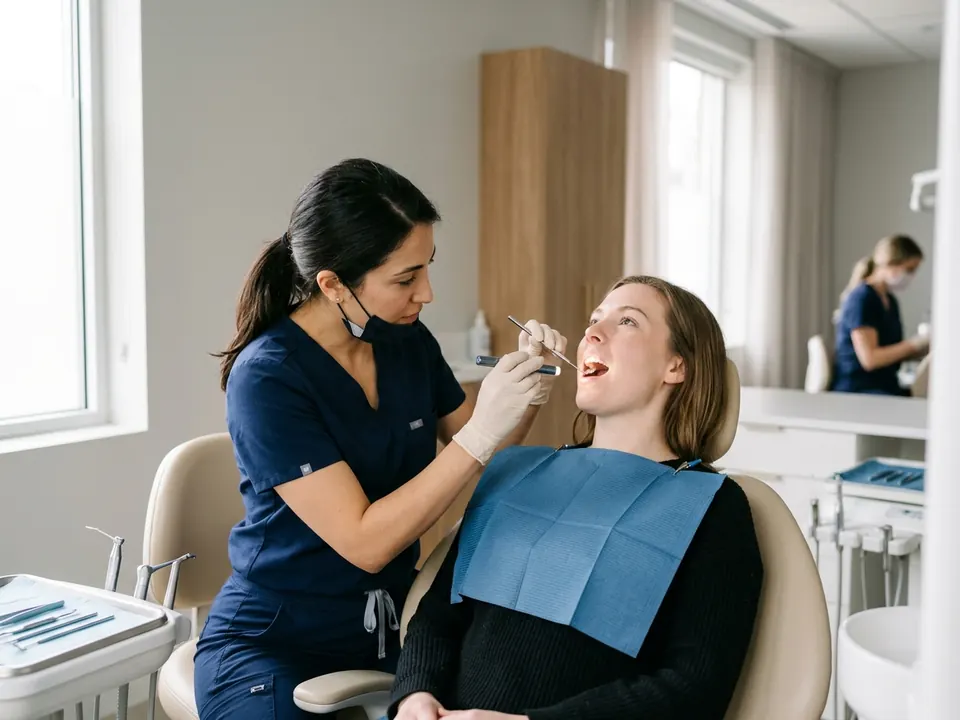
The dentists will conduct an oral cancer screening exam to look for lumps or any irregular tissue around the neck region and oral cavity.
The dentist will look for sores or discolored tissue and will check for any symptom associated with mouth cancer.
A brush biopsy might be performed by a dentist if any irregular tissue is found in the mouth. These tests are used to detect oral cancer early before it has the chance to spread to other regions
Further tests
If the biopsy confirms cancer you will need further tests to check what stage cancer has reached.Therefore, the tests will examine your lymph nodes, bones, and the tissue near the site of your initial tumor to check for the presence of other tumors.
These tests may include:
X-ray
Magnetic resonance imaging(MRI) scan
Computerized tomography (CT) scan
Positron Emission tomography(PET) scan
The relevant stages associated with mouth cancer are:
Low grade - the slowest in spreading
Moderate-grade
High grade – the most aggressive stage of mouth cancer
About Mouth Cancer Treatment
Key facts to plan your treatment: how long it takes, your hospital stay, anaesthesia, risks and recovery.
Recovery
Information coming soon. Request a consultation for personalized recovery guidance. Get Quote →
After care
Information coming soon. Request a consultation for personalized recovery guidance. Get Quote →
 Private Hospital



 JCI
 ISO