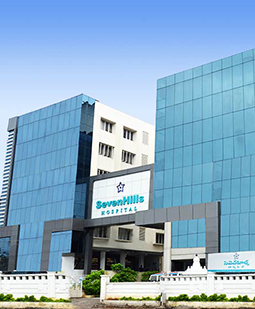
SevenHills Group of Hospitals (SHHL) has been delivering Healthcare services at the highest level, since past 25 years. SevenHills Hospital, Mumbai, is a world class integrated Healthcare Delivery System, that provides comprehensive Healthcare...
DoctorsIADr. Indoo AmbulkarCSDr. Chetan ShahView all 3
A 200-bed facility located at Gateway Center in Northwest Bangalore. The hospital opened in 2008 and provides comprehensive tertiary-level services, such as cardiac operations, orthopedics and neuroscience, as well as secondary-level medical care.
DoctorsGNDr. Govind NandakumarSGDr. Shalini GovilView all 15
The Department of Medical Oncology at Gleneagles Global Hospitals is known for its superior patient care and clinical outcomes. Medical oncologists work together with the surgeons and radiotherapists in deciding the treatment and delivering it.
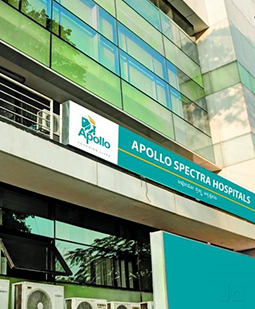
Apollo Specialty Cancer Hospital is an exclusive and well established hospital for Cancer care with an Oncology team that consists of the most renowned specialists and a well trained team of medical and paramedical professionals who are exclusively trained in cancer care.
DoctorsRProf. RajasundaramDDDr. Debnarayan DuttaView all 19
Located near Delhi, Fortis Hospital Noida is a Centre of Excellence for Orthopaedics and Neurosciences with a focus on Cardiac Sciences, Minimally Invasive Surgeries and Oncology.
Apollo Oncology Team brings together the brightest minds in surgical, medical & radiation oncology, along with a complete range of high-end ancillary experts.
Artemis Cancer Centre is an integral part of Artemis staffed by well trained and experienced team of oncologists and paramedics, and armed with world class equipment and facilities.
DoctorsRCDr. Rakesh ChopraHGDr. Hari GoyalView all 18
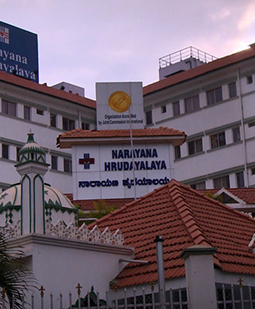
A conglomeration of hospitals in one campus, including: the Sparsh Hospital for Orthopedics & Trauma, the Mazumdar Shaw Cancer Center, the Narayana Hrudayalaya Heart Hospital, the Narayana Nethralaya Eye Hospital, as well as a full fledged multi specialty hospital.
DoctorsAPProf. Anthony PaisPNDr. Prasad NarayananView all 21
To the thousands of patients who visit for cancer treatment in India, the Apollo Hospitals Cancer Institute symbolizes hope that Cancer is Conquerable. The Cancer care system at Apollo Hospitals involves over 125 surgical and radiation Oncology specialists.
Oral cancer is a type of cancer where a tumor develops on the surface of the mouth, lips, tongue or gums. Oral cancer can also present in the salivary glands, tonsils and the pharynx although these are less common.
Types of mouth cancer include:
Squamous cell carcinoma: This is when cancer attacks the squamous cells found in the inside of the mouth.
Oral malignant melanoma: This is when cancer starts in melanocytes, cells which help give the skin its colour.
Adenocarcinomas: This is when cancer develops in the salivary glands.
Who is at risk of Oral Cancer?
Male people above the age of 50
People who smoke cigarettes, cigars or pies.
People who use smokeless tobacco
Excessive consumption of alcohol
A family history of cancer.
Excessive sun exposure, especially at a young age.
People infected with human papillomavirus
Can I reduce the risk of developing oral cancer?
The most effective ways to prevent mouth cancer from developing and preventing the recurrence after successful treatment include:
Not smoking
Drinking alcohol moderately or not at all
Eating a diet with plenty of citrus fruits, fresh vegetables, fish and olive oil.
Regular dental check-ups.
What Are the Symptoms of Oral Cancer?
Rough spots, lumps, crusts, swellings, or eroded areas on the gums, lips, or other areas inside the mouth
The development of white or red patches in the mouth lining.
A feeling that something is caught in the back of the throat
Difficulty chewing, swallowing, speaking or moving the jaw or tongue
A chronic sore throat and hoarseness.
Unexplained weight loss
Ear pain
Diagnosis
If you experience any symptoms that may indicate oral cancer, your dentist or doctor will examine the inside of your mouth and parts of your neck. Your doctor will ask you questions about your health and history of illnesses and dental problems. Be sure to tell your dentist or doctor if you use or even have used tobacco in any form.
The following tests may be done to diagnose if you have oral cancer and if so how far it has spread.
Treatment
Biopsy: A small tissue sample called a biopsy usually is taken. There are different types of biopsy which include: Brush biopsy or exfoliative cytology, incisional biopsy, a fine-needle-aspiration biopsy (FNA), mucosal staining and chemiluminescent light.
Imaging tests: These may include: CT or CAT (computed axial tomography) scans, PET (positron emission tomography) scans, MRI (magnetic resonance imaging) scans, Chest and dental X-rays, Barium swallow and endoscopy.
There are three main treatment options for mouth cancer. They are:
Surgery: The cancerous cells are surgically removed. Sometimes, some of the surrounding tissue is also removed. Surgery is usually recommended if the tumor is small and if surgery is likely to result in complete removal of cancerous cells.
Chemotherapy: Powerful medications are used to kill cancerous cells. Sometimes chemotherapy is used in conjunction with surgery.
Radiotherapy: High energy X-rays are used to kill cancerous cells. Radiotherapy can be combined with chemotherapy and surgery if the cancer is advanced.
Surgeries for oral cancers include:
Maxillectomy which can be done with or without orbital exenteration.
Mandibulectomy which is the removal of the mandible or lower jaw or part of it.
Glossectomy which is tongue removal. It can be partial, hemi or total.
About Oral Cancer Treatment
Key facts to plan your treatment: how long it takes, your hospital stay, anaesthesia, risks and recovery.
Recovery
Information coming soon. Request a consultation for personalized recovery guidance. Get Quote →
After care
Information coming soon. Request a consultation for personalized recovery guidance. Get Quote →

 Private Hospital



 JCI
 ISO