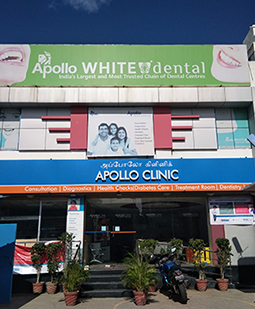
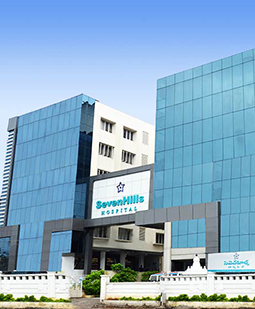
SevenHills Group of Hospitals (SHHL) has been delivering Healthcare services at the highest level, since past 25 years. SevenHills Hospital, Mumbai, is a world class integrated Healthcare Delivery System, that provides comprehensive Healthcare...
DoctorsIADr. Indoo AmbulkarCSDr. Chetan ShahView all 3
PricesStreotactic Body Radiation Therapy upon request
The Department of Medical Oncology at Gleneagles Global Hospitals is known for its superior patient care and clinical outcomes. Medical oncologists work together with the surgeons and radiotherapists in deciding the treatment and delivering it.
DoctorsJXDr. Julius Xavier Scott
PricesStereotactic Body Radiation Therapy upon request
Apollo Specialty Cancer Hospital is an exclusive and well established hospital for Cancer care with an Oncology team that consists of the most renowned specialists and a well trained team of medical and paramedical professionals who are exclusively trained in cancer care.
DoctorsRProf. RajasundaramDDDr. Debnarayan DuttaView all 19
PricesStereotactic Body Radiation Therapy upon request
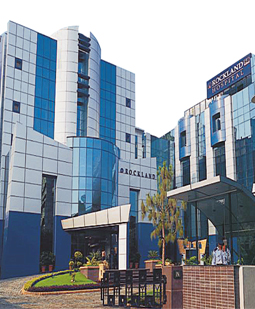
Rockland Hospital Qutab offers choice of selecting from economy rooms to most luxurious single rooms. It is well recognized and credited for its services. The hospital attracts more than 1500 international patients for their specialized medical care needs in a year.
DoctorsAKDr. Arun Kumar Giri
PricesStreotactic Body Radiation Therapy upon request
Description of Stereotactic Body Radiation Therapy:
Stereotactic Body Radiation Therapy (SBRT)
Stereotactic body radiation therapy (SBRT) is also called stereotactic ablative radiotherapy (SABR). It administers very high doses of radiation, using several beams of various intensities aimed at different angles to the body to precisely target the tumor. However, the tissues around it only receive a low dose.
What does SBRT treat?
This type of radiotherapy is mainly used to treat very small cancers, including cancer of the lung, Cancers in the lymph nodes, Spinal cord tumors and Cancer that started in the liver or cancer that has spread to the liver.
Preparation for the procedure
You may be asked not to eat or drink anything after midnight on the night before your treatment. You should discuss with your doctor any concerns. First you get a CT scan then an MRI or PET scans of the area to be treated. A computer program then designs radiation beams that follow the shape of the tumor to ensure that the entire tumor is inside the radiotherapy field and healthy tissue is avoided as much as possible.
The radiographers may make marks on your skin make sure the same area is treated at each session. A mould or mask keeps the treatment area completely still so that treatment is as accurate as possible. Any markings are made on the mask, instead of your skin. Metal markers may be put in or near your tumor. A small gold pellet or rod is released once the tip of the needle is in the right place.
Having SBRT treatment
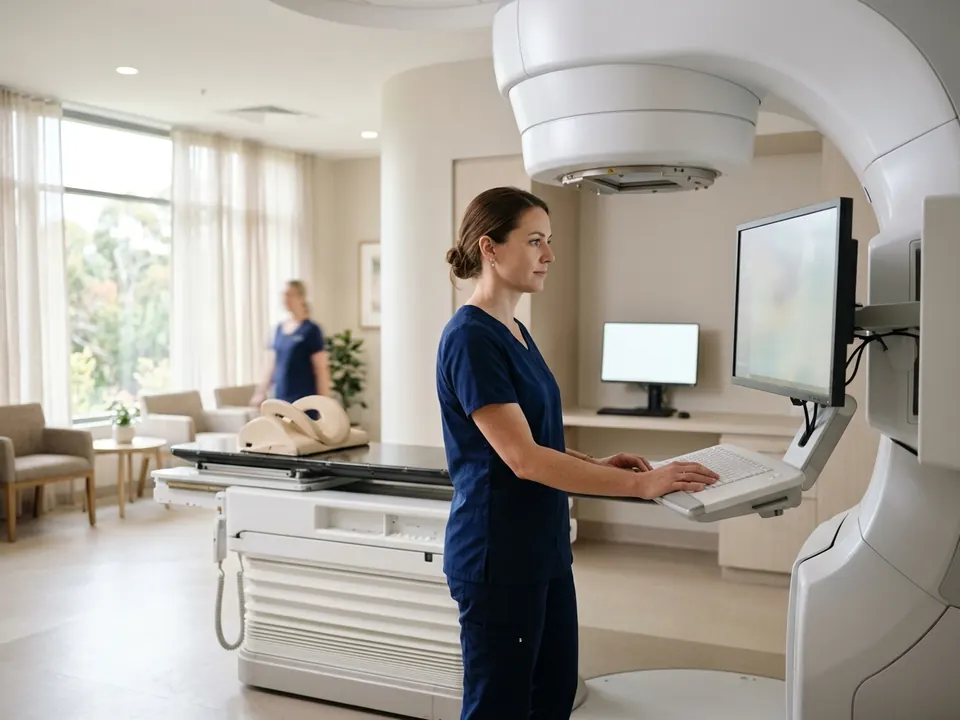
Techniques such as SBRT, aim to maximize the capabilities of destroying cancer while minimizing the radiation effect on healthy tissue. A treatment team creates your treatment plan in a few days to 2 weeks. Machines used for this therapy include the Linear accelerator (LINAC) and CyberKnife radiotherapy machine.
To have the treatment you lie on a radiotherapy couch and any moulds that you may need are put in place. The staff then leaves the room so as not to be exposed to radiation. The treatment lasts between 15 minutes to 2 hours. It is important to stay very still throughout the treatment. The machine makes a beeping noise from time to time. Once the treatment is over you can get down from the treatment couch
Possible side effects include:
headaches
soreness and swelling in the treatment area
urinary and bladder changes
secondary cancer
fracture of bones
hair loss in the treatment area
mouth problems and difficulty swallowing
eating and digestion problems
nausea and vomiting
brain changes
spinal cord changes
colon and rectal changes
infertility
joint changes
lymphedema
About Stereotactic Body Radiation Therapy
Key facts to plan your treatment: how long it takes, your hospital stay, anaesthesia, risks and recovery.
Number of sessions required
Usually, you have between 1 to 8 treatments given as a single dose or up to five doses once a day. This can vary depending on the type and location of the tumor and the patient’s condition.
Recovery
Information coming soon. Request a consultation for personalized recovery guidance. Get Quote →
After care
These treatments are normally performed on an outpatient basis. However, you may need to spend up to a half-day or more at the facility. It is advisable to have someone accompany you and drive you home afterward.
 Private Hospital


 JCI
 ISO