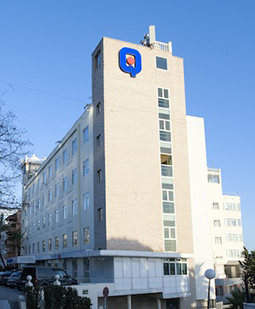
Fundació Puigvert state-of-the-art high technology equipment, including robotic surgery and minimally invasive approach, together with some of the world’s leading specialists and over 60 years of experience, allow the clinic to have served over 600.000 patients
DoctorsJPProf. Juan Palou Redorta, Prof, MD, PhDERProf. Eduard Ruiz CastañéView all 7
Urology is the medical-surgical speciality covering study, diagnosis and treatment of pathologies that affect the urinary system, suprarenal glands and retroperitoneal glands of both sexes and the male reproductive system, with no age limit.
Sanitas Hospitales is among the foremost programs for delivering sophisticated, patient-centered care across the entire spectrum of adult and adolescent urological conditions.
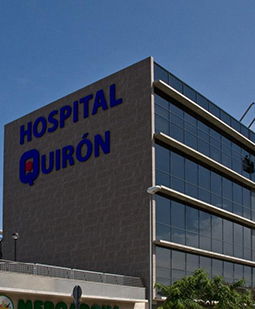
With more than 36 medical specialties, 200 physicians and surgeons of the highest level, Quironsalud Hospital Malaga is one of the most pertinent hospitals in Spain.
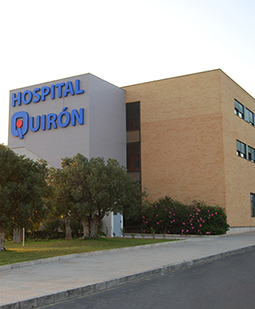
Quironsalud Hospital Torrevieja is an ISO-certified private hospital located in the north of Torrevieja, championing excellence in cancer treatment and management. IMTJ Best International Hospital of the world (awards 2017)
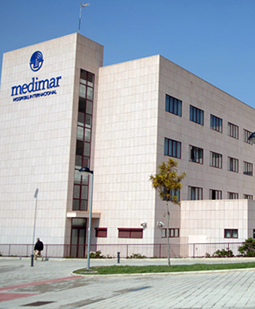
Medimar International Hospital is a tetriatry care hospital with 200 physicians, 50 resident and 150 affiliated, providing healthcare services to the residents of Alicante, as well as to over 25,000 foreign patients a year.
An ISO certified modern private hospital, which was opened in 2006, and is part of the Quironsalud Hospital Group. This tertiary care hospital has certified medical specialties capable of treating the most complicated medical cases.
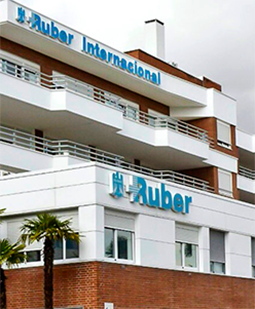
This international hospital incorporates prestigious doctors, invests in research and development, technology and continuing education that enhances skills, in facilities, and in an increased operational efficiency in order to provide nothing but the best
Quirón has an internationally prestigious medical staff, the largest in the sector, and is also the principal hospital network in terms of patient numbers and care facility area. The group administers 47 healthcare centers, more than 4.000 hospital beds and 8.000 doctors
Treatment Options for Enlarged Prostate (BPH)
The treatment options for an enlarged prostate include the following methods:
Self Care
Self care can be beneficial in treating mild symptoms.
Patients should urinate as often as they feel the urge to urinate or even if they don't feel the urge.
Patients should avoid consuming caffeine and alcohol, particularly after dinner.
When drinking fluids, patients should avoid drinking a large amount at once. Patients should not drink anything two hours before bedtime.
Over-the-counter medicines for sinus and cold may have decongestants or antihistamines, which can raise the symptoms. So, patients should avoid these.
Patients should learn and practice exercises that strengthen the pelvic muscles, like Kegel exercises.
Patients should consider lowering tension and stress levels, which often cause recurrent urination.
Medication
A few types of medication can be beneficial to people suffering from enlarged prostate.
The type of medication used has to be discussed with your physician.
Saw Palmetto
Saw palmetto is a herb used by many patients affected with an enlarged prostate. There is no evidence to prove the effectiveness of saw palmetto in treating the condition of prostate enlargement. Research on this is still required. Patients may use saw palmetto after consulting with the doctor.
Surgery
Surgery is recommended if the symptoms are severe, for instance:
Kidney failure
Frequent discharge of blood in the urine
Incontinence
Urinary retention
Bladder stones
Surgical methods that are used to treat enlarged prostate are as follows:
Transurethral Resection of the Prostate (TURP)
This is a widely used surgery for treating prostate enlargement. An endoscopic device is inserted through the penis to remove the prostate in pieces.
Transurethral Incision of the Prostate (TUIP)
This surgery is similar to TURP; however, it is performed more among patients with smaller prostates. An endoscopic device is inserted through the penis to reach the prostate. Then an incision is made in the prostate that increases the size of the opening of the urethra and bladder.
Simple Prostatectomy
During this surgery, an incision is made in the abdomen to remove the interior portion of the prostate gland. The exterior part is left intact. It is performed using general anesthesia and the patient usually needs to stay for 5 to 10 days in the hospital.
Less Invasive Treatments
Some of the techniques of less invasive treatments are:
Transurethral needle ablation (TUNA)
Transurethral electro vaporization (TUVP)
Transurethral microwave thermotherapy (TUMT)
Interstitial laser coagulation (ILC)
Holmium laser enucleation of the prostate (HoLEP)
Water-induced thermotherapy (WIT)
About Enlarged Prostate Treatment
Key facts to plan your treatment: how long it takes, your hospital stay, anaesthesia, risks and recovery.
Recovery
Information coming soon. Request a consultation for personalized recovery guidance. Get Quote →
After care
Information coming soon. Request a consultation for personalized recovery guidance. Get Quote →

 Private hospital
 ISOPrice on request

 JCI