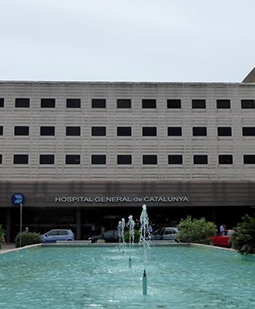
Fundació Puigvert state-of-the-art high technology equipment, including robotic surgery and minimally invasive approach, together with some of the world’s leading specialists and over 60 years of experience, allow the clinic to have served over 600.000 patients
DoctorsJPProf. Juan Palou Redorta, Prof, MD, PhDERProf. Eduard Ruiz CastañéView all 7
Urology is the medical-surgical speciality covering study, diagnosis and treatment of pathologies that affect the urinary system, suprarenal glands and retroperitoneal glands of both sexes and the male reproductive system, with no age limit.
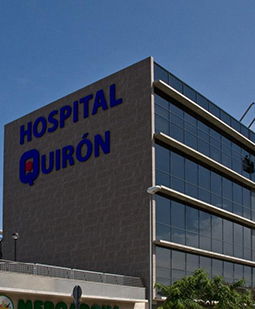
With more than 36 medical specialties, 200 physicians and surgeons of the highest level, Quironsalud Hospital Malaga is one of the most pertinent hospitals in Spain.
Sanitas Hospitales is among the foremost programs for delivering sophisticated, patient-centered care across the entire spectrum of adult and adolescent urological conditions.
This international hospital incorporates prestigious doctors, invests in research and development, technology and continuing education that enhances skills, in facilities, and in an increased operational efficiency in order to provide nothing but the best
An ISO certified modern private hospital, which was opened in 2006, and is part of the Quironsalud Hospital Group. This tertiary care hospital has certified medical specialties capable of treating the most complicated medical cases.
Our goal is not only to promote and encourage the training on pediatric urology of our professionals in order to improve the health of our patients and the community, but also to advance scientific and human knowledge.
HM Hospitales is a hospital group with six private hospitals in Madrid: three general hospitals, a cardiovascular hospital, an oncological center and a women's health hospital.
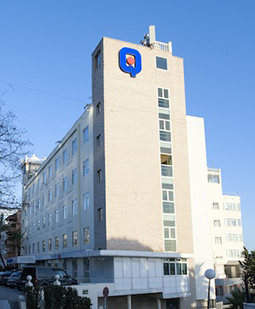
Quirón has an internationally prestigious medical staff, the largest in the sector, and is also the principal hospital network in terms of patient numbers and care facility area. The group administers 47 healthcare centers, more than 4.000 hospital beds and 8.000 doctors
The Department of Urology has the expertise to deal with Urinary tract obstruction , Stones, Prostate enlargement, infections & Male Infertility & Impotence.
Renal artery stenosis is a condition that occurs when the arteries that carry blood to one or both of the kidneys narrow. As time goes on, the condition can worsen leading to high blood pressure (hypertension) and kidney damage.
Causes
Atherosclerosis - This is the clogging, narrowing and hardening of the renal arteries due to plaque build-up. Plaque is a substance made of cholesterol, fat, calcium and other material found in the blood.
Fibromuscular dysplasia (FMD) - This occurs when there is abnormal growth of cells on the wall of the renal artery, which can cause blood vessels to narrow.
Risk factors for the condition include:
Lack of physical exercise
Diabetes
Smoking
High blood pressure
Abnormal blood cholesterol levels
A family history of heart disease
Older age
Signs and symptoms
They include hypertension that is difficult to control with medication, kidney dysfunction and pulmonary edema.
Diagnosis
Imaging tests used to diagnose the condition include:
Catheter angiogram: It is a special x-ray in which a catheter is threaded through the large arteries to the renal artery. This is done by a radiologist. Anaesthesia is not needed but to lessen anxiety a sedative may be given.
Magnetic Resonance Angiogram (MRA): This test uses magnets and radio waves to produce detailed images of the internal organs without using x rays. A mild sedative may be given to you if you have a fear of confined spaces. The images are then interpreted by a radiologist.
Computerized tomographic angiography (CTA) Scan: This test uses both computer technology and x rays to create images. The procedure is done by an x-ray technician and then interpreted by a radiologist.
Duplex Ultrasound: This test uses both traditional ultrasound and Doppler ultrasonography. It is performed by a special technician. The images are the interpreted by a radiologist.
Treatment
Treatment includes surgery, medication or lifestyle changes.
Surgery: The procedures are done by a vascular surgeon in a hospital. Anesthesia is required. The following are the different surgical procedures:
Endarterectomy - It involves cleaning out the artery. A vein or synthetic tube then connects the kidney to the aorta.
Angioplasty and stenting - A catheter is inserted into the renal artery. In addition, a stent is positioned in the artery to keep plaque flat and artery open.
Medications: Medications are taken to lower the blood pressure, to help the kidneys remove fluid from the blood and to lower the cholesterol to prevent plaque build-up.
Lifestyle changes: Maintaining a healthy body weight, diet and physical exercise are good ways to prevents plaque build-up. If you smoke, quitting will help protect your kidneys and other organs.
About Renal Artery Stenosis Treatment
Key facts to plan your treatment: how long it takes, your hospital stay, anaesthesia, risks and recovery.
Recovery
Information coming soon. Request a consultation for personalized recovery guidance. Get Quote →
Risks
Side effects from the contrast medium or sedative and injury to the artery from the catheter. If the kidneys do not remove the contrast medium well, it may cause complications to the skin and other organs. Side effects from X-ray radiation may be experienced. In addition, it is not recommended for people with dysfunctional kidneys since it uses more contrast medium.
After care
Information coming soon. Request a consultation for personalized recovery guidance. Get Quote →

 Private hospital
 ISOPrice on request

 JCI