Key planning information for vasectomy reversal in Spain.
$2,500 fromLowest listed price
1–4 hrsProcedure time
14 hospitalsList vasectomy reversal
Vasectomy Reversal in Spain is listed from US$2,500 to US$3,900 at 14 hospitals. The operation takes 1 to 4 hours. Each hospital quotes its own price for your case.
Prices last updated Jul 2019
Cost of Vasectomy Reversal in Spain
Table of prices by type of procedure, in US$. Each hospital quotes its own price for your case.
Procedure
Minimum price
Maximum price
Vasectomy Reversal
$2,500
$3,900
Price starting from $2,500 up to $3,900 · last updated Jul 2019.Final prices are quoted by each hospital
Hospitals and clinics offering Vasectomy Reversal in Spain
Vasectomy Reversal is listed by 14 hospitals in Spain. The order reshuffles every hour so each gets equal exposure.
Fundació Puigvert state-of-the-art high technology equipment, including robotic surgery and minimally invasive approach, together with some of the world’s leading specialists and over 60 years of experience, allow the clinic to have served over 600.000 patients
DoctorsJPProf. Juan Palou Redorta, Prof, MD, PhDERProf. Eduard Ruiz CastañéView all 7
Urology is the medical-surgical speciality covering study, diagnosis and treatment of pathologies that affect the urinary system, suprarenal glands and retroperitoneal glands of both sexes and the male reproductive system, with no age limit.
Sanitas Hospitales is among the foremost programs for delivering sophisticated, patient-centered care across the entire spectrum of adult and adolescent urological conditions.
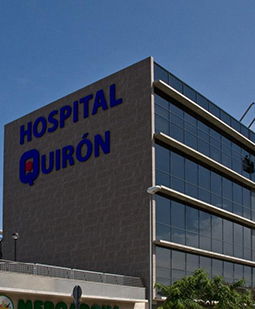
With more than 36 medical specialties, 200 physicians and surgeons of the highest level, Quironsalud Hospital Malaga is one of the most pertinent hospitals in Spain.
The Department of Urology has the expertise to deal with Urinary tract obstruction , Stones, Prostate enlargement, infections & Male Infertility & Impotence.
Medimar International Hospital is a tetriatry care hospital with 200 physicians, 50 resident and 150 affiliated, providing healthcare services to the residents of Alicante, as well as to over 25,000 foreign patients a year.
This international hospital incorporates prestigious doctors, invests in research and development, technology and continuing education that enhances skills, in facilities, and in an increased operational efficiency in order to provide nothing but the best
An ISO certified modern private hospital, which was opened in 2006, and is part of the Quironsalud Hospital Group. This tertiary care hospital has certified medical specialties capable of treating the most complicated medical cases.
HM Hospitales is a hospital group with six private hospitals in Madrid: three general hospitals, a cardiovascular hospital, an oncological center and a women's health hospital.
What is Vasectomy Reversal?
Vasectomy reversal refers to surgical procedures in which the vas deferens that was cut during vasectomy is reconnected.
Although vasectomy is a permanent form of birth control measure, vasectomy reversal is possible with the help of advanced microsurgeries.
The success of vasectomy reversal depends on the time that has passed between the vasectomy and the reversal. In due course, added obstruction may form and the patient may develop antibodies to the sperm.
The vasectomy reversal procedures are technically challenging and expensive.
Vasectomy reversal may involve two procedures: vasovasostomy, which connects vas deferens together and vasoepididymostomy, which connects the epididymis to the vas deferens.
How is the Vasectomy Reversal Surgery Performed?
Initially, a fluid sample from the scrotum needs to be tested if it contains sperm. For this procedure:
A small incision is made on both the sides of the scrotum.
The scarred ends of the vas deferens are removed.
A fluid sample is extracted and tested if it contains sperm.
If sperm is present in the fluid, it means that there is no obstruction in the epididymis and also between the testicle and the vas deference spot from which the fluid was extracted. Therefore, the two ends of the vas deferens can be connected together, and sperm can pass through it. This procedure for reconnecting the ends of the vas deferens is known as vasovasostomy.
Vasovasostomy
Vasovasostomy can be performed using a microsurgical approach that uses a highly advanced microscope to view the structures in a magnified way.
Using the operating microscope, the surgeon can make minute stitches to join the vas deferens.
In 75% to 95% patients who have undergone vasovasostomy, sperm is known to return to the semen. This depends upon the time that has passed between the vasectomy and the reversal.
If sperm is not present in the fluid sample, it may be possible that the vasectomy caused back pressure that resulted in a break in the epididymal tubule. Due to this, a blockage may have occurred. A more complex vasectomy reversal technique is then applied, which is known as vasoepididymostomy or epididymovasostomy.
Vasoepididymostomy
A long incision is made into the scrotum.
The upper end of the vas deferens is connected to the epididymis above the blockage point.
Despite the complex nature of the procedure, advanced surgical techniques have enabled vasoepididymostomy to be as successful as vasovasostomy.
Some patients may need both the techniques at the same time, vasoepididymostomy on one side of the scrotum and vasovasostomy on the other side.
How to Prepare for Vasectomy Reversal?
The patient may need to undergo some preoperative tests and physical examination.
The doctor will take the patient’s medical history records to find out how vasectomy had been performed on the patient.
The patient should inform the doctor if the patient has any ailments or medical conditions.
Certain medication that the patient is taking may be stopped two weeks before the surgery.
The patient should inform the doctor about any medication that the patient is taking with or without a prescription. These may include supplements or herbs or drugs.
Sometimes, patients may need to take antibiotics before the surgery.
On the day of the surgery, the patient should wear loose and comfortable clothing.
About Vasectomy Reversal
Key facts to plan your treatment: how long it takes, your hospital stay, anaesthesia, risks and recovery.
Duration of surgery/treatment
1 to 4 hours
Days admitted
Vasectomy reversal is usually done as an outpatient procedure.
Anesthesia
General or regional anesthesia.
Recovery
- The patient is taken to the recovery room after the surgery and monitored for about three hours.
- The patient will need to avoid urinating before being discharged.
- Pain medication is prescribed and needs to be taken for approximately three days.
- Antibiotics may also be required to prevent infection.
- The patient can resume work after three days.
Risks
- Swelling
- Bruising
- Side effects of anesthesia
- Low sperm count due to insufficient removal of blockage
- Severe hematoma
- Testicular atrophy due to injury to the spermatic artery during the surgery
After care
- Ice packs can be applied to reduce swelling and pain.
- The patient should avoid lifting heavy objects for about four weeks after the surgery.
- Physical exercises and sexual activity should also be avoided until the wound heals.
- The patient can take a shower within two days after the surgery, taking care not to soak the incision area.
- The patient is required to meet the surgeon in a week after the surgery.
- The patient needs to undergo a semen analysis after three months.

 Private hospital
 ISOPrice on request

 JCI